
Cabbage maggot larvae start feeding on roots in Ontario as soon as soil temperatures climb past 50°F, which usually lands in mid-to-late April in the southern part of the province and can push into May farther north. The pest doesn’t wait for warm weather like most garden insects. It thrives in the cool, damp conditions of an Ontario spring, which is exactly when gardeners are transplanting their first brassicas. Row covers installed before adult flies lay eggs, tight crop rotation, and timing plantings to dodge peak fly activity are what actually keep populations down. Pesticides help in commercial fields, but for most home gardens, prevention does the heavy lifting.
Why Ontario’s Cool, Wet Springs Favor Cabbage Maggot

Cabbage maggot (Delia radicum) is a fly, not a beetle or moth, and its biology is built around temperate, moisture-heavy climates. Ontario checks every box. The pupae overwinter just a few inches deep in the soil, sometimes in old brassica beds, sometimes in nearby field margins, and they need a period of cold followed by rising spring temperatures to trigger emergence. That’s standard stuff for southern Ontario, where winters are long enough to satisfy the chill requirement and springs warm gradually instead of jumping straight to summer heat.
Muck soil regions like the Holland Marsh, a major vegetable-growing area north of Toronto, see some of the heaviest cabbage maggot pressure in the province. The loose, organic-rich soil that makes those fields so productive for carrots, onions, and brassicas also happens to be ideal for maggot pupation and larval movement. Growers there have dealt with this pest for decades, and it’s part of why crop rotation schedules in that region are planned years in advance rather than season to season.
The Life Cycle, Mapped to an Ontario Growing Season
Adult flies look like small, gray houseflies, easy to miss, and that’s part of the problem. Females lay eggs at the base of host plants, right at the soil line, often within days of transplanting. Eggs hatch in about a week, and the resulting larvae tunnel into roots for two to three weeks before pupating in the soil to start the next generation.
In Ontario, this cycle typically produces two to three generations per year. The first flight, usually late April through May, is the one that does the most damage to spring transplants like broccoli and cauliflower. A second flight follows in July, often overlapping with late plantings of radish, turnip, or rutabaga. A partial third generation can show up in September in warmer years, though by then most susceptible crops are already past the vulnerable seedling stage.
Soil temperature, not the calendar, drives fly emergence. A cold, wet April can delay the first flight by a week or two, while an early warm spell pulls it forward. That’s why extension programs across the northern US and Canada use degree-day accumulation models rather than fixed dates to predict peak activity, and why a grower checking soil temperature with a simple probe thermometer often has better timing than one relying on last year’s planting date.
Which Crops Take the Hit, and What Damage Looks Like
Every plant in the brassica family is fair game, but some are far more attractive to egg-laying females than others. Radish and turnip are frequently hit hardest because their fast-swelling roots are exposed near the surface, right where larvae feed. Cabbage, broccoli, cauliflower, and Brussels sprouts transplants are also common targets, especially in the first two to three weeks after they go in the ground, when root systems are small and a handful of larvae can do real damage.
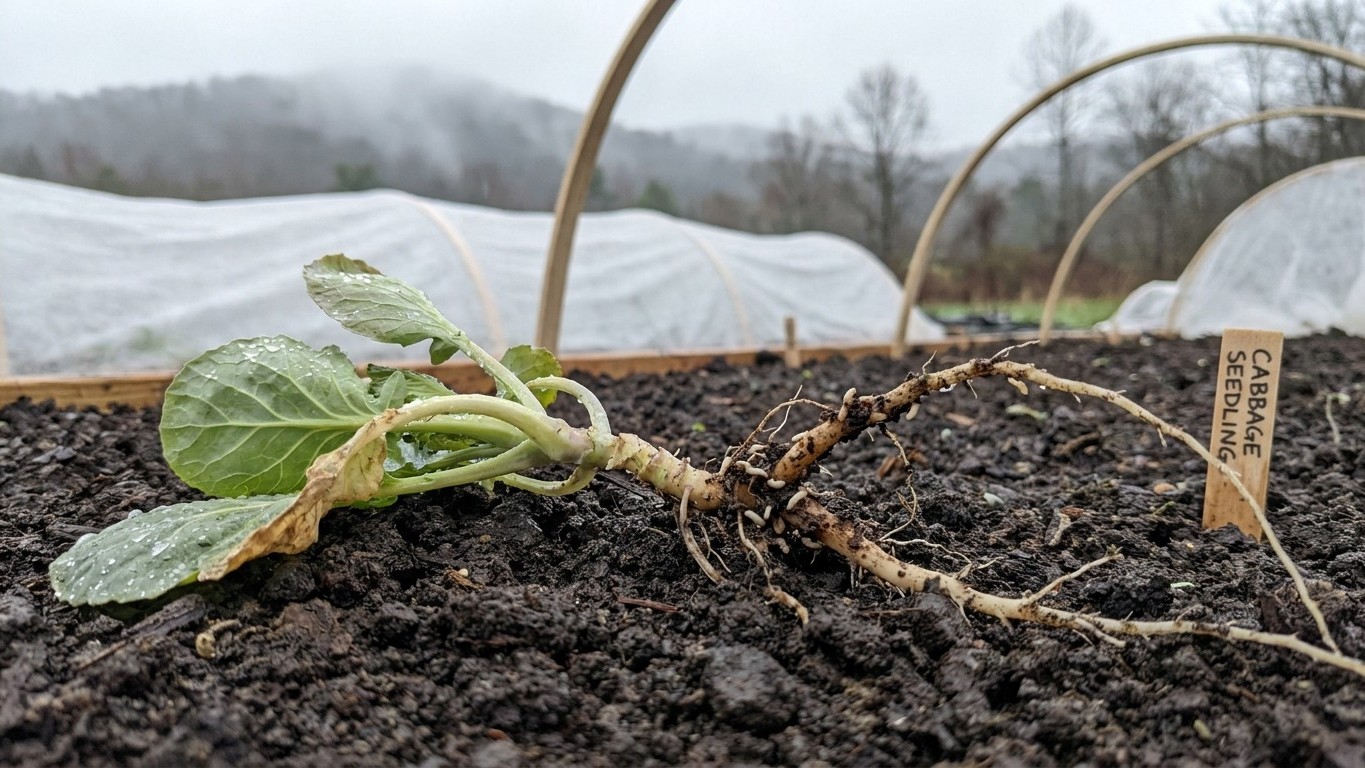
Above ground, the signs are subtle at first: a plant that wilts on a sunny afternoon even though the soil is moist, or seedlings that simply stop growing while their neighbors take off. Pull one up and the evidence is unmistakable. Roots show narrow brown tunnels, sometimes packed with small white maggots up to a quarter-inch long, and secondary rot often sets in where the tunneling breaks the root’s outer layer. Radishes and turnips can look fine from the top and be riddled with tunnels underneath, which is why a lot of gardeners don’t realize they had a problem until harvest.
Cultural and Physical Controls That Hold Up in Ontario Conditions
Floating row covers are the single most reliable tool for home gardeners, and the trick is putting them on before the flies arrive, not after damage shows up. Covers need to go over the bed at transplanting or seeding, with edges buried or weighted so adult flies can’t crawl underneath to lay eggs. Once a plant is infested, a row cover does nothing, since the whole point is keeping egg-laying females away from the soil surface.
Timing plantings around known flight windows helps too. Pushing transplant dates a week or two later than the earliest possible planting window, so seedlings go in after the first big flight has already laid its eggs and moved on, cuts exposure significantly. It’s a trade-off against earliness, but for crops like cauliflower where a maggot-damaged root often means a stunted or bolted plant, the delay usually pays off.
Crop Rotation and Sanitation Details That Matter
Pupae overwinter in the same beds where brassicas grew the previous season, so rotating brassica crops to a different part of the garden each year, ideally with a two to three year gap before returning to the same spot, breaks the cycle. Clearing out old brassica roots and debris right after harvest instead of leaving them to overwinter removes a food source and shelter for the next generation. Composting infested plant material in a hot, actively managed pile can work, but tossing roots into a cold compost heap or leaving them in the row just relocates the problem to next spring.
A few other practical steps make a measurable difference:
- Delay thinning radish and turnip seedlings until plants are past the most vulnerable early stage, since thinning disturbs soil and can attract egg-laying flies to the remaining roots
- Use collars, small barriers cut from cardboard or plastic and fitted around the stem at soil level, on individual transplants to block egg-laying access to the root zone
- Avoid excessive organic mulch or compost right at the base of young brassica stems in spring, since it can hold moisture and attract flies looking for a place to lay eggs
Biological and Chemical Options, and When They’re Worth It
Beneficial nematodes, particularly species in the Steinernema group, have shown some success against cabbage maggot larvae in soil when applied at planting and kept in moist conditions. They’re not a silver bullet, results vary with soil temperature and moisture, but for gardeners who want to avoid chemical treatments they’re a reasonable addition to row covers and rotation rather than a replacement for them.
Commercial growers facing heavy pressure, especially in intensive vegetable regions like the Holland Marsh, sometimes rely on registered insecticide applications timed to degree-day models tracking adult fly emergence. That level of precision requires monitoring tools most home gardeners don’t have access to, which is one more reason row covers and rotation remain the more practical answer at backyard scale. Diatomaceous earth worked into the soil surface around transplants gets mentioned often as a home remedy, but its effectiveness against soil-dwelling larvae is limited since the material needs direct contact with the pest to work, and larvae spend most of their life inside the root itself.
Sticky traps, either commercial yellow cards or homemade versions coated in petroleum jelly, won’t stop an infestation on their own but they do something useful: they tell you when adult flies are active in your specific yard, which takes the guesswork out of deciding when to put row covers on or when a second flight might be starting in midsummer.
One detail that surprises a lot of Ontario gardeners: cabbage maggot pressure often tracks more closely with a garden’s soil type than with the weather in a given year. Heavier clay soils that warm slowly in spring tend to see later, more compressed fly activity, while the light, fast-warming soils common in market garden regions can see an earlier and longer first flight, sometimes stretching activity across three or four extra weeks compared to a heavier plot just a few miles away.
Related guides
- Cabbage maggot in Manitoba: When It Shows Up and What Stops It
- Cabbage maggot in Quebec: When It Shows Up and What Stops It
- Cabbage maggot in Oregon: When It Shows Up and What Stops It
- Cabbage maggot in Prince Edward Island: When It Shows Up and What Stops It
- Cabbage maggot in Maine: When It Shows Up and What Stops It