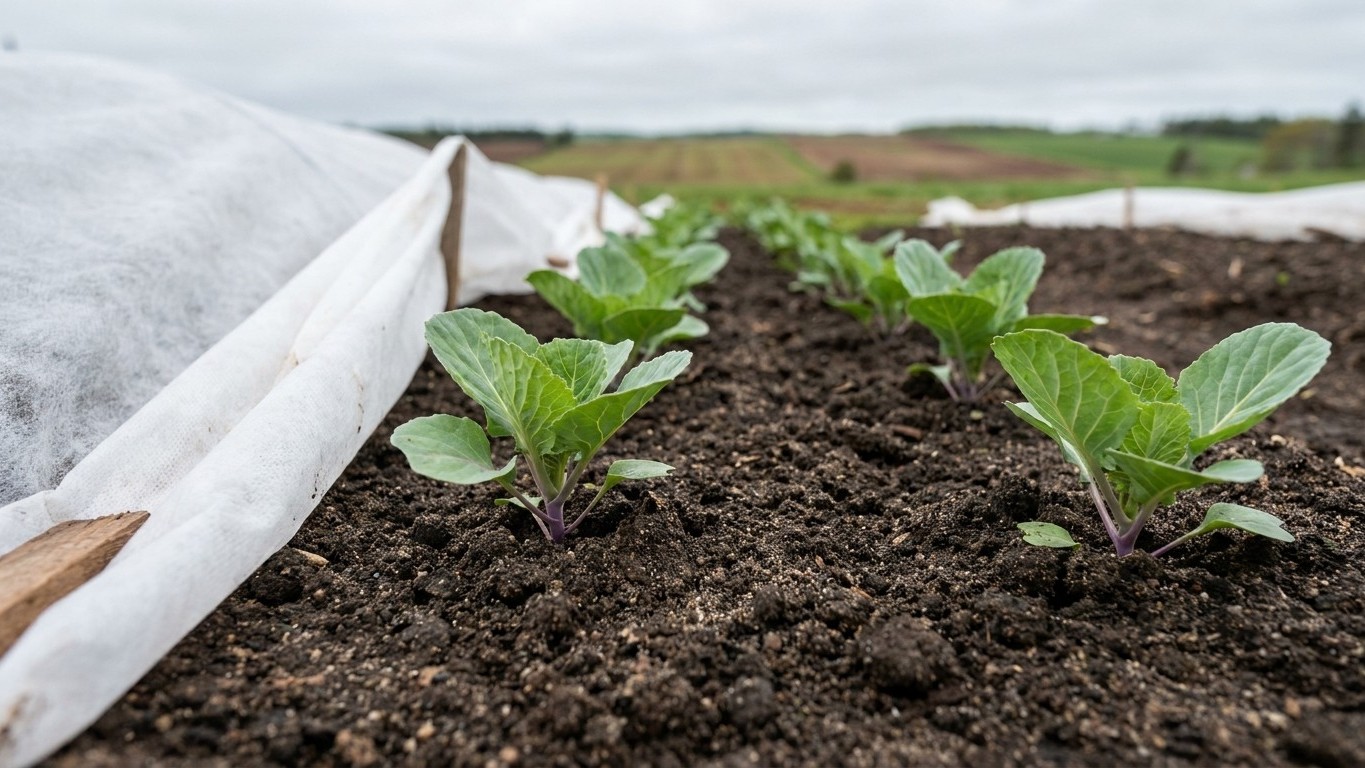

Cabbage maggot shows up in Prince Edward Island soil right around late May, when ground temperatures climb past 50°F and hold there for a few days straight. That’s the trigger for the first wave of adult flies to emerge from winter pupae and start hunting for cabbage, broccoli, and other brassica stems to lay eggs on. Row covers installed at planting, tight crop rotation, and stem collars are what actually stop the larvae from reaching the roots. Miss that early window and you’re often dealing with wilted transplants within two weeks.
Why PEI’s Climate Suits This Pest So Well

Prince Edward Island’s growing conditions read almost like a checklist for cabbage maggot survival. Cool spring soil, steady moisture from the surrounding Gulf of St. Lawrence and Northumberland Strait, and the sandy loam that made the island famous for potatoes also happen to drain well while staying damp enough at root depth for maggot pupae to overwinter comfortably.
Add to that the island’s long tradition of growing cole crops alongside potatoes, and you’ve got a landscape where brassica roots are rarely more than a few hundred feet from a field that hosted them the year before. Cabbage maggot, scientifically Delia radicum, doesn’t travel far as an adult. It doesn’t need to. The fly lays eggs at the base of the nearest suitable host, and the larvae tunnel in within days.
When Cabbage Maggot Actually Shows Up in PEI
Timing here follows soil temperature more than the calendar. Once ground temps hold steady around 50°F for several consecutive days, typically the last week of May in most of the island, the first generation of adult flies emerges and mating begins almost immediately. Gardeners and growers on PEI have long used a simpler shortcut than a thermometer: watch for wild mustard and yellow rocket blooming along field edges and ditches. When those weedy yellow flowers open, cabbage maggot flies are usually active within the same week.
PEI’s cool summers, average highs rarely pushing past 75°F, mean the pest usually completes two full generations rather than the three you’d see in warmer parts of Canada or the northern United States. A partial third generation can show up in September if the fall stays mild, which matters for anyone growing fall turnip, rutabaga, or late cabbage. The practical takeaway: the riskiest planting windows are late May through mid-June for spring crops, and again in August for fall brassicas.
What the Adult Fly and Larvae Look Like
The adult is easy to mistake for a small housefly, about a quarter-inch long, gray-bodied, with a slight hump to its back. It’s the larval stage that does the damage. Legless, cream-colored maggots up to a third of an inch long hatch from eggs laid right at the soil line near the stem and immediately burrow downward into the root or lower stem tissue.
Crops at Risk Across PEI Gardens and Fields
Any member of the brassica family is fair game. That includes the obvious commercial crops, cabbage, broccoli, cauliflower, and Brussels sprouts, but home gardeners on the island often lose more sleep over root vegetables like radish, turnip, and rutabaga, since maggot tunneling ruins the very part of the plant you’re trying to harvest. Kale and collards get hit too, though established plants with thick stems tend to shrug off light infestations better than tender seedlings do.
Seedlings and freshly set transplants take the worst of it. A plant with a stem narrower than a pencil can be girdled and killed outright within two to three weeks of egg-laying. Mature plants usually survive an attack but show stunted growth, off-color purplish leaves from root stress, and roots riddled with tunnels that invite rot organisms in behind the maggots.
Recognizing the Damage Before It Spreads
Wilting during the warmest part of the day, even when soil moisture looks fine, is usually the first visible sign. Pull a struggling seedling and you’ll often find the stem hollowed out just below the soil line, sometimes with a slimy brown rot already setting in where the maggots fed. On root crops, the damage shows up as tunnels and scarring visible the moment you slice into a radish or turnip at harvest, long after any chance to intervene has passed.
Because the damage is underground until it’s severe, most PEI growers rely on prevention rather than trying to catch an active infestation early. By the time wilting is obvious, the roots are already compromised.
What Actually Stops Cabbage Maggot on PEI
Nothing here is exotic. The methods that work are the same physical barriers, timing tricks, and rotation practices used across cool maritime climates, just applied with PEI’s specific emergence window in mind.
Physical Barriers and Row Covers
Lightweight floating row cover, sealed tight to the soil on all edges immediately after seeding or transplanting, blocks adult flies from ever reaching the stem to lay eggs. Since brassicas don’t need pollinator access the way squash or cucumbers do, the cover can stay on the entire season without hurting yield. The seal at the soil edge matters more than the fabric itself. Flies will find any gap.
Stem collars work as a lower-effort backup or supplement. A simple square of cardboard, tar paper, or heavy fabric slipped around the base of each transplant, flush against the soil, denies the fly a landing spot to lay eggs right at the stem.
Timing and Crop Rotation
Delaying transplant dates by even a week or two, so plants go in after the first big flight has passed and started to taper, cuts exposure significantly. Starting transplants indoors so they’re already a month old and have a thicker stem by the time they hit the garden also helps them tolerate light feeding without collapsing.
Rotation matters because the pupae overwinter in the soil exactly where last year’s brassica roots were. Moving brassica plantings at least 100 feet from the previous year’s plot, or better, running a three to four year rotation before planting cole crops in the same ground again, breaks the cycle. On smaller PEI garden plots where 100 feet isn’t realistic, even moving to the opposite end of the yard reduces pressure compared to replanting in the exact same bed.
Biological and Cultural Controls
Ground beetles and rove beetles are natural predators of cabbage maggot eggs and larvae, and they’re more abundant in gardens that skip heavy tillage and keep some permanent mulched or grassy margins nearby for the beetles to shelter in. Beneficial nematodes, specifically Steinernema feltiae, applied to the soil around transplants at planting time, can attack larvae before they do serious root damage; they’re sold at many garden centers as a soil drench.
Sanitation closes the loop. Pulling and destroying brassica roots and stems right after harvest, rather than leaving them to rot in place over winter, removes a chunk of the pupae that would otherwise overwinter and emerge the following May ready to start the cycle again.
A Few PEI-Specific Practical Notes
Growers who track soil temperature rather than the calendar date get the most accurate read on when to install row covers, since a cold, wet spring on the island can push emergence into early June some years while a mild one brings it forward into mid-May. Checking a soil thermometer at planting depth, roughly two to four inches down, gives a better answer than guessing from the weather forecast alone.
Diatomaceous earth or a light dusting of wood ash around the stem base is a cheap add-on many island gardeners use alongside collars, since the sharp particles and alkaline dust make the immediate area less inviting for egg-laying females, though neither replaces a proper physical barrier on its own.
Related guides
- Cabbage maggot in New Brunswick: When It Shows Up and What Stops It
- Cabbage maggot in Nova Scotia: When It Shows Up and What Stops It
- Cabbage maggot in Quebec: When It Shows Up and What Stops It
- Cabbage maggot in Washington: When It Shows Up and What Stops It
- Cabbage maggot in Minnesota: When It Shows Up and What Stops It