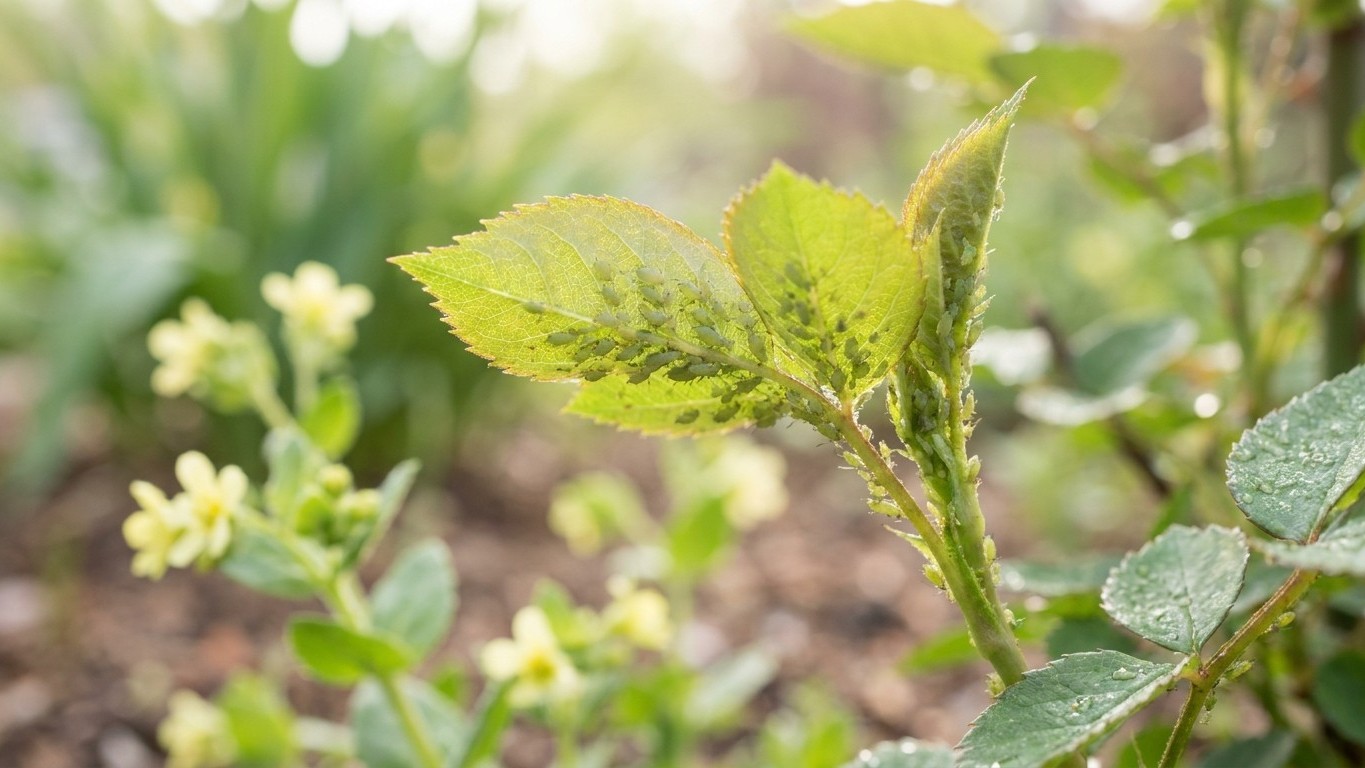

Aphids become active in Pennsylvania as early as late March in the southeastern counties around Philadelphia, and by mid-April almost everywhere else in the state. They peak twice: once in late spring as new growth flushes out, and again in late summer when populations that survived the heat rebound on stressed plants. Cool, wet springs push the first wave earlier; a mild winter means more overwintering eggs survive to start trouble sooner.
Stopping them comes down to three things working together: encouraging the predators that already eat them, avoiding the fertilizer and pesticide habits that make outbreaks worse, and catching colonies early enough that a strong hose spray or insecticidal soap actually does the job.
When Aphids Show Up in Pennsylvania

Pennsylvania spans USDA hardiness zones 5b through 7b, and that range matters more than people expect. Gardeners in Erie or the Laurel Highlands often see their first aphid colonies two to three weeks later than folks in Chester County or Philadelphia. The Piedmont region in the southeast warms up fastest, and that’s usually where aphid reports start each year.
Soybean aphid, a species that arrived in the U.S. in 2000 and spread through the Midwest and mid-Atlantic, tends to show up in Pennsylvania fields by late June, feeding on the undersides of leaves and building populations fast in warm, humid weeks. Home gardeners deal with a different cast of characters, mostly green peach aphid and melon aphid, which show up earlier and target vegetables and ornamentals rather than field crops.
Early Season vs. Late Summer Waves
The spring wave is the one most homeowners notice first. It hits new rose growth, the tender tips of tomato and pepper transplants, and flowering ornamentals like hibiscus. This wave tends to be manageable because plant growth is vigorous and predator populations are building alongside the aphids.
Late summer is trickier. By August, ladybug and lacewing populations that fed on the spring wave have often moved on or died off, while aphids keep reproducing. A single female aphid, without mating, can produce dozens of live offspring in a couple of weeks under warm conditions. That’s why a plant that looked fine in July can be coated in sticky honeydew by the second week of August, seemingly overnight.
Which Aphids You’re Likely Dealing With
Not every aphid in a Pennsylvania yard behaves the same way, and the species matters for figuring out what to do about it.
- Green peach aphid: pale green to pink, common on vegetables, peppers, and ornamentals, and a known vector for plant viruses in tomatoes and peppers.
- Melon (cotton) aphid: smaller and darker, shows up on cucumbers, squash, and melons starting in June.
- Woolly aphid: covered in a white, waxy fluff that makes it look like mold; common on apple trees, alder, and beech throughout the state.
- Black bean aphid: clusters densely on bean plants and nasturtiums, forming solid black mats on stems.
- Soybean aphid: the agricultural concern, feeding on soybean fields across central and southeastern Pennsylvania farm country.
Woolly aphids throw people off the most, since the waxy coating makes them look like a fungal problem rather than an insect one. Wiping a suspect patch with a tissue usually reveals the insects underneath, and a squished woolly aphid leaves a telltale smear rather than the powdery residue of actual mildew.
What Actually Stops Them
The fastest way to make an aphid problem worse is heavy nitrogen fertilizer. Lush, nitrogen-rich growth is exactly what aphids prefer, so a lawn or garden bed pushed hard with fertilizer in spring often becomes an aphid magnet by early summer. Cutting back to a slower-release fertilizer, or skipping the extra dose entirely on plants that already look healthy, removes some of the incentive.
Natural predators do most of the heavy lifting in a typical Pennsylvania yard. Ladybugs, both adults and their alligator-shaped larvae, can eat 50 or more aphids a day. Lacewing larvae are even more aggressive, sometimes called “aphid lions” for how fast they clear a colony. Parasitic wasps, tiny enough to go unnoticed, lay eggs inside aphids that turn the host into a swollen, bronze-colored “mummy” within a week. Spotting these mummies scattered through a colony is actually a good sign. It means biological control is already underway.
Broad-spectrum insecticides undercut all of this. Products that kill on contact don’t distinguish between the aphid and the ladybug hunting it, so spraying at the first sign of trouble can wipe out the predator population that would have solved the problem within a week or two on its own. That’s the trade-off worth thinking through before reaching for a spray bottle.
When to Reach for Insecticidal Options
For colonies that have gotten past the point where predators can keep up, insecticidal soap and horticultural oil remain the most practical options for home use. Both work on contact and break down quickly, which limits the damage to beneficial insects compared to synthetic pyrethroids. Coverage matters more than concentration: aphids cluster on the undersides of leaves and along new stem growth, so a spray that only hits the top of the plant misses most of the colony.
A strong water spray from a garden hose, aimed at the underside of leaves, physically knocks aphids off the plant and they rarely climb back on. This works surprisingly well on roses and vegetable transplants, and it costs nothing. Repeating it every few days during a heavy infestation, combined with removing the most heavily colonized leaves by hand, handles a lot of home garden cases without any product at all.
For larger outbreaks on fruit trees or ornamental shrubs, dormant oil applied in late winter before bud break smothers overwintering eggs before they hatch. This timing matters. Applying oil once leaves have emerged risks leaf burn, while a well-timed late-winter treatment (typically late February through March in most of Pennsylvania) can cut the entire season’s population before it starts.
Signs of Damage and When to Act
Curled, yellowing leaves on new growth are usually the first visible sign, followed by a sticky coating called honeydew that aphids excrete as they feed. That honeydew attracts ants, which is why an ant trail running up a stem is often the first clue that aphids are working somewhere higher up on the plant. Left alone, honeydew also grows a black fungus called sooty mold, which coats leaves and can reduce how much light they take in, even though the mold itself doesn’t feed on the plant directly.
Most established plants tolerate a moderate aphid population without lasting harm. Trees and shrubs, especially, can support hundreds of aphids on a single branch without any real setback to overall health. The bigger concern is young transplants, seedlings, and plants already stressed by drought or transplant shock, where aphid feeding pulls resources the plant can’t spare. That’s the situation where stepping in with soap, oil, or a hose spray makes the most sense rather than waiting for predators to catch up.
Vegetable growers should pay closer attention to peppers and tomatoes, since green peach aphid can transmit viruses while feeding, meaning even a small population poses a risk beyond the direct feeding damage. Field crops tell a different story: Penn State Extension’s soybean aphid monitoring generally treats economic thresholds around 250 aphids per plant on the majority of plants sampled during the reproductive growth stages, a scale far beyond what any backyard garden would ever see.
Checking the undersides of new leaves once a week during May and June catches most colonies before they become a real problem, and that single habit does more to prevent an aphid outbreak in a Pennsylvania yard than any product on a shelf.