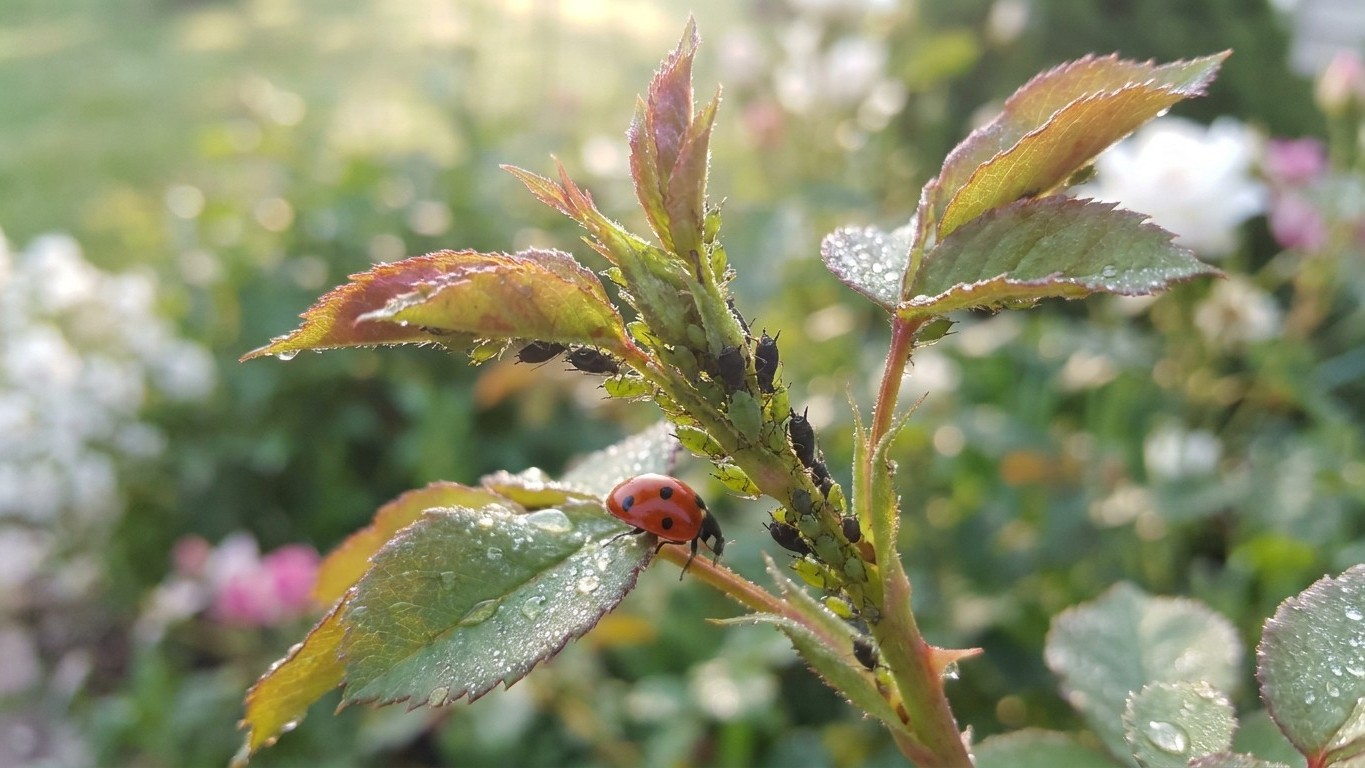

Aphids show up in Ohio gardens as early as mid-April on emerging perennials and stick around through October, with two population spikes: one in late May to early June, and a second, often bigger one in late August through September when cool nights and lingering warmth create ideal breeding conditions. Ladybugs, lacewings, a strong blast of water, and insecticidal soap stop most infestations within a week or two if you catch them early.
Ohio’s climate, humid summers, mild springs, and a fall that often stretches into late October, gives aphids more chances to reproduce than gardeners expect. A single female aphid can produce dozens of offspring without mating, and those offspring can start reproducing within a week. That’s why a few aphids on a rose bush in June can turn into a sticky, curling mess by July if nothing intervenes.
When Aphids Actually Show Up in Ohio

Timing depends heavily on which part of the state you’re in. Southern Ohio counties near Cincinnati and Portsmouth typically see aphids activate two to three weeks earlier than the Cleveland or Toledo areas, simply because soil and air temperatures climb sooner. Once daytime temps hold steady above 60°F, overwintering aphid eggs hatch and nymphs start feeding on the tender new growth of maples, roses, and vegetable seedlings.
Ohio State University Extension entomologists note that aphid populations track closely with temperature swings rather than calendar dates. A warm March followed by a mild April can push activity up by two weeks compared to a slow, cold spring. That’s part of why some years feel like an aphid invasion overnight, when in reality the insects just caught a break with the weather.
Spring Wave: April Through June
The first wave hits new growth hardest. Rose buds, maple leaf tips, and vegetable transplants like tomatoes and peppers are common early targets. This is also when aphids do the most cosmetic damage, curling leaves and leaving behind the sticky substance called honeydew that later grows black sooty mold.
Late-Summer Surge: August Into September
The second wave is often worse for homeowners because it coincides with harvest season. Aphids cluster on brassicas (cabbage, kale, broccoli), on the undersides of squash leaves, and on ornamental shrubs stressed by summer heat. Cooler nights in late August slow down some predator insects before they slow down the aphids themselves, giving pest numbers a temporary edge.
Which Aphid Species Turn Up Most in Ohio
Not every aphid in Ohio behaves the same way, and knowing the species helps target control.
- Green peach aphid – found on vegetables and ornamentals statewide, a major concern because it also transmits plant viruses.
- Rose aphid – shows up almost every spring on rose bushes, often visible in dense clusters on new buds.
- Melon aphid (cotton aphid) – common on cucumbers, squash, and melons through midsummer.
- Woolly aphid – recognizable by its white, cottony coating, often seen on apple, elm, and beech trees in late summer.
- Soybean aphid – a serious agricultural pest across Ohio’s row-crop counties, watched closely by Ohio State University’s field crop entomology program because of its yield impact.
Home gardeners mostly deal with the first four. The soybean aphid matters more if you live near farmland or grow soybeans in a larger garden plot, since populations there can build fast enough to require monitoring through July and August.
What Actually Stops Aphids in an Ohio Yard
Control works best when it matches the size of the problem. A few dozen aphids on one rose stem need a different response than a full infestation coating an entire pepper plant.
Biological Control: Let Predators Do the Work
Ladybugs and their larvae are the most efficient aphid predators found naturally in Ohio yards, and a single ladybug larva can eat 400 or more aphids before reaching adulthood. Green lacewings and hoverfly larvae are nearly as effective. Planting dill, fennel, yarrow, or alyssum near vegetable beds draws these predators in naturally, since the tiny flowers provide nectar for adult lacewings and hoverflies even when aphid numbers are low.
Avoiding broad-spectrum insecticides is part of this strategy too. Spraying at the first sign of aphids often kills the predators that would have solved the problem within days, leading to a rebound infestation that’s worse than the original one.
Mechanical and Cultural Control
A strong stream of water from a garden hose knocks aphids off plants and they rarely climb back. This works especially well on roses and vegetable transplants where infestations are still localized to a few stems. Repeating this every two to three days for a week usually breaks the cycle before populations rebuild.
Pruning out heavily infested shoots and disposing of them (not composting, since eggs and nymphs can survive) removes a large percentage of the population in one step. This matters most with woolly aphids on trees, where colonies cluster tightly on specific branches.
Insecticidal Soap and Horticultural Oil
For infestations that water alone won’t fix, insecticidal soap breaks down the aphids’ outer coating on contact and has minimal impact on beneficial insects once it dries. Horticultural oil works similarly and is often preferred for dormant-season application on trees and shrubs before buds break in spring. Both need direct contact to work, so thorough coverage on the undersides of leaves, where aphids cluster, matters more than the product itself.
Why Aphids Cause Bigger Problems Than They Look
The damage isn’t just cosmetic curling. Aphid feeding weakens plants by removing sap they need for growth, and the honeydew aphids excrete creates a breeding ground for sooty mold, a black fungus that blocks photosynthesis on leaf surfaces. On vegetable crops, some aphid species spread plant viruses as they move from plant to plant, which is a bigger long-term threat than the feeding damage itself.
Ohio’s soybean fields illustrate the stakes at a larger scale. Soybean aphid outbreaks have historically forced Ohio growers to apply targeted insecticide treatments when populations cross an economic threshold, a benchmark Ohio State University’s Extension program tracks each season to help farmers time interventions correctly rather than spraying reflexively.
Ants and Aphids: A Partnership Worth Watching
Ants often show up wherever aphids cluster, and it’s not a coincidence. Ants feed on the honeydew aphids produce and, in exchange, protect aphid colonies from predators like ladybugs. This means an ant trail leading up a rose stem or tree trunk is often a signal that an aphid colony is already established higher up. Dealing with the ants alone won’t fix the underlying aphid problem, but it’s a useful early warning sign worth checking before damage becomes visible.
Sticky honeydew residue on patio furniture, car hoods, or sidewalks beneath trees is another common Ohio complaint, particularly with mature maples and lindens that host aphid colonies high in the canopy where they’re never spotted directly.
Checking new growth weekly during April through June and again in late August catches most infestations before they spread past a single plant or branch, which keeps control simple and avoids the need for repeated chemical treatments later in the season.