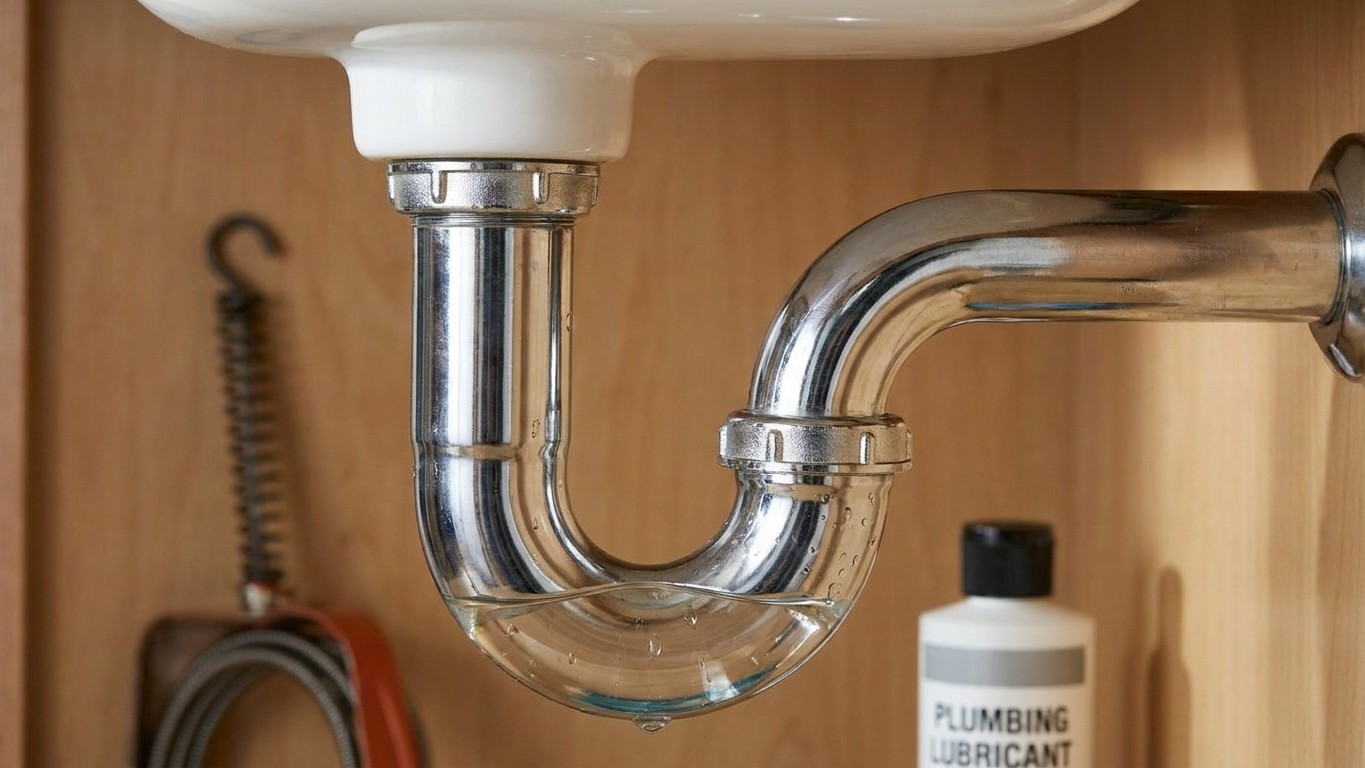

A drain that smells almost always means something dried out, not something broken. The most common cause is a dry trap: the small reservoir of water that normally seals off sewer gas has evaporated, usually in a floor drain, guest bathroom, or laundry sink that sits unused for weeks. Refill it and the smell often disappears within minutes. If it doesn’t, the cause runs deeper.
What is actually happening
Every drain in your house, from the kitchen sink to the basement floor drain, has a curved section of pipe called a trap. It holds a couple of inches of water at all times, and that water acts as a physical seal between your living space and the sewer or septic line. Sewer gas, a mix of hydrogen sulfide, methane, and other byproducts of decomposition, is under slight pressure in the pipe network. Without that water seal, it rises straight into your bathroom or kitchen.
Traps lose their water in a few predictable ways. Evaporation is the big one: a drain that isn’t used for two or three weeks (a basement floor drain, a shower in a spare bathroom, a laundry sink) will dry out on its own, no leak required. A second cause is a vent problem. Every trap needs a vent pipe that lets air in behind the draining water; without it, water can siphon the trap dry every time you flush a nearby toilet or run a full sink. That’s why a smell that shows up only after heavy water use elsewhere in the house often points to venting, not to the fixture itself.
A third mechanism is biofilm, the slimy buildup of soap scum, grease, and organic matter that clings to the inside of a drainpipe, usually in a kitchen sink or bathroom drain used daily. That film rots slowly and produces its own odor, one that smells more like rotten eggs or mildew than raw sewage, and it’s a maintenance issue rather than a plumbing failure. A fourth and less common cause is a cracked trap or a loose slip-joint connection under the sink, which lets sewer gas escape around the water seal instead of through it.
Knowing which mechanism you’re dealing with changes what you do next. A dry trap needs water. A vent problem needs airflow restored, sometimes by a plumber, sometimes by clearing a blocked roof vent. Biofilm needs cleaning. A cracked fitting needs replacing. Guessing wrong wastes time. Understanding the mechanism first tells you which of the checks below actually applies to your situation.
What to check, in order
Work through these in sequence. Each one costs nothing but a few minutes, and each result narrows down the cause before you spend money or call anyone.
- Run water in the suspect drain for 30 seconds. If the smell fades or disappears afterward, you had a dry trap, plain and simple. This is by far the most common outcome, especially in floor drains, guest bathrooms, and laundry sinks that see irregular use.
- Check whether the smell follows a pattern tied to other fixtures. If the odor shows up mainly after a toilet flush, A Washing Machine cycle, or a dishwasher run elsewhere in the house, that points to a venting issue, where water is being siphoned or pulled out of a trap by pressure changes in the shared pipe.
- Look and smell close to the drain opening versus under the sink. A smell that’s strongest right at the drain opening usually means biofilm buildup inside the pipe. A smell that’s stronger underneath, near the trap and slip joints, points toward a fitting problem rather than the drain itself.
- Inspect the trap and connections under the sink with a flashlight. Look for a damp ring, a drip trail, or actual standing moisture on the pipe or cabinet floor. Any dampness there means water is escaping the trap assembly, which is a different problem from a simple dry-out and won’t be solved by just running the tap.
- Note whether the smell is sewage-like or more like mildew and standing water. A sharp, sulfur, rotten-egg smell usually means sewer gas from a broken seal. A musty, damp smell more often means organic buildup or slow drainage rather than an open path to the sewer line.
- Check nearby floor drains and unused fixtures throughout the house. If several drains smell at once, especially ones connected to the same stack or vent run, the cause is more likely shared, such as a venting problem, rather than isolated to one fixture.
By the time you’ve gone through these six checks, you’ll usually know.
What it costs to leave it
A dry trap or biofilm buildup by itself doesn’t waste water, it’s just an odor problem. But a leaking trap connection, a cracked fitting, or a slow drip at a slip joint under the sink is a genuine water loss, and those add up faster than most homeowners expect. According to the U.S. EPA WaterSense program, “household leaks can waste nearly 1 trillion gallons of water annually nationwide,” and “the average household’s leaks can account for more than 9,300 gallons of water wasted every year.” The program also notes that “nine percent of homes have leaks that waste 50 gallons or more per day.”
Those figures come from a national conservation campaign, aggregated across millions of homes, and they’re useful for one thing here: scale. They tell you that a small, ignored drip under a sink is a common story, not a rare one, and that the industry-wide habit of putting these things off is expensive in aggregate. They don’t tell you what your specific leak is costing you, because your fittings, your water rate, and how long the leak has been running are all different from the national average.
The EPA also points out that “fixing easily corrected household water leaks can save homeowners about 10 percent on their water bills,” which is a meaningful number if your smelly drain turns out to be tied to an actual leak rather than just a dry trap. If you suspect water is escaping somewhere you can’t see (behind a cabinet, under a slab, inside a wall) your water meter is the only instrument that measures your own loss accurately. This site’s guide on finding a hidden leak walks through how to read your meter for exactly that purpose, and it’s worth doing before you assume a smell is only cosmetic.
When to stop and call a plumber
Most smelly drains are solved with a bucket of water, a bottle brush, or a quick look under the sink. But there are lines you shouldn’t cross on your own, and they’re worth stating plainly rather than leaving to judgment in the moment.
Stop and call a licensed plumber if the smell or any suspected leak is coming from behind a wall or under a slab, where you can’t see the pipe and can’t confirm what’s actually happening without opening finished surfaces. Stop if the issue involves the main water supply line rather than a single fixture drain. That’s not a DIY repair, and shutting off water at the wrong point can make things worse. Stop immediately if a gas water heater is anywhere near the smell or the suspected leak, since gas appliances and water damage together raise a safety concern that goes beyond plumbing. And stop the moment you see wet drywall, a sagging ceiling, warped flooring, or any sign that a leak has already reached structural material, because at that point the damage is active and spreading, not just a smell to be traced.
In any of these situations, knowing where your main shut-off valve is and how to use it buys you time before the plumber arrives. This site’s page on locating and operating your shut-off valve covers exactly that, and it’s a five-minute read worth doing before you ever need it in a hurry.
Common questions
Why does my drain only smell sometimes, not all the time?
Intermittent odor usually points to a dry trap that gets replenished occasionally by other water use, or a venting issue that only pulls water out of the trap under specific conditions, such as a full washing machine drain cycle or several toilets flushing close together.
Will pouring bleach or a chemical drain cleaner down the drain fix the smell?
It might mask an odor temporarily if the cause is surface biofilm, but it won’t refill a dry trap, won’t fix a venting problem, and repeated use of harsh chemicals can damage older pipe materials over time. Identify the mechanism first.
Is sewer gas from a dry trap actually dangerous?
In small, occasional amounts from a single dry trap, it’s more of a nuisance than a hazard, but sewer gas contains compounds that are unpleasant to breathe regularly and, in enclosed or poorly ventilated spaces, can build up. A persistent smell shouldn’t be ignored long-term even if it seems minor.
How often do I need to run water in rarely used drains to prevent this?
Running water for 30 seconds every two to three weeks in floor drains, guest bathrooms, and other low-use fixtures is generally enough to keep the trap seal from evaporating between uses.