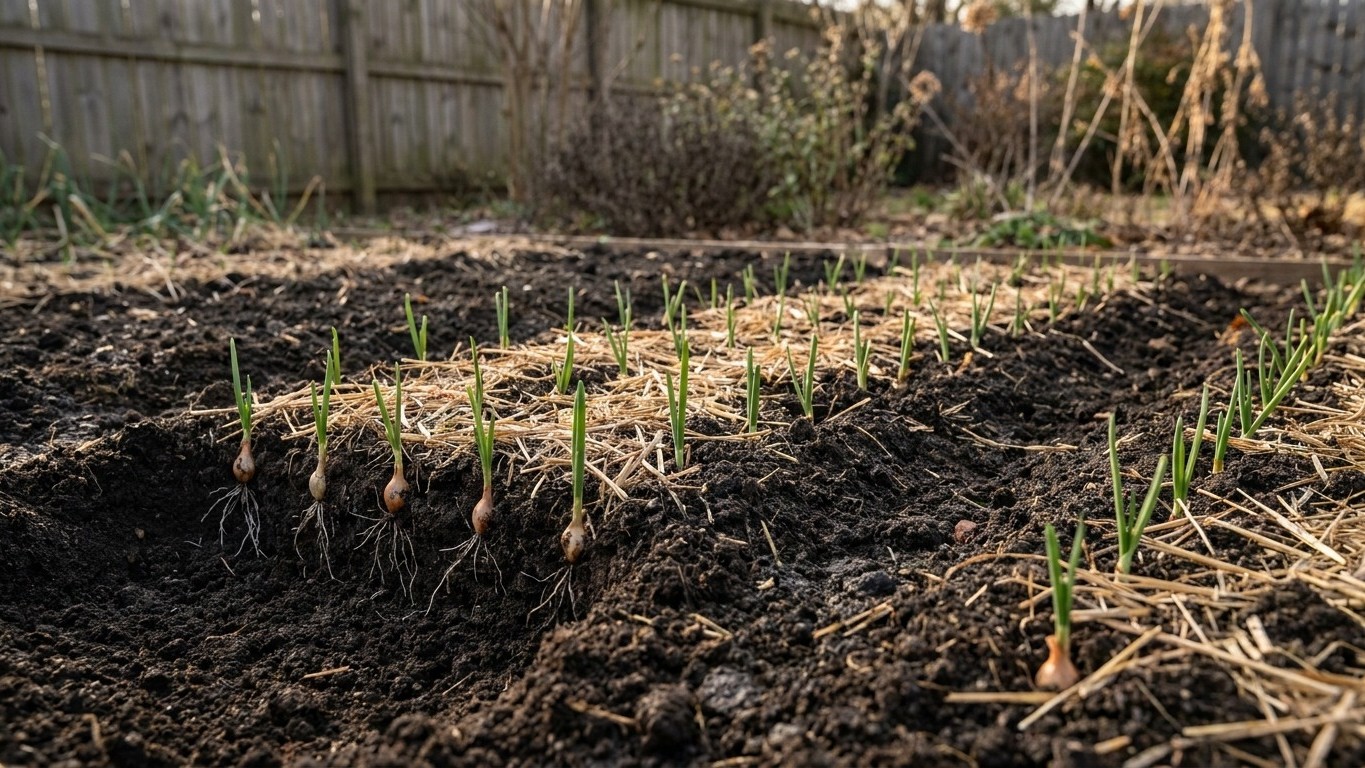

Garlic planted in a Prince Edward Island fall stays in the ground through the winter and most of the next growing season, so trouble can arrive at three different moments. Soil-dwelling larvae go after cloves and roots. Leaf and stem feeders show up in spring and early summer. Some pests ride in on the planting stock itself. Which one you face depends on timing, and the first symptom is almost never the insect.
Which pests attack garlic in Prince Edward Island
Prince Edward Island Agriculture is the provincial service that documents crop pests on the island, and it is where a name gets confirmed. Garlic is a small crop here, so it is more useful to sort the trouble by how the damage happens than to memorize a long list of insects. Three groups cover most of what home growers meet.
The first group lives in the soil and chews on cloves and roots. It works after planting, before the ground freezes, and again once the soil warms in spring. The second group feeds on the green growth: chewers that rag the leaf edges, and tunnelers that bore into leaves or the base of the stem. The third group is microscopic or nearly so, and it travels inside the cloves you plant. Worm-like organisms in the stem and bulb and mites on the cloves belong here, which is why seed source matters as much as anything you do in the bed.
Some insects you will see near the row do not belong on the list. The pests that go after the island’s big crops, such as potatoes, apples and blueberries, feed on those plants’ leaves or fruit. A beetle or caterpillar sitting on a garlic leaf is often just passing through, and treating it wastes time. The same goes for tree pests. They have no reason to be in a vegetable bed, and a bulb crop does not offer them what they came for.
Confirm the name with the province before you treat anything. A wrong guess costs a whole season, because garlic gives you one chance a year. Grocery-store garlic deserves particular suspicion as planting stock, since you cannot know what the bulbs carried in. Seed garlic from a local grower, matched to the island’s winters (the Garlic Varieties That Suit Prince Edward Island Winters guide covers the choices), starts you with cleaner cloves.
When each one shows up, and what it does first
The calendar starts at planting. The mean first fall frost at the Charlottetown A station is October 17, according to Environment and Climate Change Canada’s Canadian Climate Normals for 1981-2010. That date is a midpoint. In about half of years the first frost comes earlier, in the other half later, and northern or upland districts can differ from Charlottetown by weeks. Count back from your own first frost, as the When to Plant Garlic in Prince Edward Island: Counting Back From the First Frost guide lays out, and the pest calendar follows from there.
In the weeks after planting
Soil feeders are active while the cloves put out roots. You will see nothing at the time, which is what makes them hard to catch. The sign comes the following spring: gaps in the row where cloves never emerged, or shoots that come up thin and weak. Dig one of the gaps. A hollowed or scarred clove points to something feeding below ground, while a clove that is simply soft points toward rot.
As shoots emerge after snowmelt
Spring is when leaf feeders start. What you notice first is ragged edges, small translucent patches or thin tunnels inside the leaf blade. Damage like this on the first leaves tells you the pest arrived early, while the plant was still small, and young plants have the least reserve to lose.
While the bulbs swell, then after lifting
Once bulbs begin to size up in early summer, the first symptom is usually yellowing that starts at the leaf tips. If the cause is at the base, the plant often lifts out of the ground with almost no resistance. Pests carried in on the cloves can show up late as well, as stunted plants or bulbs that look wrong when lifted. They also continue in storage, where cloves turn soft, dusty or shriveled during curing and afterward. Check bulbs again a few weeks into storage, not only on the day you lift them. Growers in colder Quebec follow the same sequence on a different frost date, as the When to Plant Garlic in Quebec: Counting Back From the First Frost guide shows.
Telling the damage apart from everything else
Yellow leaves, stunted plants and soft bulbs have many causes, and insects are only some of them. Dry soil, poor drainage, nutrient shortage, disease and a stray hoe blade can produce the same look. The table pairs common symptoms with what separates them.
| What you see | Possible causes | What settles it |
|---|---|---|
| Yellow tips in early summer | Dry soil, low nutrients, disease, feeding at the base | Pull one plant. Look at the roots and the base of the stem, and check how moist the soil is a few inches down. |
| Ragged leaf edges | Chewing insect, wind or hail, hoe nicks, mulch dragged across leaves | Mechanical damage tends to be clean and in one direction. Feeding leaves uneven edges, and sometimes droppings. |
| Gaps in the row, weak shoots | Cold or waterlogged soil, a problem in the seed stock, feeding below ground | Dig a gap. Firm white roots point to the soil conditions, while chewed roots or a scarred clove point to feeding. |
| Soft base with fuzzy growth | Disease | Visible fuzz, a sour smell, or a pattern across the whole low spot in the bed all suggest disease more than insects. |
| Stunted, twisted plants | Problem carried in the cloves, nutrient shortage | Compare with neighbors planted from a different seed source, and bring a sample to the provincial agriculture office. |
Dig up one affected plant, roots and all, before you decide anything. A guess made from the leaves alone is wrong often enough to matter.
What actually works here, and what is a waste of time
On a short season, timing does more than any product. A physical barrier laid at the right moment beats a treatment applied late. Put floating row cover over the bed as shoots emerge in spring, and seal the edges before the first adults arrive. Covering after the first damage only traps what is already inside. Check the edges every few weeks, because a gap lets pests in and keeps them there.
Rotation is the second tool. Soil pests and the microscopic ones build up where garlic, onions and their relatives grow in the same bed year after year. Move garlic to a bed that has gone several seasons without any of them. Start with clean seed from a grower you can ask questions of, and pull any plant that looks wrong early. Throw it in the trash and keep it out of the compost pile, where it can carry the problem into next year’s soil.
Drainage helps more than people expect. Cloves sitting in cold, saturated soil over winter are weak to begin with, and weak plants invite trouble. A raised bed or a slightly sloped site costs little compared with a lost crop. Planting at the right time also matters: cloves should root well in fall without pushing much top growth before winter.
Some common habits waste effort. Spraying on a calendar date without knowing the pest hits nothing in particular and can harm beneficial insects. Spraying after the leaves yellow is usually too late, because the larvae are already inside the stem or bulb. Replanting your own cloves from a bed that had problems carries them forward. What is registered for home use on the island changes, and the provincial agriculture service is the only source that knows what is currently allowed.
Where to check this for your own county
Start with Prince Edward Island Agriculture, the provincial service that covers crop pests and what is registered for use. Ask for the contact who serves your county (Prince, Queens or Kings) and describe what you see, using the symptoms in this guide as a vocabulary.
Pest pressure varies inside the province. A pest reported in one part of the island may not have reached another, and a province-wide record says little about what is in your garden. Frost timing varies as well, and the Charlottetown A date of October 17 is a midpoint for one station, not a promise for every district. If you are choosing what to plant, the Growing Garlic in Prince Edward Island guide covers the full season. Gardeners comparing climates may also want Garlic Varieties That Suit Quebec Winters.
Before you order seed garlic this fall, call the provincial office and ask what has been showing up in your area this year. Then lift one plant from next summer’s crop, set it beside a healthy one, and take both in.
Common questions
Can I plant garlic from the grocery store?
It is a poor bet. You cannot tell where the bulbs came from or what they carried, and varieties sold in stores may not suit island winters. Seed garlic from a local grower gives you cleaner cloves and a variety matched to your conditions.
Will pests eat my garlic over the winter?
Soil feeders can work on cloves in the weeks after planting, before the ground freezes. You usually only learn about it in spring, when cloves fail to emerge. Digging a gap in the row tells you more than the leaves will.
Are yellow leaves always a sign of insects?
No. Dry soil, poor drainage, nutrient shortage and disease can all cause yellowing. Pulling one plant and checking the roots and base is the quickest way to tell them apart.
Can I plant garlic in the same bed every year?
It is better not to. Pests that feed on garlic and its relatives build up in the soil when the crop stays put. Moving to a bed that has been free of them for several seasons keeps pressure down.