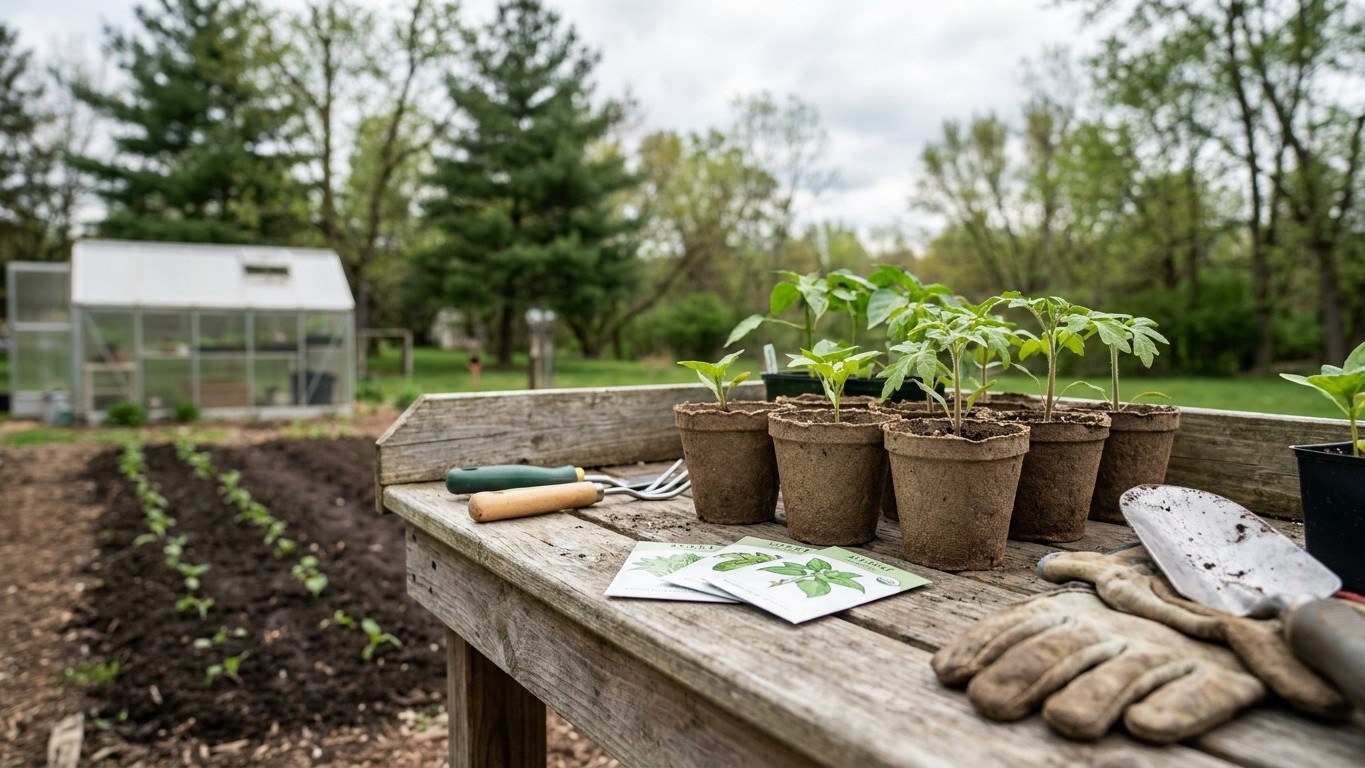

In Prince Edward Island, April sits well ahead of the average last frost, so almost nothing goes into open garden soil this month. The safe outdoor work is narrow and hardy: garlic or shallots where the ground has thawed enough to work, cold frames, dormant planting. Most of the real action happens indoors, starting the seedlings that will fill the garden once the soil warms and the frost risk finally clears.
What goes in the ground in April

The calendar says spring. The soil disagrees. Prince Edward Island sits in Canadian hardiness zone 5b, a rating from Natural Resources Canada built on seven climate variables, not the single-temperature USDA scale used across the border. That number matters less than what it implies for April: a red clay-loam soil that holds winter cold and spring meltwater far longer than the air temperature suggests. A mild afternoon does not mean the top six inches of soil have warmed enough for seeds to germinate reliably.
The frost window itself is the bigger constraint. At the Charlottetown A station, the average last spring frost lands on May 16, based on Environment and Climate Change Canada’s 1981-2010 climate normals. That date is a midpoint, not a guarantee. In one year out of two, frost arrives later than May 16, sometimes well into the month. Anything planted in April is planted three to six weeks before that average line, with real odds of a colder-than-average spring stretching the gap further.
Against that backdrop, only a short list makes sense outdoors this month, and only where the ground has actually thawed and drained.
| Crop | Cold tolerance | April action |
|---|---|---|
| Garlic, shallots | Very high | Plant if missed in fall and ground is workable |
| Peas | High | Direct sow once soil is no longer waterlogged |
| Onion sets | High | Plant late April in workable soil |
| Spinach, hardy greens | Moderate to high | Direct sow under row cover |
| Tomatoes, peppers, squash | None | Keep indoors; do not risk outside |
Nothing on that warm-season row belongs outside in April here. Treat any mild stretch as a preview, not permission.
What to start under cover
Count backward from that average May 16 frost date rather than forward from the first of the month, and April lines up as a working window for several crops, with the same caution attached: because the real frost can land later than average, transplant dates should lean cautious, not optimistic.
Tomatoes, peppers and eggplant need roughly six to eight weeks indoors before they can safely move outside, which puts their seed-starting window in the second half of March through mid-April for anyone who has not already begun. Slower growers such as onions from seed, leeks and celery need ten to twelve weeks, so April is late for those unless the goal is a smaller fall crop. Quick cole crop transplants, cabbage, broccoli, and kale started for early transplanting, only need four to six weeks and fit comfortably into an April start for setting out under cover once the weather steadies.
Two mistakes show up every season. Start too early relative to that eight-week window and the tomatoes turn leggy and rootbound long before the ground or air is ready for them, stretching toward a window that isn’t tall enough and stalling once transplanted. Start too late, waiting for warmth that feels more convincing, and the plants never build the root mass needed to handle a Island growing season that itself ends at an average first fall frost of October 17. Splitting the difference, starting cole crops now and holding tomatoes to a firm six-to-eight-week count from mid-May, keeps both risks in check.
What is ready to pick
Little to nothing comes out of open ground in Prince Edward Island in April, and there is no honest way around that. What still reaches the table comes from storage and from indoor effort, not from the garden bed.
Root cellars and cold storage rooms are doing their last real work of the season. Potatoes, winter squash and stored onions should get a hands-on check now: press gently for soft spots, look for sprouting eyes on potatoes, sniff for the sour smell that signals an onion has started to break down. Pull anything questionable out before it spreads to the rest of the bin. Squash with a soft patch near the stem end is usually a day or two from spoiling and should be used first.
Anyone who kept a cold frame running through winter may still be pulling hardy greens, spinach, mache, kale, from under the glass, since these tolerate the freeze-thaw cycle better than the open bed does. Indoors, sprouts and microgreens fill the gap in under two weeks from seed, and rhubarb forced in a dark, warm corner of the basement or garage since late winter is often ready to cut by now, producing pale, tender stalks weeks ahead of anything the outdoor plant will offer.
The jobs that matter this month

April earns its keep through preparation, not harvest, and the list of real deadlines is long enough that skipping any one of them shows up later in the season.
Dormant pruning of apple trees, pears and berry canes needs to finish before buds swell and break, since cuts made after growth starts cost the plant stored energy it needs for the season ahead. Soil testing and amending should happen now too, while beds are still empty and lime or compost has time to work into the profile before anything is planted into it. PEI’s red clay-loam soil compacts easily when worked wet, so testing moisture by squeezing a handful, if it holds a tight ball, it is too wet to till, saves real structural damage.
Seed catalogs thin out fast this time of year, so any variety not yet ordered risks being unavailable when the sowing window actually opens. Turning the compost pile, cleaning and sharpening pruners and hoes, and repairing raised bed frames, fencing and cold frame glazing all belong on the same list, because each becomes harder to fit in once transplanting starts in earnest. Planning next season’s crop rotation, deciding which bed grows brassicas versus nightshades versus legumes, is a ten-minute task now and a forgotten one later. None of this is filler work. It is the difference between a garden that starts smoothly in May and one that starts a month behind.
What not to do in April
The classic April mistake in this climate is trusting the air instead of the soil. A run of sunny, 60-degree afternoons feels like spring, but the ground beneath it can still be five to ten degrees colder, cold enough to rot squash or bean seed before it germinates. Wait for the soil itself to warm, not for a warm week in the forecast.
A second mistake is pulling mulch, row cover or cold frame lids off too soon after a mild stretch. Because the average last frost of May 16 is a midpoint, not a cutoff, a false spring in April is routinely followed by a hard freeze in early May that catches uncovered plants completely exposed. Keep protective covers on standby even after removing them once, and be ready to put them back.
Working wet clay soil is a slower but equally costly error. Tilling or digging PEI’s red soil while it is saturated collapses its structure into dense clumps that can take a full season to loosen again. Let it dry to the point where a squeezed handful crumbles rather than holds its shape. Finally, resist feeding nitrogen early to plants that are barely growing. Cold soil slows root uptake and microbial activity, so nitrogen applied now often washes away or sits unused, doing nothing but wasting the application and risking runoff.
Checking this against your own county
A province-wide month is a starting point, not an instruction. Prince Edward Island’s frost windows shift by real weeks depending on where a garden sits: coastal areas near Charlottetown moderate faster in spring than inland or northern districts like Tignish and North Cape, and low-lying fields hold frost longer than a gentle slope nearby. Elevation and proximity to water both move the practical planting date in ways a single average cannot capture.
For local variety recommendations and season updates specific to a county, the Prince Edward Island agriculture and land service is the right place to check before committing seed to soil.
Common questions
Can I plant potatoes in Prince Edward Island in April?
Generally not yet. Potato soil needs to be workable and reasonably warmed, and April ground here is often still cold and wet from snowmelt. Most Island growers wait until soil dries out in May.
When is it safe to plant tomatoes outside in Prince Edward Island?
Not before the frost risk has genuinely passed. The average last frost at Charlottetown A is May 16, but that figure is a midpoint, meaning frost lands later than that in about half of all years. Waiting until late May, with row cover ready as backup, is the safer approach.
What hardiness zone is Prince Edward Island for gardening?
The reference city sits in Canadian hardiness zone 5b, a rating from Natural Resources Canada based on seven climate factors. It is not a USDA zone and should not be compared directly to the single-variable USDA scale used in the United States.
Can I start seeds indoors in April in Prince Edward Island?
Yes, and it is one of the most useful things to do this month. Tomatoes, peppers and eggplant fit the six-to-eight-week window before the average frost date, while quick cole crop transplants can still be started for early setting out under cover.
Gardeners who plant by the Moon can check the April 2027 moon planting calendar, a tradition rather than a proven method.