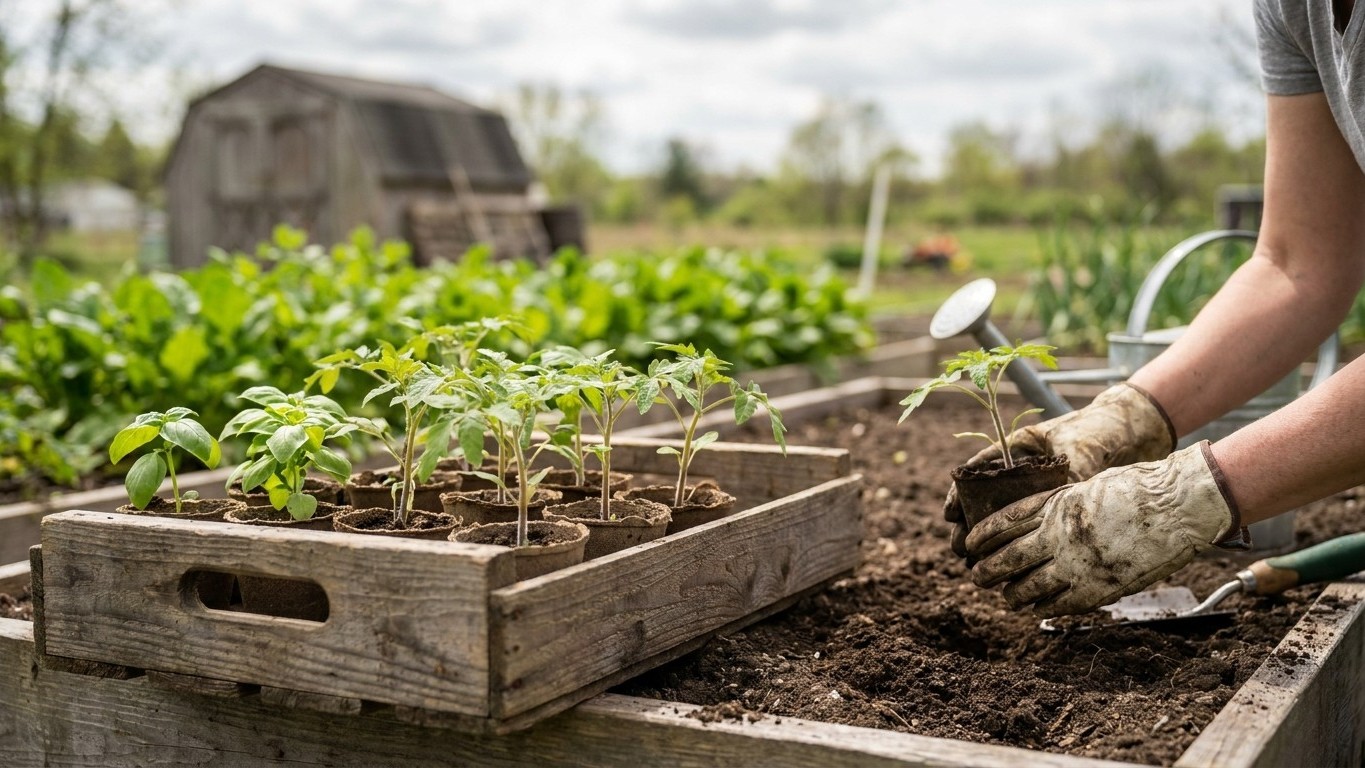

By May in Prince Edward Island, the soil has usually thawed enough to work, but the average last spring frost doesn’t arrive until May 16, and that’s a midpoint, not a guarantee. Hardy greens, alliums, and peas can go in the ground once soil is workable. Tomatoes, squash, and other tender crops still need to wait, whether started indoors or held off entirely until frost risk clears.
What goes in the ground in May

The decision here isn’t the calendar page you’re looking at. It’s soil temperature, and how far you are from that average last frost of May 16 recorded at the Charlottetown A station. That date is a mean pulled from Environment and Climate Change Canada’s 1981-2010 climate normals, which means in roughly one year out of two, frost shows up later than that. Treat it as the center of a window, not a finish line you can plant past safely.
What this means in practice: early May soil across most of the Island is still cold and often wet, especially in clay-heavy fields. Hardy crops don’t mind. Spinach, arugula, lettuce, and kale seedlings can go direct into the ground as soon as it’s dry enough to rake without clumping. Peas are a classic early planting here, tolerating light frost and germinating in soil that would rot bean seed. Onion sets, leeks, and shallots also go in early, since they’re built for a slow cool start.
Root crops follow the same logic. Carrots, beets, and radishes can be direct-sown once the soil crumbles rather than smears, typically mid-to-late May in most of the province, later in colder inland or northern pockets. None of these need frost protection once up.
What’s a gamble is anything in the tomato, pepper, squash, bean, or corn family going into open ground this month. Even toward the back half of May, you’re betting against a coin that comes up frost about half the time. The safer play for those crops is to keep them under cover, hardening off outdoors during the day, and hold transplanting until the frost risk has clearly passed in your specific location, which for many parts of the Island runs into early June, not late May.
The province sits at Canadian hardiness zone 5b for the reference station used in these figures, a rating built from seven combined climate variables under the Canadian system, not the single-variable USDA scale used elsewhere in the U.S. Don’t try to convert it to a USDA number: Natural Resources Canada is explicit that the two systems don’t map onto each other cleanly, and a given Canadian zone can span multiple USDA zones. Use it as a general reference for the region, not a precise line for your yard.
What to start under cover
For anything you still need started from seed for later transplanting, count backward from that same average last frost of May 16, not forward from today’s date. Cucumbers, summer squash, and melons are typically started under cover 3 to 4 weeks before the intended transplant date. If you’re aiming to set them out in early June, once frost risk has genuinely passed, that puts the sowing window for these squash-family crops squarely in May.
Tomatoes and peppers run on a longer clock, usually 6 to 8 weeks before transplant. If those weren’t started earlier, starting them now under cover still works, but expect a later transplant and a shorter harvest window before the average first fall frost of October 17 closes things down. That’s a real tradeoff worth naming rather than glossing over: a late-started pepper plant may still produce, just less than one started on schedule.
The two ways this goes wrong are opposite problems. Start too early relative to your transplant date, and you get leggy, rootbound seedlings sitting in small trays for weeks past when they should have gone in soil, stretching toward light and losing vigor. Start too late, and you run the plant out of the season entirely, especially with the fall frost mean sitting at October 17 rather than some later, safer date.
Do the arithmetic for your own timeline: pick the date you actually expect to transplant outdoors, based on your local frost pattern rather than the province-wide average, then count back the weeks specific to that crop. A cucumber started this month for an early June transplant is on schedule. The same cucumber started in April would have been sitting indoors far too long by the time soil and air are reliably warm.
What is ready to pick
Very little comes out of open ground in Prince Edward Island in May, and that’s normal rather than a sign anything went wrong. The real harvest this month is what made it through winter. Established rhubarb crowns push up fast once soil warms, and the first stalks are often pickable by late May in sheltered spots, pull rather than cut, and stop before the plant looks exhausted. Asparagus beds in their third year or older start sending up spears, harvested by snapping at soil level while they’re still thin and tight-tipped; once spears open into ferny growth, that flush is done for the day.
Overwintered greens under cold frames or row cover, if you kept any going through winter, are often the most reliable May harvest: kale, spinach, and hardy lettuce that sat dormant or slow-growing through the cold months put on fresh growth as light and warmth return, and they’re usually sweeter than a spring-sown planting simply because they had all winter to build sugars as cold protection.
Indoors, sprouts and microgreens fill the gap on a rotation of days rather than months, useful while outdoor harvest is still thin. It’s also worth a walk through the root cellar or storage area this month: squash, potatoes, and onions held since fall are approaching the end of their storage life by late spring, and any that are softening, sprouting heavily, or showing rot should be pulled and used or composted before they affect neighboring stock.
The jobs that matter this month

Soil preparation is the single job with the highest payoff in May, and it has a real deadline: beds worked while still slightly damp but not saturated break up cleanly, while beds worked too wet compact into clods that stay hard for the rest of the season. Testing soil now, before the bulk of planting, gives time to adjust pH or add amendments before crops go in rather than trying to correct mid-season.
Staking and support structures for peas, and cages for anything that will eventually sprawl, go in before plants need them, not after. A pea vine that’s already flopped is harder to train upright than one guided from six inches tall.
Mulching follows planting, not the other way around: mulch too early over cold, wet soil in early May and you trap the cold in rather than moderating it. Once soil has warmed and seedlings are established, a mulch layer conserves the moisture that hardy greens and peas need as the days lengthen and dry out.
Succession sowing matters for anything you want a continuous harvest from rather than one glut. Lettuce, spinach, and radishes sown every two weeks through May, rather than all at once, spread the harvest instead of dumping it all in a ten-day window.
Pest scouting starts now too, since early detection of slugs in damp beds or aphids on emerging brassicas is far easier to manage than an established infestation later in the season. And for orchard and cane fruit, any dormant pruning not finished earlier should be wrapped up before buds break fully open, since cuts made after leaf-out cost the plant more energy and heal more slowly.
What not to do in May
The classic mistake is trusting the air temperature over the calendar’s real signal. A warm, sunny stretch in early-to-mid May can feel like summer arrived, and gardeners push tomatoes, peppers, or squash into open ground because it “feels warm enough.” The soil rarely agrees. Cold soil around warm-season roots stunts growth even if the plant doesn’t die outright from a frost, and a late frost arriving after that warm spell, which happens in roughly half of all years given the May 16 mean, can wipe out the planting entirely. Wait for the soil, not the air.
Uncovering cold frames, row cover, or mulch too early after a mild week is the same mistake in reverse. Protective cover that gets stripped off during a warm spell leaves tender growth exposed exactly when a cold snap returns, and returning cold snaps in May are the rule here, not the exception.
Feeding nitrogen at the wrong point also causes real damage this month. High-nitrogen feed applied to young transplants before they’ve established roots pushes soft, leafy growth that’s more vulnerable to both frost and pests, rather than the sturdier growth that comes from a plant allowed to root in first. Hold nitrogen-heavy feeding until plants show active new growth, not immediately at transplant.
Checking this against your own county
Everything above is built from a single climate station, Charlottetown A, and Prince Edward Island isn’t one uniform climate. Elevation, distance from the coast, and simple north-south position shift these frost windows by real weeks, not days. A field near the water may see a later first frost in fall and an earlier last frost in spring than an inland or higher spot the same distance away. Use these figures as your starting estimate, then adjust based on what you’ve actually observed in your own soil and yard over past seasons. For local variety recommendations and planting guidance specific to Island conditions, the Prince Edward Island Department of Agriculture is the reference point worth checking directly.
Common questions
Is it safe to plant tomatoes outdoors in Prince Edward Island in May?
Not reliably. The average last frost is May 16, which means frost arrives later than that in about half of all years. Tomatoes and other tender crops are safer held under cover until frost risk has clearly passed in your specific location.
What can I direct-sow in Prince Edward Island in May without much risk?
Peas, hardy greens like spinach and arugula, and onion sets or leeks all tolerate the cool, sometimes wet soil typical of May here. Root crops such as carrots and beets can follow once soil crumbles rather than smears when worked.
What does Canadian hardiness zone 5b actually mean for planting decisions?
It’s a rating from Natural Resources Canada built on seven climate variables, distinct from the single-variable USDA system used in the United States. It gives a general sense of regional climate severity but doesn’t convert directly to a USDA zone number, and it reflects the reference station’s conditions rather than every microclimate in the province.
When does the growing season effectively end in Prince Edward Island?
The average first fall frost is October 17, again a mean date from Charlottetown A rather than a guaranteed cutoff. Frost can arrive earlier than that in roughly half of all years, which matters when planning how late to start warm-season crops in spring.
Gardeners who plant by the Moon can check the May 2027 moon planting calendar, a tradition rather than a proven method.