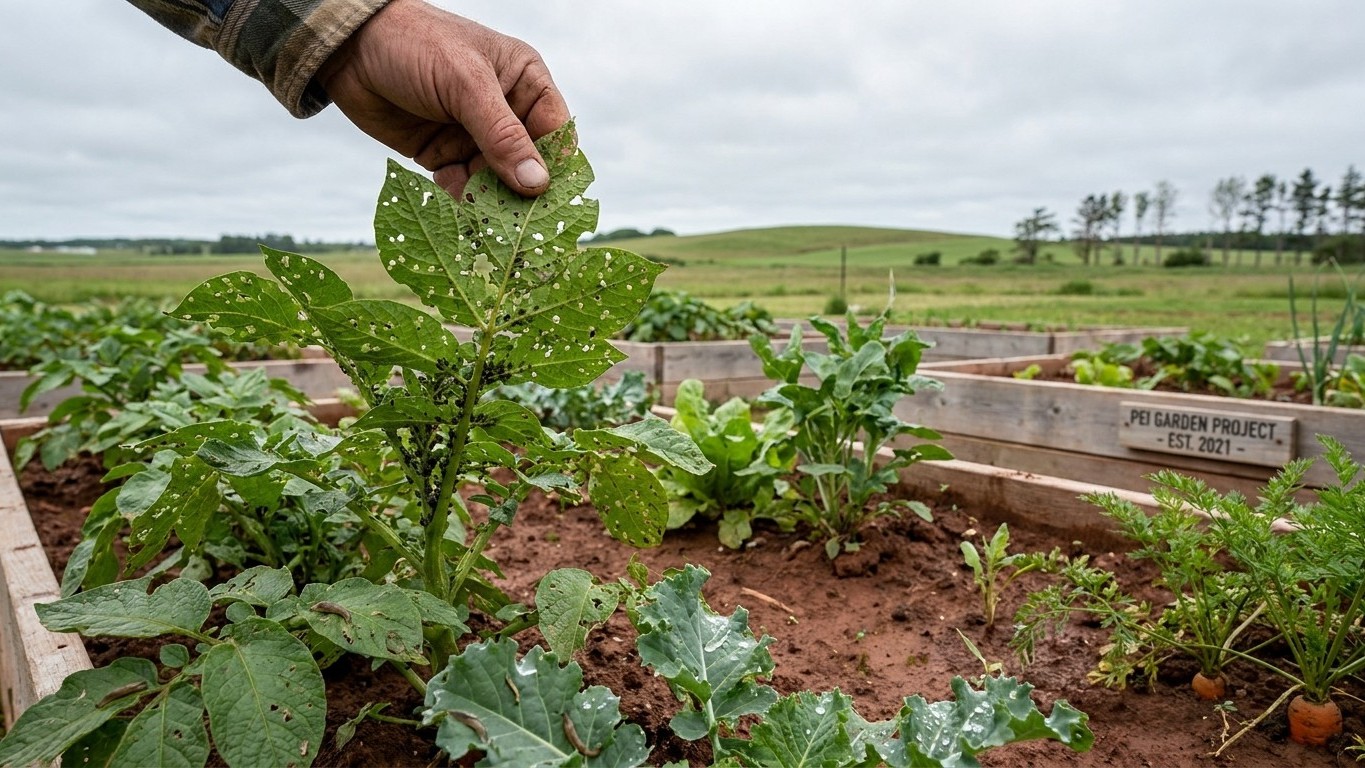

Prince Edward Island’s cool maritime climate and heavy potato and vegetable farming create a specific pest calendar: slugs and cutworms hit in spring, Colorado potato beetles and aphids dominate summer, and wireworms plus deer pressure carry into fall. Knowing the timing matters more than knowing the bug itself, because on the Island a two-week delay in treatment can mean the difference between a nibbled leaf and a wiped-out row.
PEI falls within Canadian plant hardiness zones 5b to 6a, with cool springs, humid summers, and a growing season that’s short but intense. That climate favors moisture-loving pests like slugs and certain fungal-adjacent insects, while keeping some southern pests (think Japanese beetle populations at the scale seen in New England) less established, though they’re creeping north as winters soften. The red, iron-rich soil that makes PEI famous for potatoes also holds moisture longer than sandy soils elsewhere, which changes how gardeners need to manage ground-dwelling pests.
Why PEI’s Pest Pressure Looks Different From the Rest of Atlantic Canada

Three things set the Island apart: intensive potato cropping, a short but wet growing window, and an almost total lack of natural windbreaks in open fields. Potato monocultures across large swaths of the province give Colorado potato beetle populations a reliable, uninterrupted food source year after year, which is part of why PEI has some of the most beetle-resistant beetle populations in North America, insects that have adapted to multiple insecticide classes over decades of exposure.
Home gardeners feel the ripple effect even if they’ve never grown a commercial potato crop. Beetles disperse from field edges into backyard gardens, aphids blow in on the same weather systems that bring the Island’s famous fog, and slugs thrive in the damp red clay that many residential yards sit on. Field edges also serve as a launch point for the Striped cucumber beetle in Prince Edward Island that gardeners contend with once cucurbits go in, alongside the Squash vine borer in Prince Edward Island that growers watch for as squash and pumpkin vines mature, while soft summer fruit crops face pressure from the Spotted wing drosophila Prince Edward Island gardeners often spot once berries start to ripen. Ornamental beds aren’t spared either, as the Lily leaf beetle Prince Edward Island populations chew through lily plantings across the province. Tree cover isn’t spared either, as the Emerald ash borer Prince Edward Island populations continue to spread and threaten ash trees along field edges and residential lots alike. A garden three miles from the nearest potato field can still see beetle pressure by mid-July.
Spring: Cutworms, Slugs, and Flea Beetles Wake Up First
The first pests to show up on PEI aren’t the most damaging over a season, but they’re the ones that can wipe out seedlings overnight. Cutworms, the larvae of several moth species, overwinter in soil and start feeding the moment temperatures climb into the 50s Fahrenheit, usually late April through May depending on the spring. They sever young transplants right at soil level. Spring is also when caterpillars from another moth pest become active outdoors, as gardeners notice the Winter moth in Prince Edward Island defoliating fruit trees and ornamentals just as buds begin to open. Browntail moth populations in Prince Edward Island emerge and begin feeding on shrubs and trees near gardens. Around the same time, gardeners deal with Seedcorn maggot in Prince Edward Island attacks on seeds and germinating seedlings underground before they even break the surface, while Cabbage maggot in Prince Edward Island targets brassica roots in that same cool, damp soil, a threat growers watch closely. Gardeners who’ve planted a tray of cabbage or tomato starts one evening and found half of them lying flat the next morning have met a cutworm.
A simple barrier stops most damage: a paper cup or cardboard collar pushed an inch into the soil around each transplant. It costs nothing and works better than most sprays for this particular pest.
Slugs arrive on the heels of the first warm rain and stay active well into fall thanks to the Island’s humidity. They’re drawn to lettuce, hostas, and anything soft and low to the ground. Beer traps work, but so does simply watering in the morning instead of the evening, since damp soil overnight is what slugs are hunting for. Diatomaceous earth around bed borders helps too, though it needs reapplying after every rain, which on PEI can mean every few days in a wet stretch.
Flea beetles show up around the same time and go straight for brassicas: radishes, arugula, and young broccoli transplants get peppered with tiny shot-hole marks within days of emergence. Floating row covers put on at planting time, before the beetles find the bed, are the most reliable fix home gardeners have. Once the beetles are established under the cover, it’s too late for that method to help.
Summer: Colorado Potato Beetle, Aphids, and Cabbage Worms Take Over
Colorado Potato Beetle
This is the Island’s signature pest, and for good reason. Adults overwinter in soil and field margins, then emerge in late spring to lay clusters of bright orange eggs on the undersides of potato and eggplant leaves. One female can lay several hundred eggs over her lifetime, and the larvae that hatch are voracious enough to strip a plant bare within a week if left unchecked.
Hand-picking remains genuinely effective for home-scale plantings, especially early in the season before populations build. Checking leaf undersides every two or three days from late May through June, crushing egg clusters and dropping larvae into soapy water, keeps most backyard potato patches manageable without any spray at all. Rotating where potatoes and eggplants are planted each year, rather than using the same bed, also cuts down on overwintering adults finding a ready meal right where they woke up.
Aphids
Aphids build up fast in the humid stretches of July, clustering on new growth of peas, kale, and roses. They’re rarely fatal to established plants but they stunt growth and excrete honeydew that attracts sooty mold. A strong jet of water from the hose knocks most colonies off, and it’s often enough on its own. Ladybugs and lacewings, both common in PEI gardens that aren’t heavily sprayed, do the rest of the work if given the chance.
Cabbage Worms and Carrot Rust Fly
Imported cabbageworms, the pale green larvae of the small white butterfly seen fluttering over brassica beds all summer, chew ragged holes in cabbage, kale, and broccoli leaves. Row covers installed before the butterflies start laying eggs remain the simplest control.
Carrot rust fly is a quieter threat because the damage happens underground. Larvae tunnel into carrot roots, leaving rust-colored trails that ruin the harvest even when the tops look fine. The fly is attracted to the scent released when carrot foliage is bruised or thinned, so thinning carrot rows in the evening, when the fly is less active, and covering beds with fine mesh from planting onward, cuts losses significantly.
Fall: Wireworms and Deer Move In as Growth Slows
Wireworms are the larval stage of click beetles, and they live in soil for up to five years before maturing, feeding on root vegetables the entire time. PEI’s history of long-term potato and grain rotations has left many properties with persistent wireworm populations in the soil, and home gardeners who’ve converted a former field or pasture into a vegetable bed often discover this the hard way when carrots and potatoes come up tunneled and scarred.
There’s no fast fix once wireworms are established, but a few practices reduce damage over a few seasons: rotating away from root crops for a year, planting mustard as a cover crop and tilling it in (its natural compounds have some suppressive effect on soil pests), and avoiding freshly broken sod for at least a year before planting susceptible crops.
Deer become a bigger issue as natural forage dries up in late summer and fall. Rural and semi-rural PEI properties bordering woodlots or hedgerows see the most pressure, with hostas, beans, and the tender tips of young fruit trees hit hardest. A fence at least 7 to 8 feet tall is the only truly reliable barrier; repellents and motion-activated sprinklers help but need rotating regularly since deer habituate to a static deterrent within a couple of weeks.
Building a Season-Long Prevention Routine
Most of the pests that trouble PEI gardens share a preference for the same conditions: damp soil, dense planting, and repeated use of the same beds for the same crops. A rotation plan that moves brassicas, potatoes, and root vegetables to different beds each year breaks the life cycle of several pests at once, since many of them, wireworms and Colorado potato beetles included, overwinter in the exact spot where their host crop grew.
Timing matters as much as the method. Row covers put on before pests arrive stop nearly everything; the same cover put on after an infestation just traps the problem inside. That’s why knowing the rough calendar, cutworms and slugs in spring, beetles and aphids through summer, wireworms and deer pressure into fall, changes how a gardener plans rather than just how they react.
Soil health plays a role too. Beds amended with compost tend to support healthier root systems that tolerate some pest feeding without collapsing, and they also support more of the predatory insects and ground beetles that keep pest numbers in check naturally. Overly wet beds, common on PEI’s heavier clay soils, favor slugs and some fungal issues that stress plants and make them more attractive to insect pests looking for an easy target.
For gardeners dealing with heavy infestations that go beyond hand-picking and covers, the Prince Edward Island Department of Agriculture and Land maintains updated guidance on regulated pests and integrated pest management practices specific to the province’s growing conditions, worth checking before reaching for a broad-spectrum insecticide that might do more harm to beneficial insects than good against the actual problem.
Three Pests Worth Watching Closely
Beyond the general seasonal rundown, a few pests on Prince Edward Island deserve their own close look, because each behaves in a way that catches gardeners off guard if they’re only half paying attention. Start with the emerald ash borer situation on the Island, where the current picture from provincial and federal forestry monitoring is more reassuring than in much of the rest of the country, though not without a catch worth understanding before you assume your ash trees are safe. Then there’s the lily leaf beetle’s sudden June arrival, which tends to announce itself the way it does across Atlantic Canada generally: nothing, nothing, and then a bed of lilies chewed to ribbons over a single weekend once the adults emerge. And for anyone growing soft fruit, it’s worth knowing exactly when the spotted wing drosophila becomes active, since it starts as soon as daytime temperatures hold above roughly 50°F for several days in a row, usually late May or early June, and doesn’t let up until well into the season. Each page walks through the specific timing and the specific fixes for that pest.