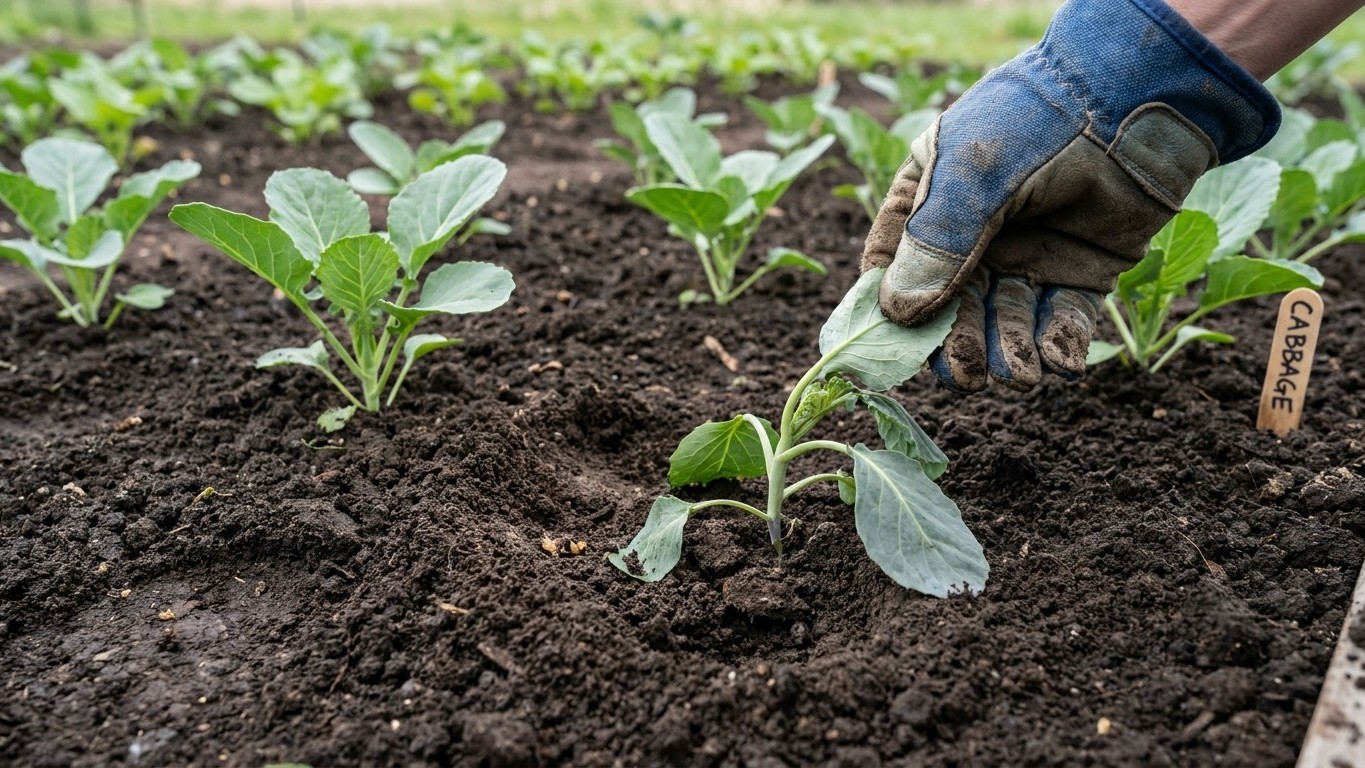

Cabbage maggot shows up in Minnesota gardens in two distinct waves each year: a spring flight that starts as soil temperatures climb into the low 50s (usually mid-April through May), and a second, smaller flight in late summer. The insect targets the root zone of cole crops, not the leaves, so most gardeners don’t notice trouble until a plant suddenly wilts on a warm afternoon for no visible reason. Row covers installed at transplant time, tight crop rotation, and avoiding the earliest planting window are what actually keep populations down.
When Cabbage Maggot Season Starts in Minnesota

The fly behind this pest, Delia radicum, overwinters as a pupa in the soil, usually just a few inches down, tucked into whatever bed hosted brassicas the previous fall. It doesn’t wait for calendar spring. It waits for soil temperature. Once the top few inches of dirt hold steady in the 50s Fahrenheit, adults emerge and start looking for host plants within days.
In most of the state, that means the first flight lands somewhere between mid-April and late May, with southern Minnesota gardens seeing activity a week or two ahead of the Iron Range or Arrowhead region. This timing overlaps almost exactly with when home gardeners are setting out their earliest broccoli and cabbage transplants, which is exactly the problem. Young, tender roots are the easiest target, and a transplant that just went into cool spring soil is already stressed before the maggots even arrive.
A second, usually lighter, generation follows in July and August. Minnesota’s climate typically supports two full generations per year, occasionally a partial third in a long, warm fall. That second wave tends to do less visible damage because plants are larger and root systems more established, but it’s still worth watching if you’ve got a fall planting of turnips, radishes, or Chinese cabbage going in.
How to Spot the Damage Before It’s Too Late
The adult fly looks almost exactly like a small housefly, gray-bodied and about a quarter-inch long, and it rarely gets noticed hovering around the base of plants. The real evidence shows up underground, which is why so many gardeners miss the early signs entirely.
Above soil, the tell is a plant that wilts during the heat of the day despite moist soil, then perks back up overnight. That on-again, off-again wilting is the classic symptom because the root system can no longer pull enough water to keep up with a hot afternoon. Seedlings and young transplants can die outright. Older plants usually survive but produce smaller heads, stunted growth, or roots riddled with tunnels that show up when you finally pull a struggling plant to investigate.
Below soil, the maggots themselves are small, cream-white, legless, and tapered at one end, usually clustered right at the base of the stem or tunneling into the taproot. Radishes and turnips show the damage most obviously since the root itself is the harvested part, and a maggot-riddled radish looks like it’s been through a woodworker’s drill bit.
Larvae vs. Adult Flies
It’s the larval stage that causes all the damage. The adult fly’s job is simply to lay eggs at the base of host plants, typically in the soil crack right where stem meets root. Eggs hatch in a matter of days, and the larvae immediately start feeding on root hairs before moving into larger roots. A single female can lay well over 100 eggs over her lifespan, which explains how a handful of flies in April can turn into a serious infestation by June if nothing interrupts the cycle.
Which Minnesota Crops Are Most at Risk
Cabbage maggot isn’t picky within the brassica family, but it does have favorites. Cabbage, broccoli, cauliflower, Brussels sprouts, radishes, turnips, and rutabagas are all fair game. Radishes and turnips tend to suffer the most visible damage because the maggots feed directly on the harvestable root, while cabbage and broccoli usually just show stunted or wilted growth above ground.
Kale and collards are somewhat less attractive to the fly, though not immune, and mustard greens sit somewhere in the middle. If you’re planning a Minnesota vegetable garden and want to hedge against a bad maggot year, leaning toward leafy brassicas over root brassicas in your earliest spring planting is one small way to reduce risk without giving up the crop family entirely.
What Actually Stops Cabbage Maggot
Prevention works far better than treatment once the larvae are already tunneling, since there’s no practical way to spray or drench a remedy that reaches maggots already inside root tissue. The strategies that hold up, based on decades of extension research across the Upper Midwest, focus on keeping the adult fly away from the plant in the first place.
Physical Barriers
Floating row covers are the single most reliable tool home gardeners have. Laid over the bed at transplanting and sealed tightly at the edges with soil or landscape staples, they physically block the adult fly from ever reaching the stem base to lay eggs. The catch is timing: covers need to go on before the first flight, not after you’ve already spotted wilting plants, and they need to stay sealed since flies will find any gap.
Cabbage collars, simple cardboard or plastic disks slipped around the base of each transplant, offer a lower-effort backup. They don’t block the fly entirely, but they make it harder for eggs to land right at the stem crack where hatching larvae have the shortest path into the root.
Timing and Rotation
Because the first flight is tied to soil temperature rather than the calendar, delaying transplant dates by even two or three weeks can let a garden dodge the worst of the spring flight. This means sacrificing some of that early-season harvest window, which is a real tradeoff for gardeners eager to get broccoli in the ground the moment the ground thaws, but it’s one of the cheapest, lowest-effort defenses available.
Crop rotation matters just as much. Pupae overwinter in the same soil where the host plant grew, so planting brassicas in the same bed year after year all but guarantees a resident population waiting to emerge each spring. Rotating cole crops to a different section of the garden, ideally with two to three years before returning brassicas to the same spot, breaks that cycle significantly. Community garden plots and small urban lots where rotation space is tight are exactly where this pest tends to become a recurring headache.
Removing crop debris in fall closes another loophole. Leaving old cabbage stems and roots in place over winter gives overwintering pupae shelter and a head start come spring. Pulling and disposing of brassica residue, rather than tilling it under, removes some of that habitat before the ground freezes.
Biological and Soil-Based Options
Beneficial nematodes, applied to the soil around transplants, have shown some success against root maggot larvae in university trials, though results vary with soil moisture and temperature at application. They work best as a supplement to row covers rather than a standalone fix, since nematodes need consistently moist soil to survive and move toward their target.
Diatomaceous earth sprinkled around the stem base can deter egg-laying adults somewhat, but it washes away with rain or irrigation and needs frequent reapplication to stay effective. It’s a reasonable backup layer, not a primary strategy.
Sticky yellow traps placed near brassica beds won’t stop an infestation on their own, but they’re a useful early-warning tool. A sudden jump in trapped adult flies tells you the spring flight has started, which is the cue to make sure row covers are sealed tight before egg-laying ramps up.
What to Do If You Already See Wilting Plants
Once wilting shows up, the plant’s root system is already compromised, and there’s no rescue treatment that reverses tunneling damage. Pulling and disposing of severely affected plants, rather than composting them, prevents any remaining larvae or pupae from completing their cycle in your garden. For plants with mild damage, extra water and a light feeding can sometimes carry them through to a smaller but usable harvest, particularly with cabbage or broccoli where the head, not the root, is what you’re after.
For root crops like radishes and turnips showing tunnel damage, there’s less flexibility. A maggot-damaged radish rarely improves, and the practical move is usually to harvest what’s salvageable and replant that section later in the season, timed to miss the second flight if possible.
Minnesota’s two-generation cycle means a bad spring doesn’t have to mean a bad whole season. Gardeners who lost an early planting to maggots often have good luck with a mid-summer sowing of fast-maturing radishes or turnips timed between the two flights, when soil conditions and fly pressure both tend to ease up for a few weeks.
Related guides
- Cabbage maggot in Wisconsin: When It Shows Up and What Stops It
- Cabbage maggot in New Brunswick: When It Shows Up and What Stops It
- Cabbage maggot in Newfoundland and Labrador: When It Shows Up and What Stops It
- Cabbage maggot in Nova Scotia: When It Shows Up and What Stops It
- Cabbage maggot in Prince Edward Island: When It Shows Up and What Stops It