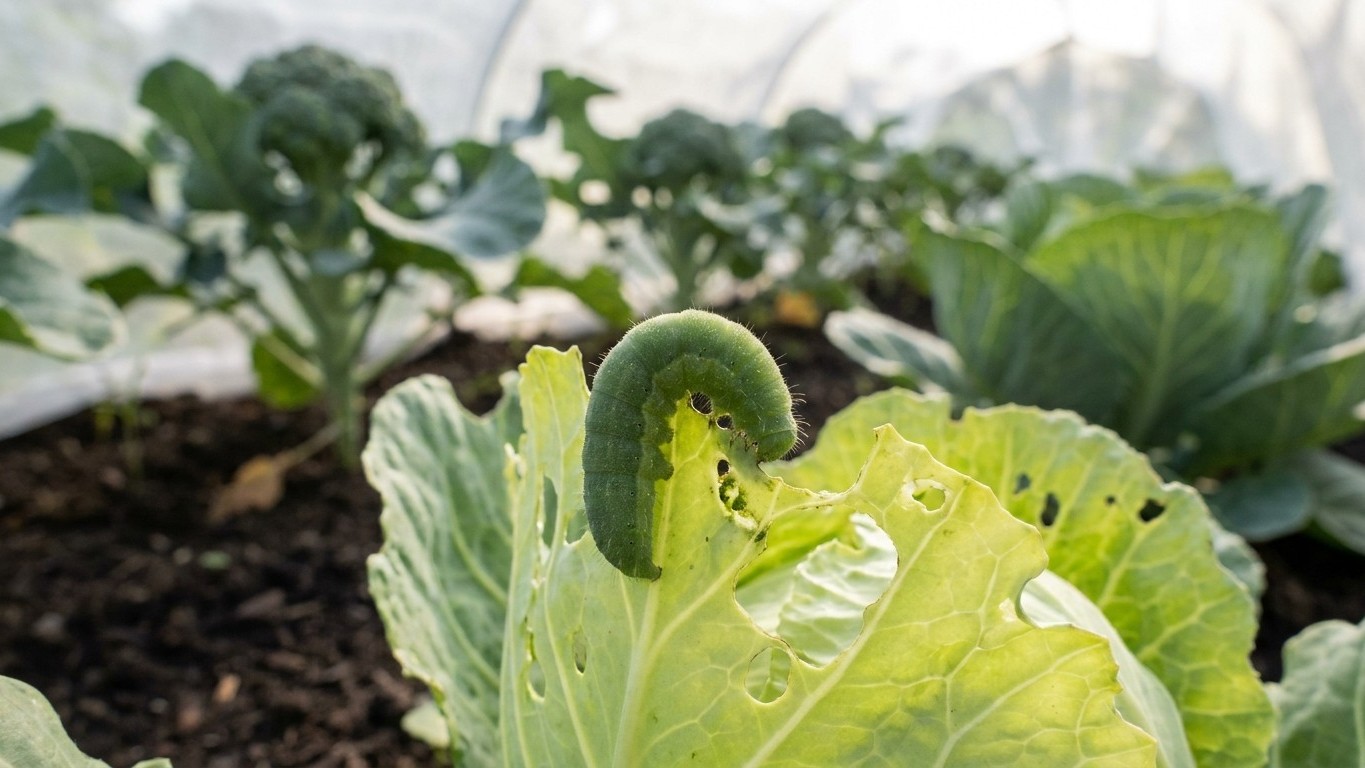

Imported cabbageworm larvae start chewing on Quebec brassicas as early as mid-June and keep feeding through late September, with the heaviest damage usually hitting in August when two overlapping generations are active at once. The good news: floating row covers installed before the first adults appear, combined with a well-timed Bacillus thuringiensis spray on young larvae, stop most infestations before they wreck a cabbage patch.
This pest (Pieris rapae) is one of the most common brassica feeders in home gardens and market farms across the province. It’s not native to North America, arriving from Europe over a century ago, but it settled into Quebec’s climate just fine. Understanding When It Shows Up and What actually interrupts its life cycle makes the difference between a few chewed leaves and a ruined broccoli crop.
Life Cycle and Timing in Quebec’s Climate

Imported cabbageworm overwinters as a pupa, usually tucked into plant debris, fence posts, or the undersides of garden structures near where host plants grew the previous season. Cold doesn’t kill the pupae. Quebec winters, even the brutal ones in the Laurentides or Saguenay-Lac-Saint-Jean, do little to reduce populations because the pupal case is built to handle freezing temperatures.
Adults emerge once daytime temperatures hold consistently above roughly 50°F (10°C) for several days in a row. In the Montérégie and around Montreal, that typically lines up with mid to late May. Cooler regions like the Bas-Saint-Laurent or the Gaspé might not see the first flight until early June. Those first butterflies mate quickly and females start laying eggs within days, singly, on the undersides of brassica leaves.
From egg to adult takes three to five weeks depending on temperature, faster in a hot July stretch, slower during a cool, wet spring. That means Quebec typically sees two full generations per season, sometimes a partial third in warmer pockets of the province if fall stays mild into September. The second generation, active from late July through August, tends to cause the most visible damage because populations have had a full cycle to build up.
Spotting the Pest Before It Spreads
The adult butterfly is easy to recognize: creamy white wings with one or two black spots, a wingspan around 1.5 to 2 inches. People often see them fluttering low over cabbage and kale beds and assume they’re harmless. They’re not doing damage themselves, but every female you spot is laying dozens of eggs over her lifespan.
Those eggs are pale yellow, shaped like tiny torpedoes, and stuck upright on the leaf underside. A single egg is easy to miss during a casual glance, which is exactly why weekly inspection matters more than waiting for obvious chew marks.
The larvae are velvety green caterpillars with a faint yellow stripe running down the back, growing up to about 1.25 inches before pupating. They blend into cabbage and kale leaves almost perfectly, and their feeding pattern gives them away before their color does: ragged, irregular holes chewed between the leaf veins, along with small dark green frass pellets scattered on the foliage below.
Not the Same as Its Look-Alikes
Gardeners frequently confuse imported cabbageworm with two other brassica pests. Cabbage loopers move with a distinctive arching, inchworm-like crawl and tend to chew larger, cleaner-edged sections of leaf. Diamondback moth larvae are smaller, more slender, and often feed by skeletonizing leaves rather than punching full holes through them. Correct identification matters because the timing windows and treatment thresholds differ slightly for each.
What Actually Stops Imported Cabbageworm
No single method wipes out a cabbageworm population on its own. The combination that works best in Quebec gardens layers a physical barrier with a targeted biological spray and a bit of habitat management for natural predators.
Physical Barriers That Block Egg-Laying
Floating row covers, the lightweight spun fabric sold at most garden centers, are the single most reliable tool available to home gardeners. Installed right after transplanting or seeding, before the first adult butterflies are active in late May, they physically prevent females from reaching the leaves to lay eggs. The edges need to be buried or weighted down completely; a two-inch gap is enough for a butterfly to squeeze through and undo the whole point of the cover.
The trade-off is that covers need to come off for pollination if you’re growing anything in the brassica family that needs it, though most cole crops (cabbage, broccoli, kale, Brussels sprouts) don’t require pollinator visits to produce the edible part. That makes row covers especially practical for this pest compared to crops like squash or cucumbers.
Biological Controls That Target Larvae Directly
Once eggs have hatched, Bacillus thuringiensis var. kurstaki (often labeled Btk) remains the most widely recommended treatment. It’s a naturally occurring soil bacterium that produces a toxin lethal to caterpillars but harmless to bees, birds, and people. It works best against young larvae in their first or second instar, so spraying early, right after eggs hatch, matters more than spraying often. Rain washes it off leaves, so a reapplication after a heavy downpour is usually necessary during a wet Quebec summer.
Natural parasitoid wasps do a surprising amount of unpaid work in Quebec gardens. Cotesia glomerata lays its eggs inside cabbageworm larvae, eventually killing the host from within, while various Trichogramma species parasitize the eggs before larvae even hatch. Gardeners can encourage these wasps by leaving a few flowering herbs like dill, fennel, or yarrow near brassica beds, since the adult wasps need nectar sources to survive between generations.
For small backyard plots, handpicking is still one of the most underrated controls. A weekly check of leaf undersides, squishing eggs and dropping larvae into soapy water, keeps populations low enough that a full-blown infestation rarely gets a chance to establish. It takes ten minutes for a typical raised bed and costs nothing.
Cultural Practices That Reduce Next Year’s Population
Clearing plant debris from brassica beds at the end of the season removes overwintering sites for pupae, cutting down on how many adults emerge the following May. Crop rotation, moving cabbage-family plants to a different part of the garden each year, also helps, since it forces newly emerged adults to search farther for host plants, giving natural predators more time to find the eggs and larvae first.
Avoiding excessive nitrogen fertilizer is worth mentioning too. Lush, fast-growing foliage tends to attract egg-laying females more than moderately fed plants, so a balanced feeding schedule rather than heavy nitrogen pushes can make a bed slightly less appealing without sacrificing yield.
Timing Your Response to Quebec’s Growing Season
Scouting should start the first week of June across most of the province, right as the earliest adults finish their initial mating flight. Checking twice a week through July and August catches the second generation before it does serious damage, since that’s the window when populations peak.
By mid-September, cooler nights slow larval development enough that most gardeners can ease off monitoring, though a warm fall can occasionally push a partial third generation into early October in the warmest parts of southern Quebec. Fall cleanup, removing spent brassica plants rather than leaving them to overwinter pupae in place, sets up a lower starting population for the following spring.
A single female imported cabbageworm can lay several hundred eggs over her lifetime, scattered one at a time across dozens of plants. That’s the real reason early intervention beats reactive spraying: by the time visible damage shows up on a leaf, the eggs that produced it were laid two to three weeks earlier, and the next generation is often already underway on nearby plants.