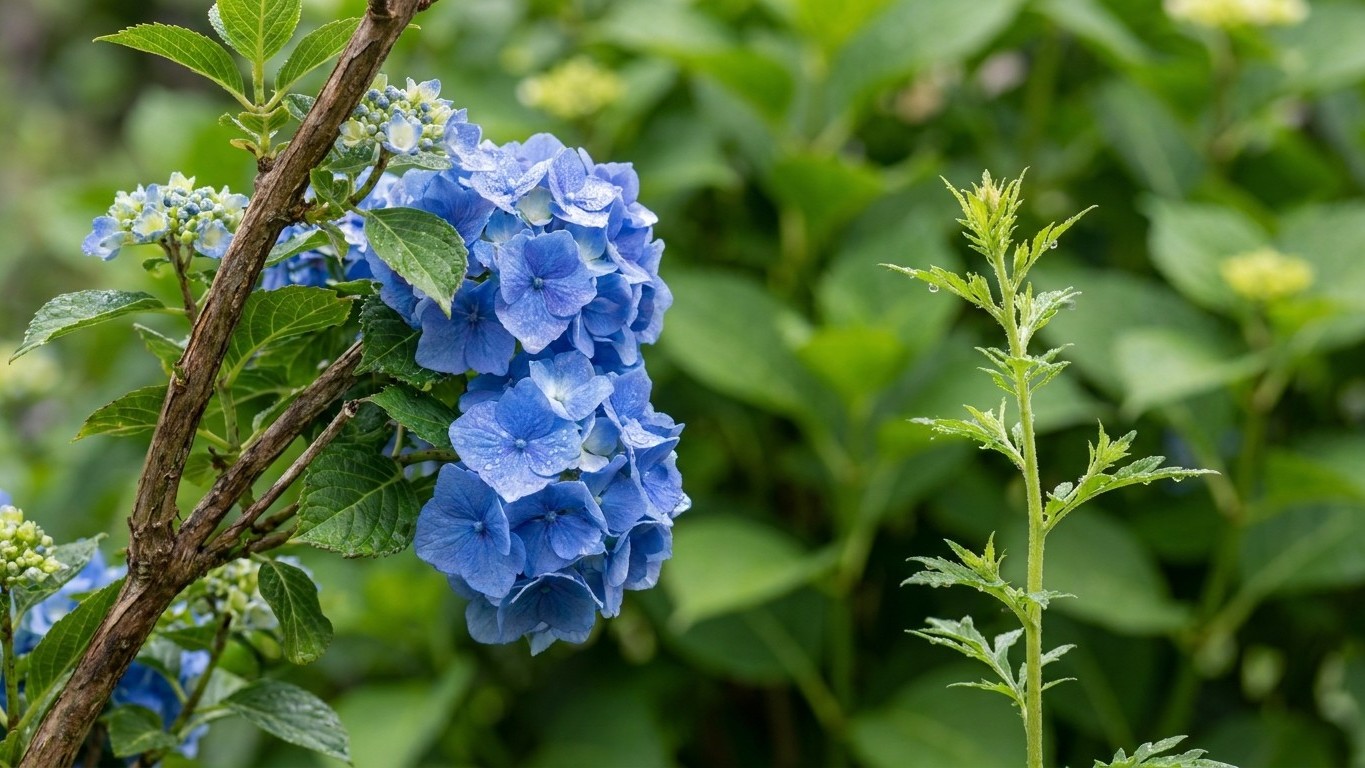

Hydrangeas can grow well in Alberta, but success depends heavily on choosing the right species. Panicle and smooth hydrangeas shrug off prairie winters and bloom reliably on new wood each year. Bigleaf types, the ones that turn blue or pink from soil pH, mostly fail here because their flower buds form on stems that rarely survive an Alberta winter. Timing planting around the region’s short, sharp frost-free window matters more than almost anything else you’ll do.
When to plant Hydrangeas in Alberta
Environment and Climate Change Canada’s 1981-2010 climate normals for the CALGARY INT’L A station put the average last spring frost at May 21 and the average first fall frost at September 16, leaving 117 frost-free days on average. That’s a mean, not a guarantee: in roughly one year out of two, frost arrives later than May 21, so treating that date as a safe planting day is a gamble. Gardeners in Edmonton, the Peace region, or anywhere at higher elevation should expect their own local frost-free window to run later and shorter than Calgary’s, sometimes by two or three weeks.
Most home gardeners in Alberta start with potted nursery stock rather than seed. Seed-grown hydrangeas take several years to reach flowering size and rarely match the parent plant’s color or form, so cuttings and container plants dominate the trade for good reason. If you’re propagating your own from softwood cuttings, take them in early summer, root them indoors or in a sheltered cold frame for four to six weeks, then harden them off gradually over seven to ten days before moving them outside.
Counting back from frost
Whether you’re transplanting a rooted cutting or a nursery pot, hold off until after the average last frost date, and build in a buffer given the 50/50 odds attached to that May 21 figure. Many Alberta gardeners wait until the first week of June before putting hydrangeas in open ground, accepting a shorter head start on the season in exchange for not losing new growth to a late cold snap. If you’re hardening off cuttings, start that process about ten days before your intended planting date, so the count-back looks like this: pick a target transplant date in early June, subtract ten days for hardening off, and subtract another four to six weeks before that for rooting if you started from a cutting rather than a purchased plant.
Anyone gardening north of Calgary or at elevation should push all of these dates later rather than rely on the Calgary normals directly. A province this size isn’t one climate, and the frost-free count that works in the Calgary area can be optimistic further north.
Soil and site preparation
Hydrangeas generally want morning sun and afternoon shade, which also happens to protect them from Alberta’s drying chinook winds that can strip moisture from leaves even in winter. Full sun is more tolerable here than in hotter states simply because summer heat is milder, but wind exposure is the bigger threat to watch for when picking a site.
Soil should be loamy and well-drained. Where Alberta soils run heavy in clay, work in two to three inches of compost or aged manure across the planting area at least two to four weeks before you plant, so it has time to settle and integrate rather than sitting as a pocket that traps water around the roots. For bigleaf hydrangeas, soil pH shifts bloom color: acidic soil below 6.0 pushes blue tones, while soil above 7.0 pushes pink. Panicle and smooth hydrangeas aren’t affected by pH this way, which is one more reason they’re the steadier choice for this climate.
Dig the planting hole roughly twice as wide as the root ball and no deeper, then backfill with a mix of native soil and compost rather than pure amendment, which can otherwise create a soft-sided basin that discourages roots from spreading outward. Space panicle varieties, which can reach six to eight feet, about four to six feet apart. Smooth hydrangeas stay more compact and can go in at three to four feet. Keep any planting a few feet clear of building foundations for airflow, and consider a windbreak, fence, or existing shrub line on the windward side if the site catches open prairie wind.
Varieties that suit Alberta
The trait that matters most here isn’t days to maturity, it’s whether a variety blooms on old wood or new wood. Old-wood bloomers set their flower buds the previous fall, and if those stems die back over winter, as they often do in Alberta, the plant survives but doesn’t flower. New-wood bloomers push fresh stems and flower buds every spring regardless of how hard the winter was, which is why they dominate reliable prairie hydrangea plantings.
| Type | Bloom habit | Cold hardiness | Alberta fit |
|---|---|---|---|
| Panicle (Hydrangea paniculata) | New wood | To zone 3 | Reliable, widely planted |
| Smooth (Hydrangea arborescens) | New wood | To zone 3 | Reliable, tolerates hard winters |
| Bigleaf (Hydrangea macrophylla) | Mostly old wood | Zone 5-6 | Marginal, often won’t flower |
| Oakleaf (Hydrangea quercifolia) | Old wood | Zone 5 | Poor fit without heavy protection |
Widely available panicle cultivars like Limelight, Quick Fire, and Little Lime are bred for compact size and dependable bloom, which suits smaller yards and shorter growing seasons alike. Smooth hydrangea cultivars such as Annabelle and Incrediball produce large white or pale green flower heads on new growth every year, making them close to foolproof once established. Bigleaf types are sold in Alberta garden centers, and some reblooming cultivars flower on both old and new wood, giving a partial safety net, but even those need significant winter protection to have any real shot at old-wood blooms. Oakleaf hydrangea is better suited to warmer states and isn’t a practical open-ground choice here.
What to plant alongside
Shade-tolerant perennials with similar water needs make the most sense as neighbors. Hostas, ferns, astilbe, and heucheras fill the space under a hydrangea’s canopy without competing hard for the same moisture, and their fine or contrasting foliage textures play well against big hydrangea leaves. Spring bulbs planted at the base can draw pollinators early in the season, before hydrangea blooms open in mid-to-late summer, keeping a pollinator presence in the bed across a longer stretch.
Avoid planting hydrangeas near black walnut trees if any grow nearby; the juglone compound walnut roots release is a documented toxicity risk for many shrubs, hydrangeas included, even though black walnut isn’t common across most of Alberta. Keep turfgrass from crowding right up against the base, since grass roots compete aggressively for the same shallow moisture a young hydrangea needs. Heavy feeders like roses planted too close can also pull nutrients away from a hydrangea’s root zone, so give both plants their own generous ring of amended soil rather than a shared bed.
One pairing worth being skeptical of: marigolds planted next to hydrangeas as a pest deterrent. There’s no real evidence supporting that specific combination for hydrangea pests, so treat it as garden folklore rather than a strategy worth relying on.
Watering, feeding and support
Hydrangeas want consistent moisture, roughly the equivalent of an inch to an inch and a half of water a week, applied deeply rather than in frequent shallow doses that only wet the surface. A two to three inch layer of organic mulch around the base holds that moisture in and buffers the root zone against temperature swings, which matters in a climate where soil can freeze and thaw more than once through a shoulder season.
Feed with a balanced fertilizer or a top-dressing of compost in early spring as new growth begins. Avoid feeding heavily in late summer, since a flush of soft new growth right before the average September 16 frost date is exactly the growth most likely to be damaged when cold arrives.
Large panicle varieties carry heavy flower heads that can flop, especially after rain, so a grow-through hoop or simple stake set early in the season saves a lot of frustration later. Pruning timing depends on the type: panicle and smooth hydrangeas, blooming on new wood, can be cut back hard in late winter or very early spring without sacrificing that year’s flowers. Bigleaf hydrangeas should never be pruned hard in fall, since that removes the old wood buds that hold next year’s limited chance at bloom. Deadheading spent flower heads through the season keeps plants tidy and can encourage a bit of continued bloom on repeat-flowering types, though it won’t change the underlying old-wood-versus-new-wood math.
Common problems
Powdery mildew shows up as a white, dusty coating on leaves, usually where air circulation is poor or humidity sits high after rain. Thinning crowded stems and watering at the base rather than overhead cuts the risk substantially; a fungicide labeled for ornamentals is a fallback if it gets ahead of you.
Leaf scorch, crisp brown edges on otherwise healthy-looking leaves, usually traces back to wind exposure or drought stress rather than disease. It’s common on plants sited without a windbreak against Alberta’s chinook winds. Deep, consistent watering and a bit of afternoon shade or wind protection generally resolves it.
No blooms at all is the complaint that frustrates people most, and it almost always comes down to one of two causes: a late spring frost killed the flower buds on new growth, or the plant is an old-wood bloomer that lost its buds over winter. Chlorosis, yellowing leaves with green veins, points to iron deficiency tied to alkaline soil, which is common enough in parts of Alberta to be worth a soil test if it shows up.
On pests, Montana State University Extension’s urban integrated pest management program lists brown marmorated stink bug, grasshoppers, miller moths, social wasps, and thrips as common problems in that state’s home landscapes. That’s a neighboring state’s list, not a provincial one, since no Canadian province publishes an equivalent home-garden pest guide, but the biology involved doesn’t stop at the border even if the exact calendar might shift. Thrips cause a silvery stippling on leaves and can distort flower buds. Grasshoppers chew ragged holes straight through leaf tissue in dry years. Stink bugs pierce leaves and stems to feed, leaving small discolored spots behind. If you spot damage you can’t identify, Alberta’s provincial agriculture office is the right place to confirm what you’re dealing with rather than assuming it matches a US state’s list exactly.
Ripening before the frost comes back
With 117 frost-free days on average between May 21 and September 16, the question for any Alberta hydrangea grower is whether that’s long enough for the plant to actually flower before the cold shuts things down. There’s no published days-to-bloom figure specific to this data set, but as a general rule, panicle and smooth hydrangeas push new growth once the frost risk clears and typically need something like two to three months of active growth before buds show color, putting bloom in mid-to-late summer. That leaves a comfortable margin inside a 117-day window, with weeks to spare before the average first fall frost.
Bigleaf hydrangeas face a much harder math problem. If their stems die back over winter, which is common here, the plant has to rebuild its entire framework from the ground up before it can even begin forming the old-wood buds most cultivars rely on for flowers. That’s effectively two years of growth compressed into one short season, and it’s the core reason bigleaf hydrangeas so often skip blooming entirely in Alberta gardens even when they survive.
A few things buy extra time on the front end: starting cuttings indoors well before the last frost, protecting overwintering stems with a heavy mulch or burlap wrap so more old wood survives, and siting plants against a south-facing wall that banks a little extra heat in spring. None of these turn a marginal variety into a reliable one, but they can shift the odds. Redo this arithmetic with your own district’s frost dates rather than Calgary’s, since a shorter window further north or at elevation changes the calculation directly.
Harvest and end of season
Cut panicle and smooth hydrangea blooms for drying once the petals feel papery to the touch rather than soft, which usually means they’re fully open but haven’t started browning yet. Hang them upside down in a cool, dark, well-ventilated space, and they’ll hold their shape and much of their color for months. Left on the plant, those same blooms fade into the pink, bronze, or tan tones hydrangeas are known for through fall, which is worth leaving at least some heads on the shrub for.
Ease off fertilizing by mid-summer so plants aren’t pushing tender new growth as the average September 16 first frost approaches. A slight reduction in watering through early fall helps growth harden off rather than staying soft and vulnerable. Once that first frost is close, or the ground starts to firm up, add a heavier four to six inch mulch layer around the base to protect roots, and for bigleaf or other marginal types, wrap the crown and lower stems with burlap and dry leaves to give old wood the best possible chance of surviving to spring.
Remember that September 16 is an average, not a promise. In some years the first hard frost lands earlier, particularly at higher elevation or further north, so it pays to watch the forecast in late summer rather than working strictly off the calendar date.
Local help
For county-level frost dates, soil testing, and identification of pests or diseases specific to your part of the province, Alberta’s Agriculture and Irrigation office is the right first call. They can point you toward more localized information than any provincial average can offer on its own.
Common questions
Can hydrangeas survive an Alberta winter outdoors? Panicle and smooth hydrangeas generally survive because they bloom on new wood, so winter dieback doesn’t prevent flowering the following year. Bigleaf hydrangeas often survive as a plant but frequently fail to bloom.
Will soil pH change my hydrangea’s flower color in Alberta? Only for bigleaf types, where acidic soil pushes blue and alkaline soil pushes pink. Panicle and smooth hydrangeas aren’t affected by soil pH this way.
Do hydrangeas need full sun in Alberta? Morning sun with afternoon shade is a safer bet than full sun, mainly to protect plants from drying chinook winds rather than from heat, which is milder here than in warmer states.
When should I prune my hydrangea? Prune panicle and smooth types in late winter or early spring since they bloom on new wood. Avoid hard fall pruning on bigleaf types, since that removes the old wood buds holding next year’s flowers.
Why didn’t my hydrangea bloom this year? The two most common causes are a late spring frost damaging new growth, or an old-wood bloomer that lost its flower buds over winter. Switching to a new-wood variety like panicle or smooth hydrangea largely solves this problem going forward.