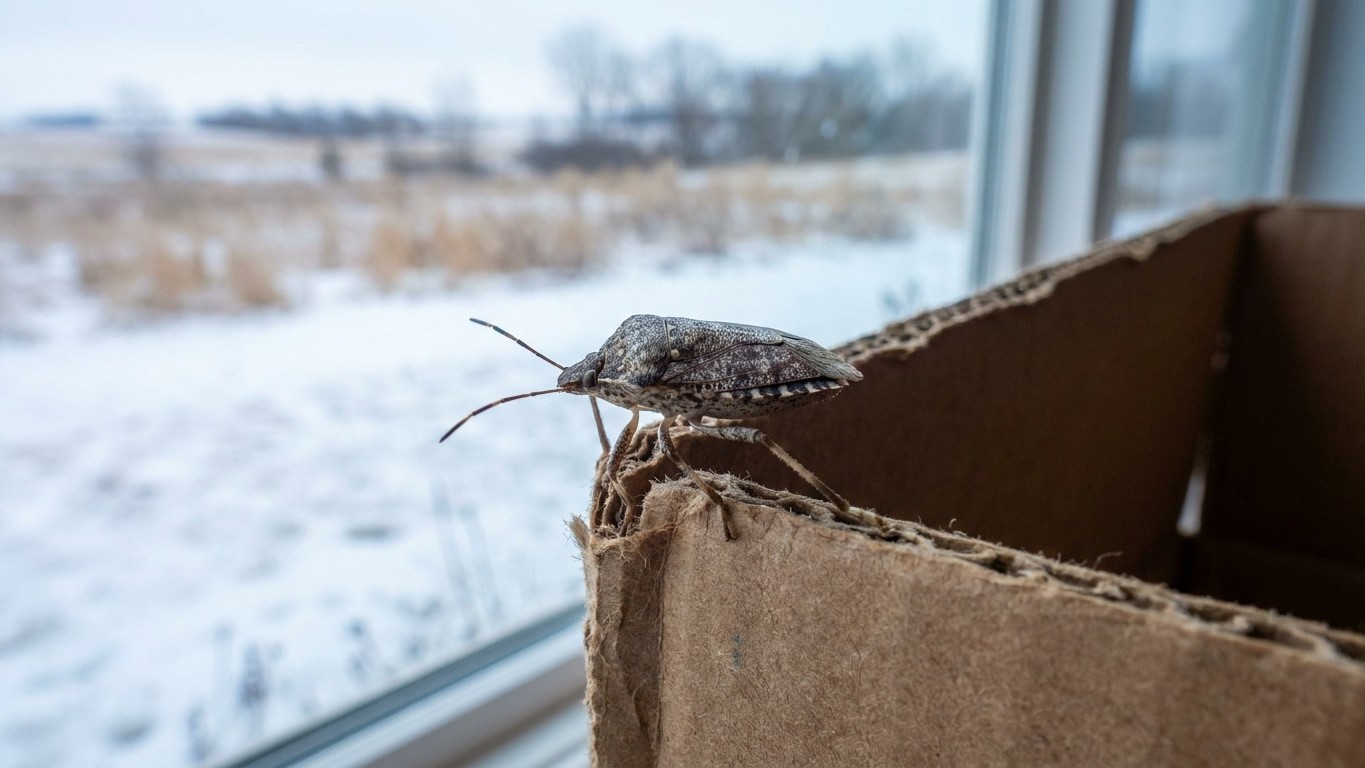

No, this insect hasn’t set up shop in Saskatchewan. Every confirmed sighting in the province to date has been a lone hitchhiker riding in on a vehicle, a moving truck, or a shipment from somewhere warmer, not a breeding population living in local hedgerows or crop fields. The province’s winters are the main reason it stays that way, and that fact changes how homeowners here should respond if they spot one.
What’s Actually Been Found in Saskatchewan

The brown marmorated stink bug (Halyomorpha halys) is native to East Asia and was first documented in the United States near Allentown, Pennsylvania, in the mid-1990s. From there it spread through the mid-Atlantic states and eventually into more than 40 states, becoming a genuine agricultural headache in orchards and soybean fields. In Canada, it followed a similar but slower path, first turning up in southern Ontario around 2010 and later gaining a foothold in parts of coastal British Columbia, where milder winters give it a fighting chance.
Saskatchewan sits outside that pattern entirely. Provincial agriculture staff and federal inspectors do occasionally log individual specimens, almost always traced back to a car that drove up from a warmer region, a piece of furniture shipped from out of province, or produce boxes arriving from areas where the insect is already common. These are what entomologists call adventive occurrences: single insects that arrived by accident and have no local population to return to. A single bug in your garage in Regina is a curiosity worth reporting, not evidence of an outbreak.
Why the Climate Keeps It From Taking Hold
Cold is the bottleneck. Brown marmorated stink bugs survive winter by squeezing into cracks, attics, wall voids, and leaf litter, then going dormant until spring. That strategy works fine in Virginia or even southern Ontario, where winter lows rarely stay below zero Fahrenheit for long. Saskatchewan is a different story. Regina and Saskatoon regularly see January nights drop to -20°F or colder, and that kind of sustained deep freeze kills off overwintering insects that don’t have the shelter of a heated building.
A stink bug that sneaks into a house before the first hard frost can survive a Saskatchewan winter just fine, aggregating in wall gaps the same way it does in Maryland. The problem for the species is what happens next. To establish outdoors, you need enough survivors emerging in spring, in the same area, with host plants and mates nearby, to build a self-sustaining generation. One or two insects thawing out in a garage don’t add up to that. Add a growing season that’s shorter than the mid-Atlantic corridor the bug prefers, and the math simply doesn’t favor a permanent population, at least not yet.
Climate models used by pest researchers do flag western Canada’s growing zones as gradually warming, which is part of why British Columbia’s Fraser Valley eventually became hospitable. Saskatchewan’s prairie winters remain a much higher bar to clear, and there’s no indication that’s changing on a timeline anyone should worry about this decade.
Telling It Apart From Saskatchewan’s Native Look-Alikes
Most “stink bug sightings” reported in the province turn out to be something else entirely, which makes identification the most useful skill here. The real brown marmorated stink bug is shield-shaped, about 5/8 inch long, mottled brown and gray across its back, with two telltale features: alternating light and dark bands running along the edge of its abdomen, and similar pale bands on its antennae. Squash it and it releases a sharp, cilantro-like odor, which is exactly how it earned its name.
Common Saskatchewan Insects Mistaken for It
Three residents of the prairie provinces get confused with this pest more than any others:
- Say’s stink bug (Chlorochroa sayi), a native shield bug that’s greenish to brown, common in canola and mustard fields, and lacks the banded antennae.
- Western conifer seed bug, which has flared, leaf-shaped hind legs and a longer, narrower body, often mistaken for a stink bug when it wanders indoors in fall.
- Boxelder bug, black with reddish-orange wing markings, frequently swarming on sunny walls near boxelder and maple trees in late summer.
If the antenna bands and abdomen fringe aren’t clearly visible, it’s almost certainly one of these three rather than the invasive species. Both Say’s stink bug and boxelder bugs are considered nuisance insects at worst in Saskatchewan and don’t carry the same crop-damage reputation.
What to Do If You Find One
Resist the urge to crush it. That cilantro smell isn’t just unpleasant, it can linger on fabric and skin for hours. A better approach is to trap it under a jar or cup, slide a piece of paper underneath, and either release it outside if you’re confident it’s a native look-alike, or keep it contained if you suspect the real thing.
Because Saskatchewan currently has no established population, provincial agriculture officials and the Canadian Food Inspection Agency have a genuine interest in tracking early detections. Reporting a suspected brown marmorated stink bug, ideally with a clear photo showing the antenna bands, helps confirm whether it’s an isolated hitchhiker or something that needs a closer look. This is the same early-warning logic used for other invasive insects tracked province by province: catching the first arrivals matters far more than dealing with an established population later.
On the prevention side, the fixes are mundane but effective. Seal gaps around window frames, door thresholds, and utility penetrations with caulk, since these are the entry points any overwintering insect uses, native or invasive. Check the interior of vehicles and moving boxes after road trips from regions where the bug is common, particularly Ontario, British Columbia, or anywhere south of the border. Outdoor lighting also matters more than people expect. Stink bugs are drawn to light at night, so switching porch fixtures to yellow-toned LED bulbs or motion-activated lights cuts down on what gets pulled toward your siding in the first place.
The first confirmed brown marmorated stink bug in Canada was found in Hamilton, Ontario, back in 2010, nearly a decade and a half after it arrived in Pennsylvania. That gap between first arrival and first establishment is worth remembering: a lone insect in a Saskatoon garage today says very little about what the province’s pest landscape looks like ten years from now, and tracking these stray arrivals is exactly how researchers spot the shift before it becomes a problem.
Related guides
- Brown marmorated stink bug in Alberta: When It Shows Up and What Stops It
- Brown marmorated stink bug in Washington: When It Shows Up and What Stops It
- Brown marmorated stink bug in British Columbia: When It Shows Up and What Stops It
- Brown marmorated stink bug in Kentucky: When It Shows Up and What Stops It