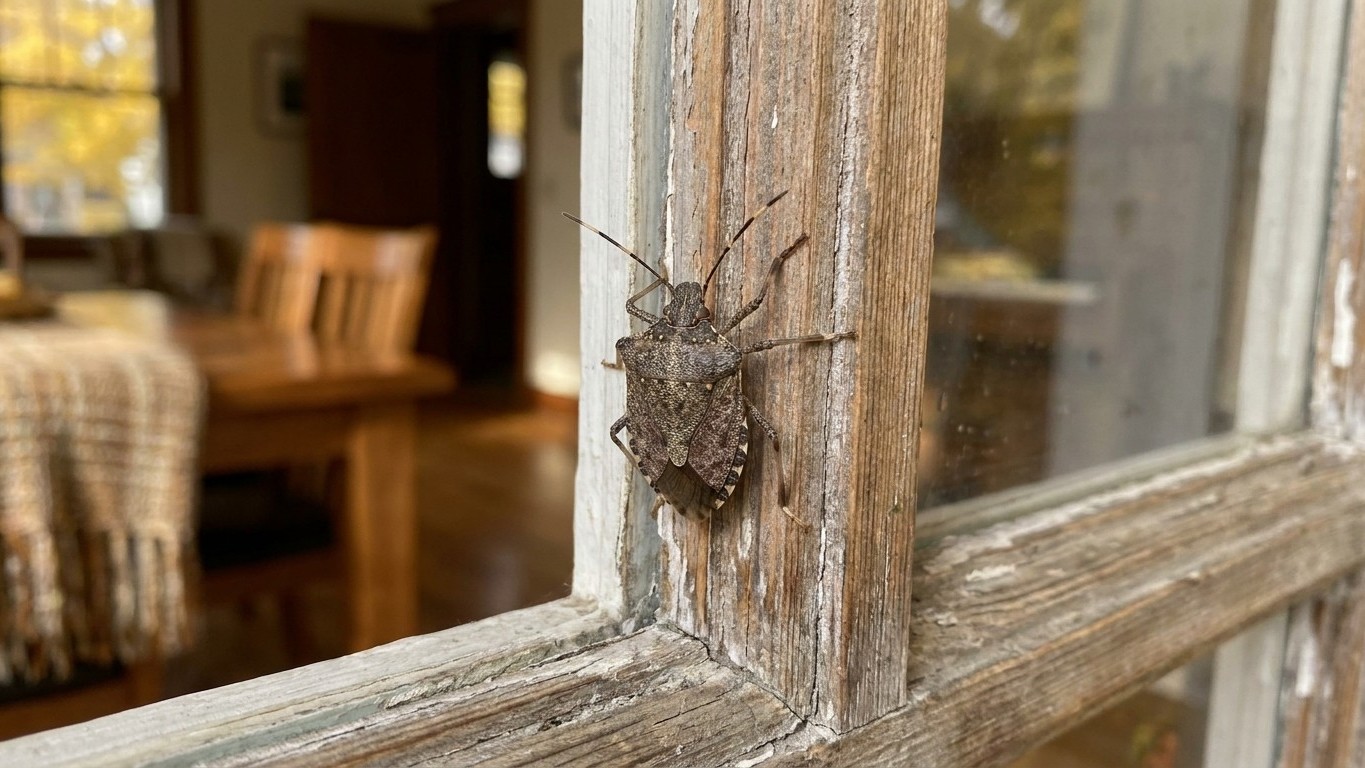

Brown marmorated stink bugs have been found in Alberta, but they haven’t set up permanent, breeding populations the way they have in Ontario or British Columbia. What Albertans mostly deal with are individual bugs that hitchhike in on vehicles, moving boxes, or shipped goods and then show up indoors in late summer or fall, looking for a warm place to spend the winter. Sealing up entry points before September beats any spray you could buy.
Where Alberta Fits on the Stink Bug’s Map

The brown marmorated stink bug (Halyomorpha halys) isn’t native to North America. It arrived from East Asia, first turning up near Allentown, Pennsylvania, in the mid-1990s. From there it spread through the Mid-Atlantic states, then west and north, eventually crossing into Canada. Ontario recorded its first confirmed population near Hamilton around 2010, and the bug has since gained a foothold in parts of Quebec and southern British Columbia’s Lower Mainland and Okanagan region.
Alberta sits well outside that established range. Provincial pest surveillance and reports from residents have logged scattered individual bugs, usually traced to a vehicle, a piece of furniture, or a shipment that passed through an infested region. Cold snaps of minus 20 or 30 degrees Fahrenheit, which show up reliably across the province every winter, make it hard for outdoor populations to survive and reproduce the way they do in the milder Fraser Valley or southern Ontario. That’s the main reason Alberta hasn’t seen the kind of dense fall swarms that homeowners in Pennsylvania or Oregon have grown used to.
That doesn’t mean the risk is zero going forward. Climate patterns shift, shipping and travel between provinces keep moving bugs around, and a single fertile female that survives indoors over winter can start laying eggs come spring. Alberta Agriculture and Forestry treats new sightings as worth tracking precisely because the population isn’t established yet, and early detection is far easier to manage than an entrenched infestation.
Telling It Apart From Alberta’s Regular Stink Bugs
Alberta already hosts native stink bugs and several look-alikes, so a mottled brown insect on your windowsill isn’t automatically the invasive species. The brown marmorated stink bug measures about five-eighths of an inch long, shield-shaped, with a marbled brown-and-gray pattern on its back. The giveaway details are the pale, alternating bands on its antennae and around the edges of its abdomen, features most local stink bugs don’t share.
The insect most often confused with it in Alberta homes is the western conifer seed bug, which is genuinely common across the province and shares the same fall habit of sneaking indoors to overwinter. It’s a similar brown color and roughly the same size, but its hind legs flare out flat like small leaves, and it lacks the banded antennae. If you squash one and get a strong, resinous odor rather than the more acrid, cilantro-like smell associated with brown marmorated stink bugs, you’re likely dealing with the conifer seed bug instead.
A clear photo sent to Alberta Agriculture and Forestry’s pest reporting line or a local extension office is the fastest way to get a confirmed identification, and it feeds directly into the province’s early-detection tracking for this species.
When They Show Up: The Fall Migration Indoors
Outdoors, brown marmorated stink bugs feed on an unusually wide menu, more than 300 plant species by some counts, including fruit trees, soybeans, and ornamental shrubs. In regions where they’re established, that appetite makes them a genuine agricultural pest. Alberta’s dominant crops, wheat, canola, and forage for cattle, aren’t on their preferred list, which is part of why the economic threat here is lower than in Ontario’s fruit-growing counties.
The behavior that actually matters to Alberta homeowners kicks in as daylight shortens. Starting in late August and running through October, adult bugs stop feeding and start searching for sheltered spots to survive winter. They gather on sun-warmed exterior walls, especially south- and west-facing siding, then work their way toward any gap they can find: torn window screens, unsealed utility lines, chimney flashing, vents, and the small gaps around siding and soffits.
Once inside, they tuck into wall voids, attic insulation, and other quiet spaces and go dormant. Homeowners typically don’t notice anything until a warm stretch in late winter or a furnace running steadily wakes the bugs up, and they start appearing on windowsills, in light fixtures, or crawling across ceilings looking for a way back outside. That late-winter reappearance is often the first sign a bug got in undetected the previous fall.
What Actually Stops Them
Insecticide sprays are not the answer for bugs that are already inside a wall void or attic. Killing them in a hidden space just leaves a stack of decomposing bodies that can draw carpet beetles or leave odor and staining behind. The approach that consistently works, in Alberta and everywhere else this insect has spread, is exclusion done before the fall push begins.
- Caulk gaps around window and door frames, and check that weatherstripping still compresses fully when the door closes.
- Install fine mesh screens over dryer vents, attic vents, and any other opening that leads into the living space.
- Fix or replace torn window screens rather than leaving a bug-sized hole for the season.
- Seal utility penetrations, cable lines, gas lines, and outdoor faucet fittings, with expanding foam or caulk.
- Add or repair door sweeps on exterior doors, including garage doors and the gap under sliding patio doors.
For a bug that does make it inside, a vacuum with a disposable bag beats squashing it. The scent glands that give this insect its name release an unpleasant odor when the bug is crushed, and vacuuming avoids the smell along with the stain it can leave on drywall or curtains. Empty the vacuum bag outside right away so the bug doesn’t just crawl back into the house.
Checking What Comes Home With You
Because Alberta’s population is driven mostly by hitchhikers rather than an established local breeding cycle, a quick inspection habit does more good than any product on a shelf. Travelers and movers coming from Ontario, British Columbia, or U.S. states where the bug is common are the most likely source of a new arrival. A look through the trunk, under the seats, and around luggage before unloading at home catches most stowaways before they ever get a chance to find a gap in the siding. The same goes for firewood, nursery plants, and outdoor furniture shipped in from those regions, all worth a once-over before they go into a garage or shed.
Reporting a confirmed sighting to Alberta’s provincial pest monitoring program adds real value beyond just solving one homeowner’s problem. Every verified report helps track whether isolated hitchhikers are starting to survive Alberta winters in greater numbers, which is the exact signal that would tell entomologists the invasion front has finally reached the prairies.
Related guides
- Brown marmorated stink bug in British Columbia: When It Shows Up and What Stops It
- Brown marmorated stink bug in Saskatchewan: When It Shows Up and What Stops It
- Brown marmorated stink bug in Connecticut: When It Shows Up and What Stops It
- Brown marmorated stink bug in Illinois: When It Shows Up and What Stops It
- Brown marmorated stink bug in Missouri: When It Shows Up and What Stops It