
August in South Carolina is not a month for planting many new things straight into a hot garden bed. The real answer splits three ways: southern peas and a few heat-tolerant crops can still go directly into the ground, fall brassicas need to be started as seedlings now under cover, and most of the work this month is watering, scouting pests, and prepping beds for the cool-season crops that will follow.
What goes in the ground in August

Soil temperature, not the calendar, decides what survives an August planting in South Carolina. Garden soil in the Midlands and Upstate routinely sits between 80°F and 95°F this month, which is far above the range that lettuce, spinach, or carrot seed will germinate in. Those crops will simply sit in the ground, rot, or sprout weak and bolt within days. The safe bets are the ones that actually like the heat.
Southern peas (blackeyed, crowder, pink-eye purple hull) can still be direct-sown early in the month, especially in the Midlands and Lowcountry where the growing window stretches further into fall. Bush beans and cucumbers planted now for a second, fall crop have a real shot, particularly along the coast. Okra started in early August will still produce before frost in most of the state, though it’s a tighter call in the Upstate.
By the last week or two of August, once overnight temperatures start easing, direct-sown collards, turnip greens, mustard greens, kale, and rutabaga become the better move. These germinate fine in warm soil and are built to mature through cooling fall weather, timed against a first frost that falls between November 20 and December 5 depending on where you are (NOAA NCEI 1991-2020 Climate Normals, station USW00013880).
The gamble crops are anything that needs 80-plus days and full summer heat to finish: a fresh planting of sweet corn or a new round of tomato transplants set in open ground. Those can work in the Lowcountry, where frost arrives closer to December, but they’re a poor bet in the Upstate, where the season closes several weeks earlier. Zone matters here too. South Carolina spans USDA Hardiness Zones 7a to 9a, and that range is built on extreme winter minimums, not summer growing length, but it tracks the same north-south pattern: colder, shorter seasons inland and upstate, milder and longer along the coast.
What to start under cover
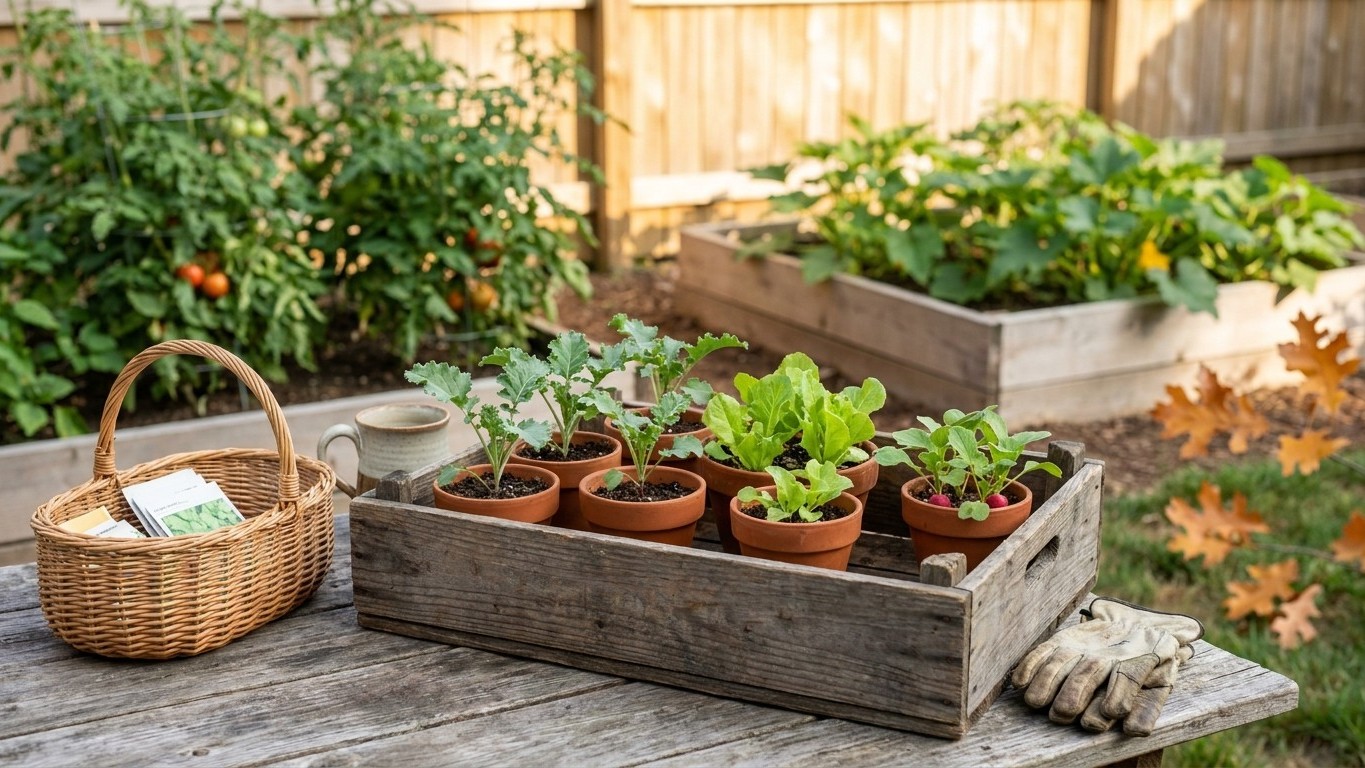
The real August work happens in trays, not in garden beds. Broccoli, cabbage, cauliflower, and Brussels sprouts all need to be seeded now if they’re going to produce a fall crop, and the math runs backward from the first frost window, not forward from today’s date.
Take a frost date of November 20, the early end of the range. Broccoli needs roughly 70 days from transplant to harvest. Push that transplant date back to early September, then subtract the four to six weeks a seedling needs to grow big enough to move outside, and the seed needs to go into a tray by early-to-mid August. Wait past that and the plant runs out of season, especially inland where frost lands earliest. Start too soon, on the other hand, and the seedling sits rootbound in its cell for weeks in blazing heat, stressed before it ever touches soil.
Lettuce and spinach belong in this category too, even though they’ll eventually be direct-sown outside. Garden soil is too hot for their seed to germinate reliably in August, so starting them in trays kept somewhere cooler (a shaded porch, an air-conditioned room near a window) and moving the seedlings out once soil temperatures drop in September gets around the problem entirely.
The two ways this goes wrong are opposite but equally common. Seed too early and the plants become leggy, rootbound, and stressed before transplant, which shows up later as bolting or poor head formation. Seed too late, especially in the Upstate where the frost window closes by late November, and the plant never reaches maturity before cold shuts it down.
What is ready to pick
August is peak harvest for a wide stretch of the South Carolina garden, even while the fall crop is still just seed in a tray.
- Tomatoes and peppers are at their heaviest production, assuming they’ve survived the heat stress that can stall fruit set.
- Okra needs picking every day or two, pods harvested at 2 to 4 inches before they turn woody.
- Southern peas are ready when pods reach the dry, rattling shell stage, or picked green a bit earlier for fresh shelling.
- Watermelon (thump test, plus a browning tendril near the stem) and cantaloupe (it should “slip” free from the vine with light pressure) are finishing out their season.
- Figs and early muscadine grapes are ripening in many yards across the state.
Sweet potatoes are not ready yet, that harvest runs September into October, but it’s worth checking the vines now for vigor. Onions and garlic pulled earlier in summer should be checked in storage for any soft or sprouting bulbs before they spread rot to the rest of the batch.
The jobs that matter this month

Watering rhythm matters more in August than almost any other month. South Carolina’s combination of high heat and unpredictable afternoon thunderstorms means gardens can swing from bone-dry to waterlogged within a day. Deep, infrequent watering, roughly 1 to 1.5 inches a week delivered in one or two sessions rather than a daily sprinkle, and done in the morning rather than evening, keeps roots healthy and cuts down on the fungal disease that thrives in humid, wet foliage overnight.
Mulch depth deserves a check right now too. A thinning mulch layer lets soil temperatures spike even higher, which is exactly the wrong condition for germinating those late-August fall greens. Topping it back up to 2 to 3 inches keeps the seedbed cooler and more even.
Pest pressure peaks alongside the heat. Squash vine borer can take down an entire squash planting in days, stink bugs target tomatoes and southern peas, and tomato hornworms strip foliage fast enough to notice overnight. A quick walk through the garden every few days, checking undersides of leaves and the base of squash stems, catches most problems before they spread.
Succession sowing bush beans and cucumbers every two to three weeks keeps the harvest coming rather than crashing all at once. Tomato plants that have sprawled past their cages need staking now, before the branches snap under their own weight. And bed prep for the fall brassicas heading out in September, working compost into the soil where those transplants will land, is worth doing now while there’s time, rather than the week they’re ready to go in.
What not to do in August
The most common mistake is direct-sowing lettuce or spinach seed straight into August soil because the morning felt cool. Soil surface temperature runs well above air temperature in full sun, often by 10 to 20 degrees, and that seed will sit dormant or rot rather than sprout. Start those in trays somewhere cooler instead.
A close second: moving fall broccoli or cabbage seedlings straight from a shaded nursery tray into open August sun without hardening them off first. The shock of full sun and heat after weeks under cover can stall growth or kill the transplant outright. A few days of partial shade cloth, gradually increased sun exposure, makes the difference.
Pulling shade cloth or row cover off too early after a stretch of cloudy or mild weather is another trap. South Carolina heat can spike right back within days, and uncovered seedlings pay the price fast.
Nitrogen timing trips up a lot of tomato and pepper growers this month. Heavy nitrogen feeding in August pushes leafy green growth at a point when the plant is already struggling to set fruit in the heat, leaving a lush plant with disappointing yield. A lower-nitrogen, potassium-leaning feed supports fruiting instead.
Checking this against your own county
A state-wide planting month is a starting point, not an instruction for a specific yard. South Carolina’s frost dates and hardiness zones cover a wide range, from Zone 7a inland and upstate to Zone 9a along the coast, and elevation moves those numbers by weeks in either direction. Peninsular Charleston runs noticeably milder than the airport station used for regional frost data, while the Upstate can see frost arrive well before the state-wide window closes.
For a planting date built around a specific county, the Clemson Cooperative Extension Service maintains local planting guidance that accounts for these differences.
Common questions
Can I plant tomatoes in South Carolina in August?
A fresh tomato transplant set out in August can produce a fall crop in the Lowcountry, where frost doesn’t arrive until early December, but it’s a much tighter window in the Upstate, where frost can land as early as November 20.
What vegetables can I direct sow in August in SC?
Southern peas, bush beans, cucumbers, and okra early in the month, followed by collards, turnip greens, mustard greens, kale, and rutabaga once the weather starts easing later in August.
When should I start fall broccoli and cabbage seeds in SC?
Count backward from the local first frost date, subtracting roughly 70 days for maturity plus four to six weeks of seedling growth. For most of the state, that lands on early-to-mid August for a September transplant date.
Is it too hot to plant lettuce and spinach in August?
Direct-sowing them into garden soil is a poor bet, since soil temperatures run well above their germination range. Starting the seed in trays somewhere cooler and transplanting once fall soil temperatures drop works far better.
Gardeners who plant by the Moon can check the August 2027 moon planting calendar, a tradition rather than a proven method.