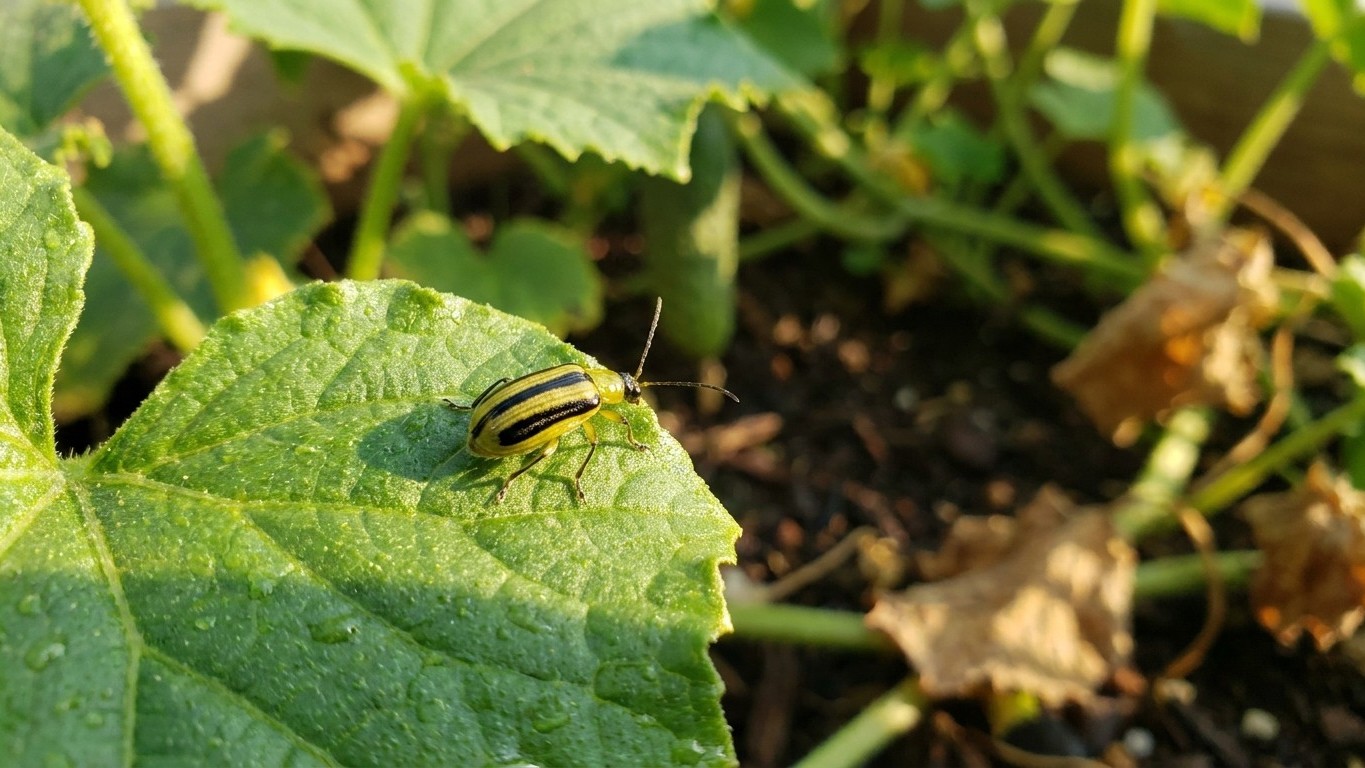

Striped cucumber beetles show up in South Carolina as early as mid-March in the Lowcountry and by mid-April in the Upstate, right when cucurbit seedlings push their first true leaves. The fix isn’t one product but a sequence: floating row covers at planting, prompt removal once flowers open for pollination, then yellow sticky traps or a targeted insecticide if beetle counts climb past one or two per plant. Get that timing wrong and you’re not just losing leaf tissue. You’re risking bacterial wilt, a disease this beetle carries that can kill a squash vine in a week.
What the Beetle Looks Like and Why It’s Different From a Squash Bug

Adult striped cucumber beetles (Acalymma vittatum) run about a quarter inch long, with a yellow-green body and three bold black stripes running down the wing covers. Gardeners often confuse them with the spotted cucumber beetle, a close cousin with black dots instead of stripes that also turns up in South Carolina gardens. Both feed on cucurbits, but the striped species is the more aggressive early-season threat and the more efficient disease carrier.
The larvae are a different story entirely. Thin, white, worm-like grubs about a third of an inch long, they live in the soil and chew on roots and the base of stems, damage most gardeners never see because it happens underground. A plant that wilts suddenly on a hot afternoon despite moist soil is often signaling root damage from these larvae rather than a lack of water.
When Striped Cucumber Beetles Show Up in South Carolina
South Carolina’s mild winters mean adult beetles never truly disappear. They overwinter as adults tucked into leaf litter, woodpiles, and the edges of fields and gardens, then emerge once soil and air temperatures hold steady above roughly 65 degrees Fahrenheit. That threshold arrives at different times across the state, and it matters for when you should have protection in place.
In the Lowcountry and coastal plain, from Charleston down through Beaufort County, beetles are frequently active by the second week of March, sometimes earlier during a warm spell. Midlands gardeners around Columbia typically see the first beetles late March into early April. In the Upstate, near Greenville and Spartanburg, emergence usually lags a few weeks behind, landing in mid to late April most years.
Because South Carolina’s growing season runs long, the state typically supports two generations of striped cucumber beetle per year rather than the single generation common in cooler climates further north. The first generation targets young spring plantings of cucumber, squash, and melon. A second wave appears in mid to late summer, often coinciding with fall squash and pumpkin plantings gardeners put in for October harvest. That second generation is frequently heavier, since the population has had all summer to build.
Reading the Signs Before You See the Beetle
Small, ragged holes in cotyledons (the first round leaves a seedling produces) are usually the first visible clue, showing up before you ever spot an actual beetle on the plant. Scarring on stems near the soil line, a slight yellowing of new growth, or flowers with chewed, uneven petal edges are all early warnings worth checking daily during the first three weeks after transplanting or direct seeding.
The Real Damage Isn’t the Chewing
A few beetles nibbling leaves rarely kill a healthy cucurbit plant outright. The bigger risk is bacterial wilt, caused by the bacterium Erwinia tracheiphila, which the beetle carries in its gut and spreads through its feces as it feeds on wounded leaf tissue. The bacteria clog the plant’s water-conducting vessels, and an infected vine can go from vigorous to collapsed within seven to ten days. Cucumbers and muskmelons are highly susceptible; squash and pumpkins show more variable resistance depending on variety.
There’s no cure once a plant is infected. That single fact reframes the whole approach to this pest: control isn’t really about protecting leaves, it’s about preventing beetles from ever landing on the plant during that vulnerable seedling stage when infection risk is highest. A simple field test for suspected wilt: cut a wilting stem and slowly pull the two halves apart. If a sticky, stringy strand of bacterial ooze forms between them, that plant is infected and should come out of the garden rather than stay in place hoping it recovers.
What Actually Stops Striped Cucumber Beetles
No single tactic works well on its own against this pest. Extension entomologists across the Southeast consistently recommend layering physical barriers, cultural timing, and targeted treatment rather than reaching straight for a spray bottle.
Row Covers: The Single Best Early-Season Tool
Lightweight floating row covers placed over seedlings or transplants immediately at planting keep beetles off the most vulnerable growth stage entirely. The covers need to come off once female flowers open, since cucurbits require insect pollination to set fruit, but by that point the plants have usually grown enough vegetative mass to tolerate some beetle feeding without serious harm. Anchor the edges well with soil or garden staples. Beetles are persistent and will exploit any gap.
Trap Crops Pull Beetles Away From the Plants You Care About
Striped cucumber beetles show a strong preference for certain cucurbit varieties, particularly Blue Hubbard squash, over cucumbers and other squash types. Planting a small border of Blue Hubbard around the perimeter of a cucumber or zucchini patch draws beetles to the trap crop, where they can be treated or removed without spraying the main harvest plants. This works best when the trap crop is planted slightly ahead of the main crop, so it’s already attractive when beetles emerge.
Delayed planting is another underused tactic. Pushing cucumber and squash planting dates back by two to three weeks after the typical local last frost lets the first beetle wave pass its peak activity before seedlings emerge, reducing the window of highest infection risk.
Kaolin Clay and Sticky Traps for Monitoring and Light Pressure
A kaolin clay spray, applied to leaf surfaces, creates a fine white film that beetles find irritating and tend to avoid, without harming pollinators. It needs reapplication after rain. Yellow sticky traps placed at plant height near seedlings serve less as a control method and more as an early-warning system, letting you gauge whether beetle pressure is building before damage becomes visible.
When Chemical Treatment Makes Sense
If beetle counts exceed roughly one per plant on seedlings, or bacterial wilt has already appeared in the area, targeted treatment becomes reasonable. Products containing spinosad or pyrethrin offer effective knockdown with lower impact on bees when applied in early morning or evening, after flowers close for the day. Systemic neonicotinoid treatments applied at transplant can provide season-long root protection against larvae but carry real pollinator risk and should be avoided once plants begin flowering. Always check current label restrictions, since registered uses and restrictions shift and the label is the legal authority on application timing and rates.
Fall Plantings Face Their Own Beetle Pressure
South Carolina’s long season lets many gardeners put in a second squash or cucumber crop in July for fall harvest, but this planting runs straight into that heavier second beetle generation. Fall plantings benefit from the same row-cover strategy used in spring, along with extra attention to garden sanitation. Clearing spent spring cucurbit vines and fruit debris promptly removes overwintering and breeding habitat that would otherwise feed straight into the second generation’s buildup.
Cleaning Up in Fall Sets Up an Easier Spring
Adult beetles seek out plant debris, mulch, and the edges of gardens as overwintering shelter once temperatures drop in October and November. Removing old cucurbit vines, tilling under crop residue, and clearing weedy field margins near the garden reduces the population of beetles that survive winter to emerge the following spring. Crop rotation matters too. Planting cucurbits in a different bed than the previous year, ideally with at least 50 feet of separation, makes it harder for emerging beetles to find host plants immediately.
Gardeners in the Lowcountry, where winters rarely produce a hard, sustained freeze, tend to see higher overwintering survival and correspondingly heavier beetle pressure the following spring compared to Upstate gardens, where colder winter nights knock back a larger share of the adult population before it ever gets the chance to feed on a new season’s seedlings.
Related guides
- Striped cucumber beetle in North Carolina: When It Shows Up and What Stops It
- Striped cucumber beetle in Connecticut: When It Shows Up and What Stops It
- Striped cucumber beetle in Indiana: When It Shows Up and What Stops It
- Striped cucumber beetle in New Mexico: When It Shows Up and What Stops It
- Striped cucumber beetle in New Brunswick: When It Shows Up and What Stops It