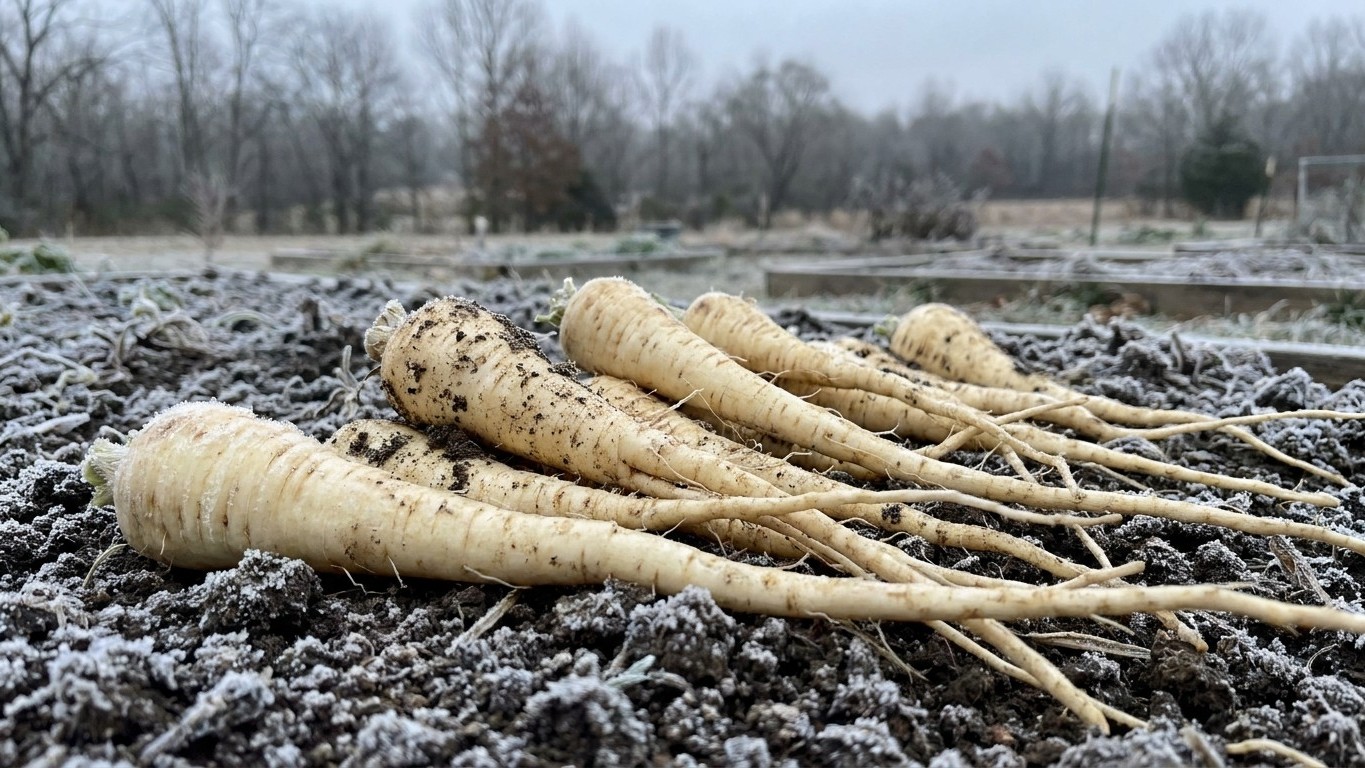

Parsnips grown in South Dakota will sweeten, and they’ll do it reliably. The winters here are cold enough, and long enough, to deliver the frosty stretch this root crop needs to turn stored starch into sugar. The bigger question for South Dakota gardeners isn’t whether the cold arrives, it’s whether the growing season leaves enough time to get a root worth waiting for.
The short answer
Everything about parsnip flavor comes down to one thing: does this place deliver several weeks of hard, honest frost before the ground locks up? In Sioux Falls, the mean minimum temperature for the coldest month sits at 8.5 degrees Fahrenheit, based on NOAA NCEI Climate Normals covering 1991 to 2020. That’s not a record low pulled from some unusually brutal week. It’s the average of the coldest daily lows across an entire month, year after year.
That figure matters more than any hardiness zone number you’ll find printed on a seed packet or a nursery tag. A hardiness zone tells you whether a perennial plant survives the winter where it’s rooted. Parsnip sweetening isn’t about survival. It’s about exposure. The root needs repeated cold snaps, ideally several weeks of them, while it’s still sitting in the ground, so the plant’s stored starches convert to sugars as a kind of biological antifreeze response. A zone rating can’t capture that process. Only actual frost exposure can.
An 8.5 degree average minimum for the coldest month means South Dakota isn’t flirting with frost, it’s living in it. This isn’t a state where gardeners need to worry about a mild winter cheating them out of sweet parsnips. The cold here is deep, it’s sustained, and it shows up on schedule most years. Combine that reliable cold with a root left in the ground into fall, and the sugar conversion Utah State University Extension describes happens almost automatically.
So the short version: parsnips grown in South Dakota won’t just grow here, they’ll sweeten here, provided the gardener does one thing right, which is leaving the roots in place long enough to catch several of those frosty weeks before pulling them. Harvest too early, straight after the first light frost, and you get a fine parsnip that never got the chance to convert. Wait through a handful of hard freezes, and the flavor payoff shows up in the kitchen, not just the garden bed.
Does the season fit?
Parsnips take 100 to 120 days from seeding, according to Utah State University Extension, and they’re sown directly in place rather than started indoors and transplanted. The seed itself is slow, needing 14 to 21 days just to germinate, so patience matters before you even see a first leaf. Here’s how that timeline lines up against South Dakota’s frost dates, using Sioux Falls airport data as the reference point.
- Start with the sowing window: parsnip seed goes in the ground 2 to 3 weeks before the last spring frost. With that frost falling between April 29 and May 9, sowing lands somewhere around April 8 to April 25.
- Add the germination lag: since parsnip seed takes 14 to 21 days to sprout, don’t expect visible green until close to the end of April or the first week of May, even from an early sowing.
- Count forward 100 to 120 days from the seeding date, not from germination, to reach maturity. Depending on which end of the sowing window and maturity range you land on, that puts harvest readiness somewhere between mid-July and mid-September.
- Compare that maturity date against the first fall frost, which arrives between September 24 and October 4. Even the latest maturity estimate falls before that window closes, leaving real breathing room rather than a photo finish.
- After the roots reach maturity, they can stay put through the frost window and into the weeks beyond, picking up the repeated cold exposure that drives the sugar conversion, before the ground freezes hard enough to make digging difficult.
The math works comfortably here. There’s enough season to grow the root and enough cold afterward to sweeten it, without the tight squeeze gardeners in shorter-season regions have to manage.
What goes wrong here
- Forked or split roots. This has two separate causes, and they don’t share the same fix. Heavy, compacted, or stony soil forces the taproot to split around obstructions as it pushes down, so the remedy is deep digging, breaking up clay, and sifting out rocks before sowing, with Utah State University Extension recommending deep sandy soil or a double-dug bed where sandy soil isn’t available. Overwatering is the second cause, and it works differently, encouraging shallow, branching root growth instead of one clean taproot. The fix there is even, moderate watering rather than heavy soaking, especially in the seedling’s first few weeks.
- Harvesting before the cold has done its work. Given South Dakota’s reliably deep winters, the real local risk isn’t a mild season that never sweetens the crop, it’s a gardener pulling roots too soon out of impatience or a fear of the first hard freeze. The remedy is simple: leave the roots in the ground through several frosts rather than the first one, then harvest.
- Slow germination eating into the calendar. Parsnip seed’s 14 to 21 day germination window can lull a gardener into thinking the sowing failed, prompting a re-sow that pushes maturity dangerously close to the first fall frost. The fix is patience and a marked calendar, not a shovel and fresh seed.
Handling parsnips isn’t only about soil and timing. North Carolina Extension Gardener Plant Toolbox states plainly: “All parts of this plant contain furocoumarins which can make skin sensitive to light causing burns so be sure to wear gloves, long sleeves and long pants when dealing with it.” That warning covers the whole plant, not just the leafy tops that brush against bare arms during harvest.
The mechanism is what makes this risk easy to miss. Furocoumarins don’t burn skin on contact by themselves. The reaction needs sap on the skin and sunlight hitting that same patch of skin, together. That’s why a gardener can handle parsnip tops on an overcast morning and feel nothing, then get a painful reaction after pulling roots and pulling weeds on a bright, sunny afternoon. It’s also why the burn doesn’t show up immediately, it can develop hours after the exposure, once the sun has had time to react with the sap already on the skin. Washing hands afterward doesn’t undo that reaction once sunlight has hit the sap. The actual protection is preventing skin contact in the first place, which means gloves, long sleeves, and long pants whenever you’re pulling, trimming, or handling parsnip plants, especially on a clear day.
Checking this against your own county
The frost dates and cold-month figures in this article come from a single reference station in Sioux Falls. Rural and suburban gardens across South Dakota often see their last spring frost later and their first fall frost earlier than that station reports, sometimes by one to two weeks, and more if you’re gardening at higher elevation or in a low-lying spot that traps cold air.
Before locking in a sowing date, check those local numbers against South Dakota State University Extension, which tracks frost data and growing recommendations specific to counties across the state. It’s a short call or a quick search, and it’s the difference between a sowing date that’s theoretically correct and one that actually matches the frost pattern in your own backyard.
Common questions
Can parsnips survive being left in the ground all winter in South Dakota?
Utah State University Extension’s guidance focuses on sweetening through several frosty weeks rather than full winter storage in the ground, and South Dakota’s deep, sustained freezes make digging difficult once the soil locks up hard. Most gardeners harvest after multiple frosts but before the ground becomes unworkable.
Do parsnips need a specific soil type to avoid forked roots?
Utah State University Extension recommends deep sandy soil as the ideal, with heavy soil requiring a double-dug bed to loosen it enough for a straight taproot to form.
How do I know if my parsnip seed failed instead of just being slow?
Germination takes 14 to 21 days according to Utah State University Extension, so give the full window before assuming failure. Digging up the row too early to check often does more damage than the wait.
Is the sap risk only from touching parsnip leaves?
No. North Carolina Extension Gardener Plant Toolbox specifies that all parts of the plant contain furocoumarins, so roots, stems, and leaves all carry the same risk when combined with sunlight exposure on bare skin.