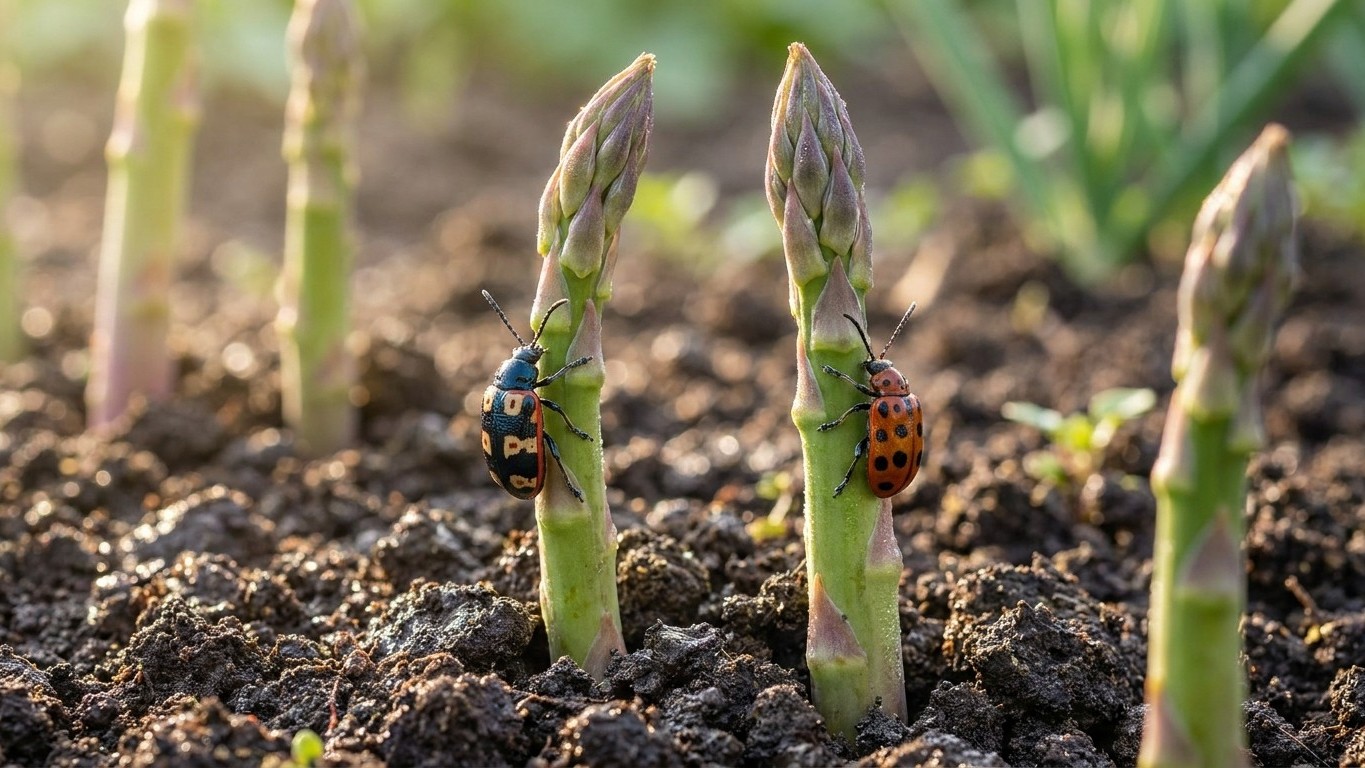

Asparagus beetles show up in South Dakota as soon as spears break through the soil in spring, usually once daytime temperatures hold steady above 50°F for several days in a row. In most of the state that means late April in the southeast counties and into May across the central and western regions, where cooler soil delays emergence by a week or two. The first generation feeds on tender spears; a second generation often follows in July and August, attacking the fern growth that asparagus plants need to store energy for next year.
Two Beetles, One Crop: What’s Actually Feeding on Your Asparagus

South Dakota gardeners deal with two distinct species, and telling them apart matters because their damage patterns differ. The common asparagus beetle (Crioceris asparagi) is the more destructive of the pair. It’s about a quarter-inch long, with a dark blue-black body and cream-colored squares along its back, bordered in red. Adults chew directly on spears, leaving brown scarring that makes the whole stalk unmarketable even if the plant survives.
The spotted asparagus beetle (Crioceris duodecimpunctata) looks different, orange-red with twelve black spots, closer to a small ladybug in color. This species mostly skips the spears and heads for the ferny foliage and berries later in the season. Its larvae feed inside the berries, which sounds alarming but actually causes less economic damage to a home garden than the common beetle’s spear-feeding habit.
Both species overwinter as adults, tucked into hollow stems, old plant debris, or loose soil near the asparagus bed. That overwintering behavior is exactly why bed cleanup in fall changes how bad the infestation gets the following spring. A patch left standing all winter with dead ferns intact gives beetles a five-star hotel until the weather warms up again.
Timing in South Dakota: Why the Calendar Shifts Across the State
South Dakota’s growing season splits roughly into two climate zones for pest-timing purposes. East of the Missouri River, spring warms faster and asparagus crowns push spears earlier, which means beetle activity in Sioux Falls, Brookings, or Yankton often starts in the last week of April during a mild year. West River counties around Rapid City and the Black Hills foothills run cooler and drier, delaying spear emergence and beetle arrival into mid-May most seasons.
Soil temperature drives this more than the calendar date. Asparagus crowns need soil in the 50°F range at a four-inch depth before they push growth, and beetles track that same signal since their food source (fresh spears) doesn’t exist until then. A cold, wet April across the eastern part of the state can push the whole cycle back by ten days to two weeks compared to a dry, sunny spring.
The second generation timing matters just as much as the first, even though it gets less attention. Once harvest ends in June and gardeners let spears grow into fern, that foliage becomes the target for the next round of beetles and their larvae. Skipping fern inspection in July is one of the most common reasons gardeners get blindsided by a beetle population explosion the following spring, since that unchecked second generation is what overwinters and restarts the cycle.
What Actually Stops Asparagus Beetles
Cultural Controls That Reduce Overwintering Sites
Fall cleanup remains the single most effective long-term control available to home gardeners. Cutting asparagus ferns down to two or three inches after the first hard frost, then removing and destroying the debris rather than composting it in place, eliminates a huge share of the overwintering habitat. Beetles that can’t find hollow stems or leaf litter near the bed have to travel further to find shelter, and many simply don’t survive the winter without it.
Keeping the bed weed-free during the growing season also helps, since beetles will use nearby plant debris and weedy cover as backup shelter even when the asparagus ferns themselves get cleaned up. A tidy bed with bare soil or a thin mulch layer between plants gives beetles fewer places to hide during the day, which makes hand-picking and monitoring far more effective.
Hand-Picking and Monitoring During Spear Emergence
Because the first generation targets spears directly, catching beetles early in the harvest window prevents most of the visible scarring that ruins market-quality stalks. Checking plants every two to three days during April and May, then knocking adult beetles into a container of soapy water, works well for garden-sized plantings. Beetles tend to drop and play dead when disturbed, so a quick tap over a cup or tray catches most of them without much fuss.
Larvae show up as small, dark, slug-like grubs feeding on the same spears or, for the spotted species, inside developing berries. Squishing larvae by hand or knocking them off with a strong water spray reduces the population heading into the next life stage before it can mature and lay more eggs.
Beneficial Insects and Natural Predators
A parasitic wasp, Tetrastichus asparagi, attacks asparagus beetle eggs and has become established in many asparagus-growing regions of the Midwest, including areas of the Northern Plains. Gardeners who avoid broad-spectrum insecticides during the beetle’s egg-laying period give this wasp a better chance to build up naturally in the bed over a few seasons. Ladybugs and lacewings will also feed on beetle eggs and small larvae when given the chance, another reason to think twice before reaching for a spray at the first sign of a beetle.
When Insecticide Treatment Makes Sense
For larger plantings or infestations that hand-picking can’t keep up with, insecticidal treatments targeted at the egg-hatch and early larval stage tend to give the best return. Spinosad and pyrethrin-based products, both accepted for organic production, work reasonably well against young larvae if applied when eggs are visible on the spears rather than waiting until damage is already obvious.
Timing any spray around harvest matters for food safety, and label instructions on pre-harvest intervals should guide when it’s safe to cut spears again after treatment. South Dakota State University Extension recommends scouting fields regularly through the harvest period specifically because the short window between spear emergence and cutting leaves little room for guesswork on spray timing.
Building a Bed That Beetles Struggle to Establish In
Asparagus is a perennial crop that can produce for fifteen to twenty years from the same crowns, which makes long-term pest management more valuable than a one-season fix. Rotating where new plantings go isn’t practical the way it is with annual vegetables, so the habitat around an established bed carries more weight over time.
Row covers during the earliest spear emergence can physically block adult beetles from reaching new growth, though they need to come off once harvest starts to allow pollinator access and airflow. Some gardeners in the eastern part of the state use lightweight covers for the first two weeks of spear production specifically to get ahead of that first beetle wave before switching to hand-picking for the rest of the season.
Interplanting asparagus with tomatoes has long been suggested as a beetle deterrent based on the idea that tomato foliage odor confuses beetle host-finding behavior. The research support for this is thinner than the folklore suggests, so it shouldn’t replace fall cleanup and monitoring as the core strategy, even if it’s worth trying alongside them in a home garden setting.
The two-generation cycle means a bed that looks clean by June can still be building a beetle population that shows up as a real problem the following April. Checking fern growth through midsummer, not just spears in spring, closes that gap and keeps the following year’s emergence from starting with a head start.