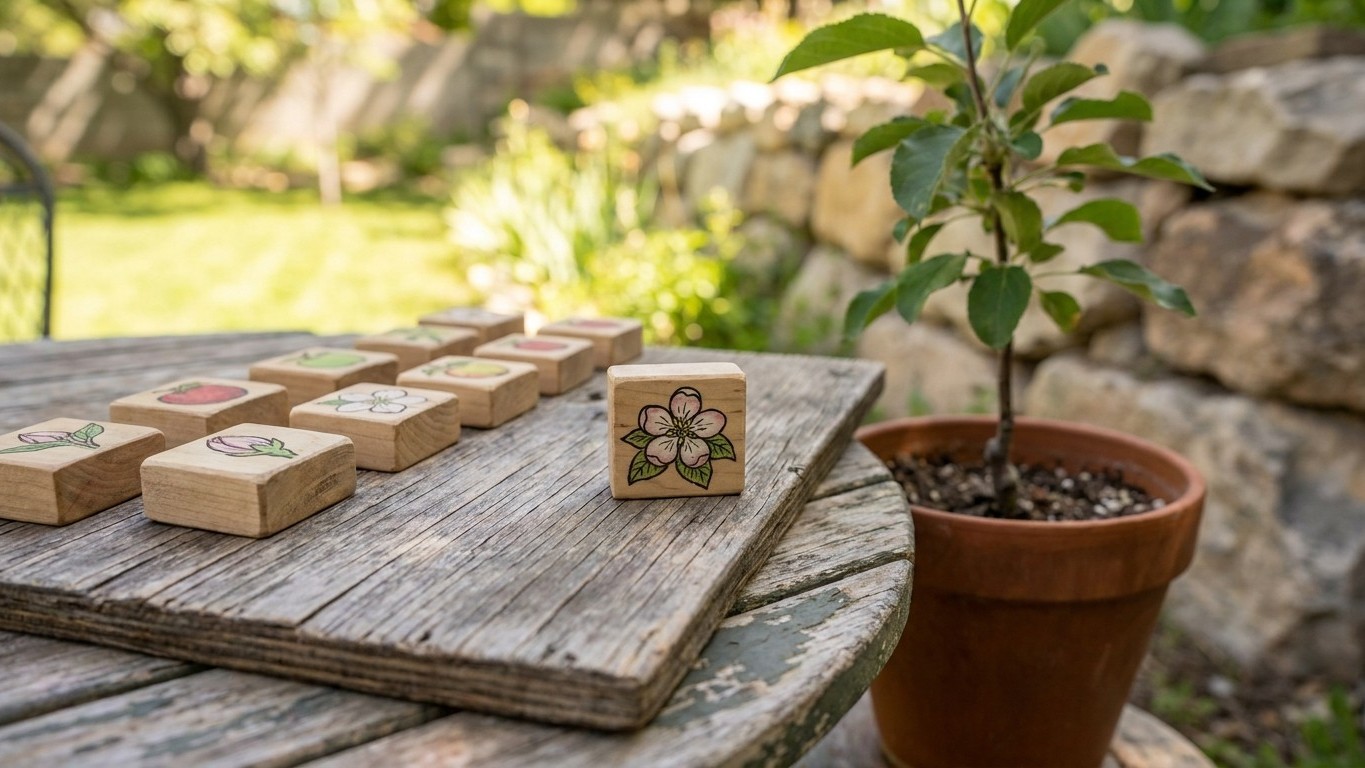

A bloom that opens ten days early in Salt Lake City walks straight into a frost window that hasn’t closed yet, and by the time anyone notices, the crop is already gone. That’s the mistake the calendar is meant to prevent: growers count from April or October as if the date itself carries the risk, when it’s the tree’s stage — bud swell, bloom, fruit set — that decides whether a cold night actually costs anything. Get the stage wrong and no amount of watching the thermometer saves the harvest.
The short answer for Utah
For growers near Salt Lake City, the freeze-free season for apples runs from the close of the last spring freeze window (April 12 to April 29, NOAA NCEI 1991-2020) to the start of the first fall freeze window (October 18 to October 29, same source). Bloom needs to land after the spring window closes to avoid losing the crop, and harvest needs to finish before the fall window opens. That gives Salt Lake City something like five months of reliable growing, though the real number shifts year to year because both windows are ranges, not fixed dates.
What actually happens on a given tree in a given year depends on three things: how high above the valley floor it sits, which cultivar was planted, and how much winter chill built up before spring warmth arrived. An early-blooming cultivar can open flowers before the frost window closes even in an ordinary year. A tree that never accumulated enough winter chill leafs out unevenly and sets fruit poorly no matter what the frost does. The stage the tree is in, not the date on the calendar, is what tells you whether a cold night is a real threat.
These figures are Salt Lake City figures specifically. Bench land above the valley, the higher valleys of northern Utah, and the warmer basin around St. George all run on different frost timing, sometimes by weeks in either direction. If you haven’t settled on a planting site or rootstock yet, Growing Apples in Utah covers that ground first.
Working through it

Every stage from dormancy to harvest has its own frost tolerance, and that tolerance is what should drive your decisions, not the month printed on a nursery tag.
Dormancy to green tip
In full dormancy, buds are closed tight and the wood is at its hardiest all year. This is pruning and dormant-oil season. Salt Lake City’s coldest month has a mean daily minimum of 21.6F (NOAA NCEI 1991-2020), and fully dormant apple wood shrugs that off without trouble. The risk is a warm stretch that pushes buds toward green tip early, ahead of a later cold snap.
Green tip, the first flush of green showing at the bud tip, is still fairly frost hardy but loses hardiness by the day. In the Salt Lake City area this stage commonly falls near or before the early end of the April 12 to April 29 window, so trees at green tip often ride out one or more nights near freezing without real damage.
Pink through fruit set
At pink, petals are visible but not yet open, and frost sensitivity climbs sharply. This stage typically lands somewhere inside the April 12 to April 29 window. Full bloom is the most frost-sensitive point of the whole year, which is why the goal is a bloom that opens after that window closes rather than inside it. Early-blooming cultivars are the ones that sometimes miss that goal.
Once petals drop and small green fruit begins to form, frost tolerance recovers. A light frost that would have ruined open bloom usually leaves young fruitlets alone. Thinning follows a few weeks after petal fall, once it’s clear which fruit actually set.
| Stage | What it looks like | Frost risk | What to do |
|---|---|---|---|
| Dormancy | Buds tight, closed, dark | Low | Prune, apply dormant oil |
| Green tip | First green at bud tip | Low to moderate | Watch for a warm stretch pulling buds forward |
| Pink | Petals visible, unopened | High | Have frost protection ready |
| Bloom | Flowers fully open | Highest | Protect on any forecast near freezing |
| Petal fall / fruit set | Petals gone, tiny green fruit | Moderate, dropping | Begin thinning decisions |
| Harvest | Depends on cultivar | Low, but season is closing | Pick ahead of the first fall freeze window |
Harvest timing sits at the other end of the calendar. A cultivar’s own catalogue timing, early, mid, or late season, tells you roughly how many weeks after bloom the fruit finishes, and that count has to land before Salt Lake City’s first fall freeze window, October 18 to October 29 (NOAA NCEI 1991-2020). Late-season cultivars that need a long, warm autumn to finish are the ones most likely to get caught if that window arrives on its early side. If you’re still choosing what to plant with that timing in mind, The Best Apple Varieties for Utah ranks the realistic options for this climate.
What changes across Utah
Salt Lake City sits in a mile-high valley near the Great Salt Lake, and that combination gives it a milder frost pattern than much of the rest of the state. Move onto the benches on the east side of the valley, or into a higher valley to the north like Cache Valley, and the season compresses from both ends: spring frost risk lingers later into the year and fall frost risk arrives sooner, because cold air pools and settles at elevation and in low ground overnight.
Southern Utah, around the St. George basin, sits at a much lower elevation and typically runs a longer freeze-free stretch than Salt Lake City does. That helps a late-season cultivar finish ripening, but it can work against winter chill: a cultivar bred for a harder cold climate may not get the accumulated chill it needs in a mild southern Utah winter. Inland high valleys with heavy cold-air pooling face the opposite problem, a short freeze-free window that only suits a cultivar that blooms late and matures fast.
- Benches and higher valleys (Cache Valley and similar): cold air pools and lingers, compressing the season from both ends.
- Salt Lake City and similar valley floors: the mildest frost pattern reflected in the data used on this page.
- Southern Utah (St. George basin): lower elevation, longer freeze-free season, but less reliable winter chill.
None of this changes the underlying logic, only the dates. Whatever county you garden in, the calendar worth following is the one built from that area’s own frost data, not Salt Lake City’s.
The mistakes this climate punishes
An early-blooming cultivar planted where the last freeze runs late is the single most common failure. The flowers open before frost risk has passed, sometimes before the local last-freeze window has even closed, and a single cold night can take most of the crop. This shows up in April, right at bloom, and there’s no fixing it once it happens.
A high-chill cultivar planted in a mild-winter site is the opposite mistake, and it’s quieter. The tree survives fine but leafs out unevenly and blooms over a stretched, ragged period instead of all at once, and fruit set suffers because pollination windows don’t line up. This shows up in spring as patchy, staggered bud break rather than a clean flush.
Fertilizing or pruning late into summer pushes soft new growth that hasn’t had time to harden before the first fall freeze arrives. That tender growth is the first thing to die back once the freeze hits, and it can open the door to canker and other wood disease the following year. Stop feeding well before the growing season is expected to end, and hold major pruning for dormancy instead.
Picking by the calendar month rather than by fruit condition costs growers both ways. Pick too early and the apples never develop full flavor or storage life. Leave a late cultivar too long and a fall freeze window can arrive before the fruit is off the tree. Judge readiness by how easily the fruit separates from the spur and by background color change on the cultivar you’re growing, not by what month it happens to be.
Checking this against your county
The figures on this page come from Salt Lake City’s official weather station and NOAA’s 1991-2020 climate normals. If you garden anywhere else in Utah, from a mountain valley to the Dixie basin, treat these numbers as a starting point rather than a local forecast. USU Extension runs county offices across the state with local growing information, and the fastest way to confirm your own frost window and chill pattern before committing to a cultivar is to check with the office nearest you through the USU Extension directory.
Common questions
Why did my apple bloom and then get hit by frost anyway?
Because bloom is tied to the tree’s stage, not to a safe date on the calendar, and it can open before the local last-freeze window closes. This is more likely with an early-blooming cultivar or after an unusually warm early spring stretch that pushes the tree ahead of schedule.
Can I grow apples in a high mountain valley in Utah?
Yes, but the cultivar choice matters more there than anywhere else in the state. Look for cold-hardy, early-ripening cultivars such as ‘Haralson’ or ‘Wealthy’, both bred for harsh northern winters, and expect a shorter window between last spring freeze and first fall freeze than a valley-floor site would give you.
Do apple trees need a set number of chill hours in Utah?
Yes, every cultivar has a published chill requirement, usually several hundred hours of cold below about 45F, and it’s printed on the nursery tag or catalogue listing. A low-elevation site with a mild winter risks under-chilling a high-chill cultivar, which shows up as delayed or uneven bloom the following spring.
When should I actually pick if I don’t trust the calendar?
Check how easily the fruit separates from the spur with a gentle twist, and look at background skin color and seed color for the cultivar you’re growing. A late cultivar still needs to come off before the first fall freeze window arrives, so don’t wait past that point hoping for a little more sweetness.