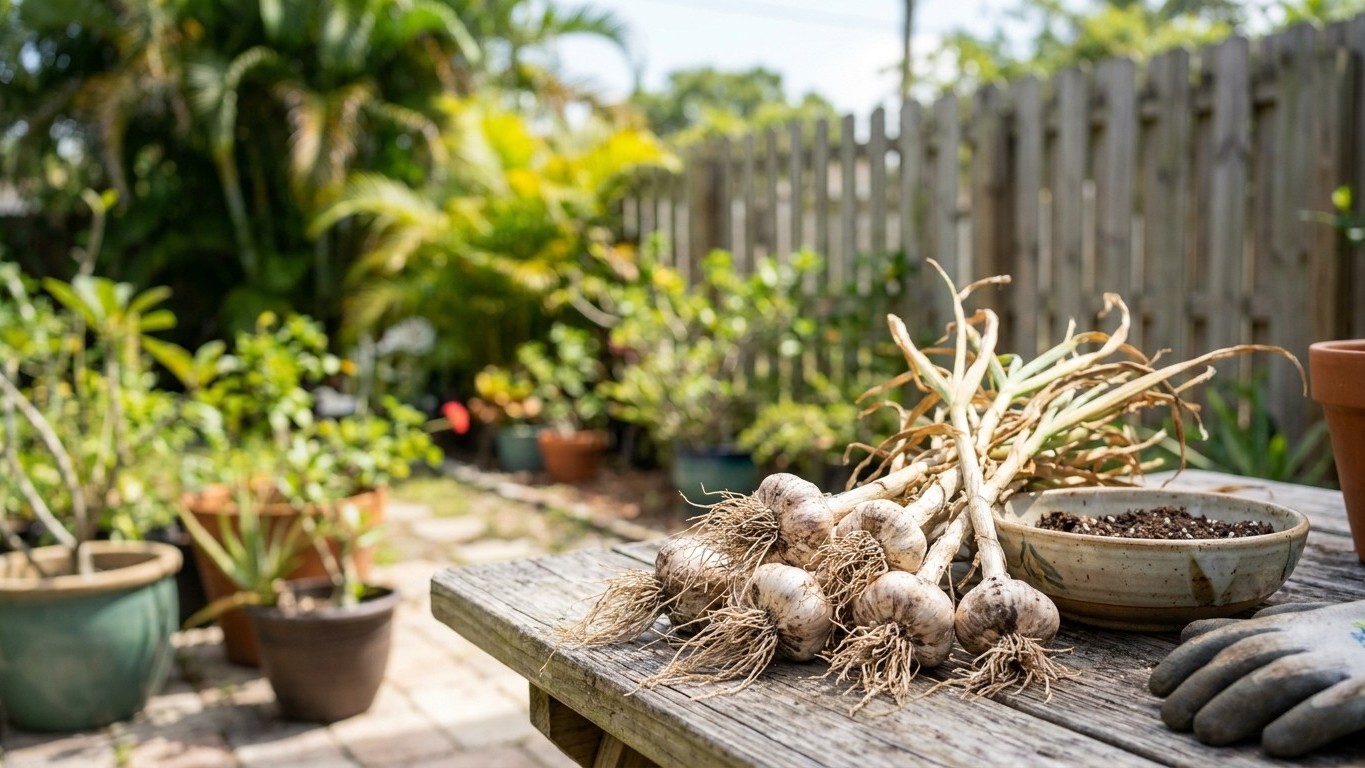

Garlic in Utah comes out of the ground when the lower leaves have browned but four or five green leaves remain up top, usually in early-to-mid summer depending on when it was planted the previous fall and how high up you garden. There’s no fixed calendar date for this state. The clue is the plant itself, and where you live changes everything else: curing speed, storage risk, even which pests show up first.
When garlic is ready to lift in Utah
Garlic grown in Utah gets planted in autumn and pulled the following summer, which means the timing of harvest is really set months earlier, at planting. Gardeners in the Salt Lake Valley, in higher mountain valleys, and in the warmer low deserts of southern Utah are all working from different clocks, because the growing season length and soil temperatures differ so much across the state.
The one hard data point available for this territory comes from NOAA’s climate normals for the Salt Lake City area (station USW00024127), which puts the first fall freeze somewhere between October 18 and October 29. That’s a midpoint, not a guarantee. In roughly half of all years, that first freeze arrives later than the window suggests, and in the other half, it comes earlier. Gardeners farther up in elevation, or in mountain valleys, should expect colder soil and an earlier autumn than the Salt Lake data reflects. Southern Utah runs warmer and later. This matters for harvest timing because it sets how much fall root growth the bulb gets before winter, which in turn affects how big and how early it matures the next summer.
Rather than counting days from a calendar, watch the plant. Garlic tells you it’s close to ready when the bottom third to half of the leaves have yellowed and dried, while the upper leaves are still green. Pull too early and the bulbs stay small with loose, unformed skins. Wait too long, past the point where nearly all the foliage has collapsed, and the cloves separate inside the wrapper, split it open, and store poorly.
Regional differences worth knowing
| Zone | Growing conditions | Harvest timing tendency |
|---|---|---|
| Salt Lake Valley | Milder valley floor, moderate elevation | Follows the general early-to-mid summer window |
| Higher mountain valleys | Colder soil, shorter frost-free season | Later fall planting cutoff, later spring growth start |
| Southern Utah low desert | Warmer, longer frost-free season | Earlier spring growth, potential for earlier lifting |
Because these differences are real but not quantified in published normals for every zone, the safest local check is a county office of Utah State University Extension, which can speak to conditions in your specific valley or bench.
Curing it, and where to hang it here
Curing is the step between pulling garlic out of the ground and being able to store it without it rotting. Freshly lifted bulbs are still full of moisture in the neck and outer wrappers, and that moisture has to leave slowly, in shade, with airflow, before the bulbs go anywhere near a storage shelf.
Utah’s low humidity is genuinely an advantage here compared to more humid parts of the country. Dry air pulls moisture out of the neck and skins faster, which lowers the risk of the mold and soft rot that plague curing garlic in muggier climates. That’s a real regional edge, but it comes with its own failure mode: air that’s too hot and too dry can scorch bulbs sitting in direct sun, or dry the outer wrappers so fast that the neck doesn’t seal properly underneath.
The fix is shade, not full sun. A covered porch, an open garage with the door up for airflow, a carport, or a shed with a window cracked all work, as long as sunlight doesn’t hit the bulbs directly and air can move through. Direct sun on a hot Utah afternoon, especially at lower elevations where summer heat is intense, can bleach and cook exposed bulbs within a few hours.
Hang garlic in loose bunches, or lay it in a single layer on a screen or slatted rack, so air reaches all sides. Leave the roots and tops attached during curing rather than trimming them right away; cutting too soon opens a path for moisture loss and rot to travel into the bulb before it’s ready. Curing takes noticeably longer in a humid basement than in an open, breezy garage, so location changes the timeline more than most gardeners expect.
The bulb is cured when the outer wrappers are papery and dry, the neck is tight, and the roots have shriveled. At that point, trim the roots close, cut the tops down to an inch or two (or braid softneck varieties before trimming), and brush off loose dirt without washing the bulbs, since washing reintroduces the moisture curing just removed.
Storing it through a Utah winter
Cured garlic wants a cool, dark, dry spot with decent airflow, roughly a basement shelf, a pantry away from the stove, or an insulated closet away from exterior walls. What it doesn’t want is the refrigerator. Cold, humid fridge conditions push garlic to sprout early, since the cold mimics the winter chill the clove is biologically waiting for before it tries to grow again in spring.
Utah’s dry winter air is generally friendly to stored garlic, since low ambient humidity means less risk of mold developing on bulbs sitting for months. The complication is temperature swings rather than humidity. An unheated garage or an uninsulated shed, which might seem like an obvious storage spot, can drop well below freezing during a hard Utah winter cold snap, especially in higher valleys and mountain towns where overnight lows regularly fall far colder than in the Salt Lake area. Freezing damages the internal cell structure of the clove, turning it soft and unusable once it thaws.
A storage space that stays consistently cool, somewhere in the range gardeners generally describe as a home’s coldest interior closet or an insulated three-season porch, tends to outperform anywhere temperatures swing from above freezing in the day to well below at night. That swing is what actually breaks garlic down in storage, more than any single cold night on its own.
Mesh bags, cardboard boxes with ventilation holes, or open baskets all work better than sealed plastic containers, which trap the small amount of moisture bulbs continue to release and invite rot from the inside out. Check stored bulbs every few weeks through winter and pull any that have gone soft or started sprouting before they affect their neighbors.
Softneck varieties generally hold longer in storage than hardneck types, which matters when deciding how much of a harvest to eat first and how much to tuck away for late winter use.
What goes wrong here
Most Utah garlic failures trace back to one of three points: pulling too early or too late, curing in the wrong conditions, or storing bulbs somewhere that swings temperature or traps moisture. But pests can also take a bulb down before it ever reaches the curing rack.
Utah State University Extension documents onion thrips and aphids as pests present in this territory, and both can affect allium crops including garlic while they’re still growing. Slugs are also documented here and can damage bulbs and lower leaves in damp garden beds, particularly in irrigated plots or shaded corners where soil stays moist longer.
Watching for these while the crop is still in the ground, rather than after harvest, matters more for garlic than for many vegetables, since damage to the outer layers in the field often shows up later as a soft spot or entry point for rot during curing or storage. A bulb that looked fine coming out of the soil but had thrip damage on its neck leaves is more likely to fail to cure properly than one that grew undisturbed.
The other common mistake isn’t a pest at all. It’s washing bulbs before they’re cured, or trimming the tops flush against the bulb right after pulling. Both open the door for moisture and rot to move in before the garlic has had a chance to seal itself off through natural curing. Patience during those first two or three weeks after lifting does more to determine whether a harvest lasts through winter than almost anything done earlier in the season.
Common questions
Can I tell garlic is ready without watching the leaves?
Leaf color is the most reliable field signal available, since no published local harvest calendar exists for Utah’s varied elevations. Pulling one test bulb and checking whether the cloves have separated and the wrapper has formed is a useful backup check.
Does Utah’s dry climate mean curing is faster here than elsewhere?
Generally yes, low humidity speeds moisture loss from the neck and skins, though bulbs left in direct sun rather than shade can scorch faster in Utah’s intense summer heat than in milder climates.
Is a garage safe for storing garlic through winter?
Only if it stays consistently cool without dropping to freezing. Unheated garages in higher-elevation Utah towns can freeze hard enough overnight to damage cloves, even when daytime temperatures seem mild.
Should I plant earlier in the fall if I live at higher elevation?
Colder, higher valleys generally need earlier fall planting to let roots establish before the ground freezes, though exact local timing is best confirmed with a county office of Utah State University Extension rather than a single statewide date.