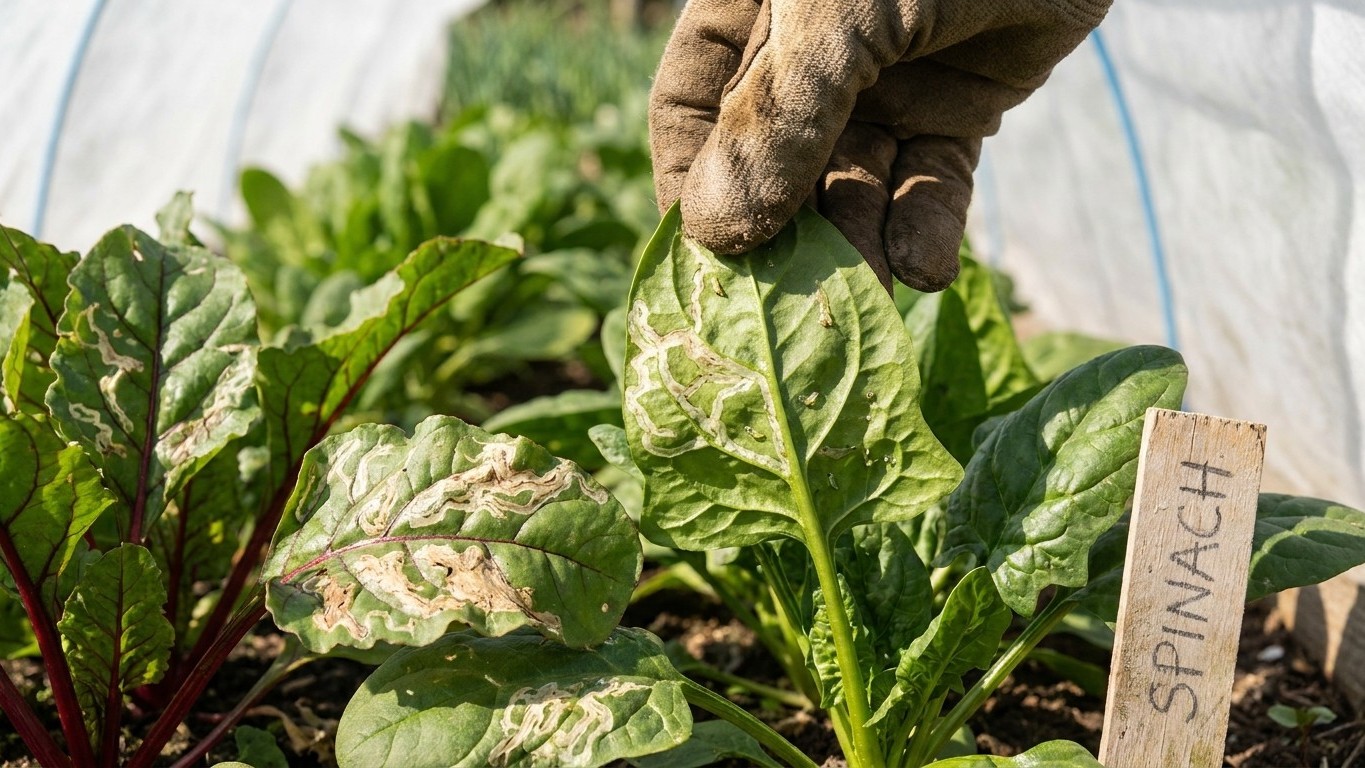

Leafminer flies show up in Utah gardens once soil warms in spring, laying eggs on spinach, beet, and chard leaves within weeks of transplanting. The larvae that hatch tunnel inside the leaf itself, so once damage appears, sprays and traps do little. Row covers timed to the last frost, prompt removal of mined leaves, and crop rotation are what actually break the cycle.
The weeks to watch

Leafminer flies become active in Utah as soon as daytime soil temperatures climb into the range that lets pupae in the soil finish developing, which in most of the state means spring, and they keep producing overlapping generations into midsummer. Utah State University Extension does not publish a specific flight-date window for this species, so the timing below follows the general pattern seen across similar climates rather than a Utah-specific calendar entry.
First generation
The earliest flies emerge as soil temperatures rise in spring, right around when gardeners are setting out spinach and beet transplants. Eggs go on the undersides of young leaves within days of the adults appearing.
Second and later generations
Leafminers typically run two to three generations per season in temperate climates, with each new flight overlapping the tail end of the last. That overlap is why a garden can show fresh mines on new growth even after older infested leaves have already been pulled.
Reading the calendar from your last frost

The insect does not check a calendar. It responds to soil warmth, so a cold, late spring pushes the first flight back, and a mild one pulls it forward. The one date most Utah gardeners actually track is the last spring frost, which for the Salt Lake City area (NOAA NCEI, 1991-2020 Climate Normals, station USW00024127) falls somewhere between April 12 and April 29. That’s a range, not a single day, and higher, colder parts of Utah run later while the warmer south runs earlier.
- Start from your local last-frost window (April 12 to April 29 for the Salt Lake valley) and mark when you actually plan to transplant spinach, beet, or chard.
- Expect the first leaf mines within a few weeks of that transplant date, since egg-laying begins almost as soon as flies find tender new leaves. Use that window to decide when a row cover needs to go on, not a fixed date pulled from a different climate.
What it attacks, and what the damage looks like

The first sign is usually a leaf that looks blistered or blotchy rather than eaten. Pale tan or whitish patches spread between the top and bottom surfaces of the leaf, sometimes as a winding, serpentine trail and sometimes as a wider blotch, and holding the leaf up to light often reveals the tunnel and the tiny maggot inside. The damage is done entirely by the larval stage, which feeds inside the leaf tissue where nothing sprayed on the surface can reach it. That’s the detail that decides what treatment can still help, since once the larva is inside, removing the leaf is often the only option left.
Crops most commonly affected in home gardens include:
- Spinach
- Beets and beet greens
- Swiss chard
- Occasionally tomato and pepper leaves
Heavily mined leaves can still be edible after the damaged section is cut away, though a badly tunneled leaf usually isn’t worth saving for anything beyond the compost pile.
How Utah sits in this pest’s range

This site currently documents leafminers in one territory: Utah. That doesn’t reflect the insect’s actual range, which extends well beyond the Mountain West, only the limits of what’s published here so far. No neighboring state’s data feeds into this page, so there’s no cross-border comparison to draw on yet, and none should be assumed.
Within Utah itself, the more useful contrast is elevation rather than any state line. The Salt Lake valley sits in a relatively mild pocket, and the frost dates cited above reflect that valley floor. Higher benches and mountain valleys across the state run colder and later, which pushes the whole leafminer season back accordingly, while the warmer low-desert areas of southern Utah likely see flies active earlier than the valley date suggests.
What actually works against it

The cheapest, most reliable measures come before the flies ever lay an egg. Once larvae are tunneling inside a leaf, most of these options stop being useful, which is why order matters here.
- Time transplanting around the leaf’s first-flight window. Setting spinach or beet starts out slightly later, once the earliest flies have already come and gone, means fewer eggs land on tender young leaves.
- Use floating row covers from transplant through several weeks in. The mechanism is simple physical exclusion: the fabric keeps adult flies off the leaves so they can’t lay eggs. It only works if it goes on before the first flies arrive and stays sealed at the edges; once a fly gets under it, or once eggs are already laid, the cover does nothing for that generation.
- Remove and destroy mined leaves as soon as they appear. Picking off a leaf with visible tunneling and disposing of it (not composting it in an open pile) takes the larva out of the garden before it matures into another egg-laying adult. This is the one step that still helps after damage has started.
- Rotate spinach, beet, and chard to a different bed each year. Pupae overwinter in the soil near where infested leaves fell, so moving the crop makes it harder for emerging flies to find a host nearby.
- Clear old leaf debris in fall. Removing spent plants reduces the number of overwintering pupae in place to emerge the following spring.
Some gardeners also rely on yellow sticky traps to catch adult flies before they lay eggs. They’re commonly used, but trials on how much they actually reduce leaf damage in a home garden don’t offer a clear conclusion either way, so treat them as a monitoring tool rather than a control method.
Common questions
Can leafminer damage kill a plant?
Rarely on its own. A few mined leaves cost the plant some photosynthesis but usually don’t kill mature spinach, beet, or chard. Heavy, repeated infestation on young seedlings is more likely to stunt growth significantly.
Is it safe to eat leaves with old mines?
Yes, once the damaged section is cut away and the rest of the leaf looks normal. The concern is quality and taste in the tunneled area, not toxicity.
Do leafminers spread to other garden vegetables?
They favor spinach, beet, and chard, but related leafminer species can affect tomato and pepper foliage as well, so keeping an eye on nearby crops during an active infestation is worth the extra minute.