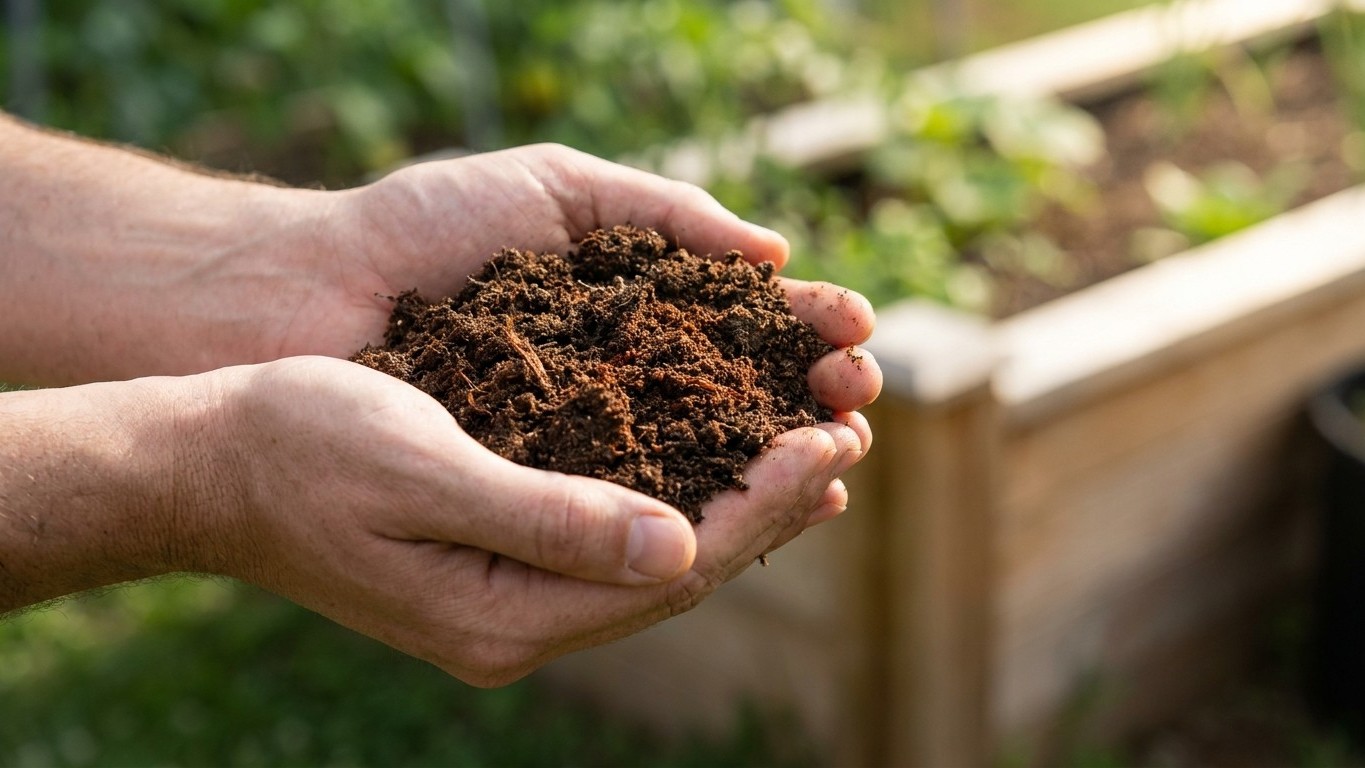

Dig a foot down almost anywhere in Virginia and you’re likely standing on a cousin of the Pamunkey series, the soil USDA names as representative of the state. It’s a slightly acid, silty loam that drains well but holds onto nutrients better than sandy ground does. Your own yard may match it closely, or not at all, depending on what came before your house.
What is under your garden

The Pamunkey series is an Alfisol, a forest soil built up under hardwood cover over thousands of years, and it’s the one USDA NRCS points to when it needs a single soil to stand in for Virginia. Alfisols are known for moderate fertility and a decent ability to hold onto nutrients rather than let them wash straight through, which is a useful trait if you’re trying to keep fertilizer where your plants can reach it instead of in the nearest storm drain.
The numbers behind that reputation come from USDA’s Soil Survey Geographic Database, averaged across 26 mapped components of the series. Surface pH runs about 6.2, which counts as slightly acid and sits close to the sweet spot most vegetables and lawns want. Texture is a loam leaning silty: 50 percent sand, 11 percent clay, 39 percent silt. Organic matter is thin, about 1.2 percent, which is typical of a mineral soil that’s been farmed or built on rather than left under leaf litter for a century.
| Reading | Value |
|---|---|
| Surface pH | about 6.2 (slightly acid) |
| Sand | 50 percent |
| Clay | 11 percent |
| Silt | 39 percent |
| Organic matter | about 1.2 percent |
| Drainage class | well drained |
Here’s the honest caveat: this is the soil that represents Virginia on a map, not the soil under your tomatoes. A state this size holds hundreds of mapped series. River bottoms run heavier and wetter. Hill country in the west sheds water fast over rock. And if a builder scraped topsoil off your lot before pouring a foundation, what’s left behind bears no resemblance to any natural series at all, Pamunkey included.
Five minutes with your own dirt
Grab a handful of moist soil from your garden bed and squeeze it between finger and thumb, trying to form a ribbon. Sand won’t ribbon at all, it just falls apart. A short ribbon under an inch means loam. A ribbon over two inches long that holds its shape means you’re dealing with clay. Then fill a clear jar a third full of soil, top it off with water, shake it hard, and let it sit overnight. Sand settles to the bottom within minutes, silt layers in above it over an hour or two, and clay stays suspended or forms a thin cap on top by morning. Read the layers and you’ll know, roughly, what you’re digging into before any lab report arrives.
Testing before you amend
Guessing at soil chemistry is how gardeners end up dumping lime on ground that was already fine, or fertilizer on soil that had plenty of phosphorus already. A real soil test measures what your eyes can’t: exact pH, available phosphorus and potassium, and often organic matter percentage. Given that the regional pH tends to run close to 6.2, you can expect something in that neighborhood, but expecting isn’t knowing, and plenty of individual yards drift well outside that number depending on old ash piles, concrete debris, or decades of acidifying fertilizer.
Taking a sample well is half the job. Do it right and the lab report actually means something.
- Pick one area at a time, don’t mix soil from the vegetable bed with soil from the lawn.
- Use a clean trowel or soil probe and dig 8 to 10 cores spread evenly across that area.
- Go down to the depth roots actually occupy, about 6 inches for most garden beds.
- Break up clods, remove roots and stones, and mix the cores in a clean plastic bucket.
- Pull about two cups of the mixed soil, let it air dry if it’s wet, and bag it for the lab.
- Label each bag clearly with the area it came from and what you plan to grow there.
When results come back, the pH number tells you which direction to correct, and the nutrient levels tell you whether you actually need fertilizer or whether you’ve been wasting money adding more of something you already have enough of.
Amending it
Because the representative pH for this soil sits around 6.2, most Virginia gardens start out slightly acid rather than sharply so. That’s a different fix than what a gardener in truly acid soil, or truly alkaline soil, needs to make. Match the correction to the actual number on your own test report, not to the state average.
Lime for acid ground
If your test comes back below about 5.5, lime is the tool, not sulphur, which would only push the pH further the wrong way. Acid soil locks up phosphorus so roots can’t use it, and it stunts brassicas like broccoli and cabbage in particular. Ground limestone raises pH slowly, over one to two growing seasons, not overnight, because it has to react with soil moisture and work down through the root zone. Apply it in fall so winter freeze-thaw cycles help work it in before spring planting.
Sulphur for alkaline ground
If a test comes back above about 7.3, lime has no business anywhere near that bed. Elemental sulphur, worked in along with compost or other organic matter, is the slow honest route back down, typically taking a full season or more to show real movement. High pH locks iron out of reach for plant roots, and that’s exactly what yellow leaves with dark green veins, classic iron chlorosis, are telling you before a test ever confirms it.
Organic matter for heavy clay
At 11 percent clay this series isn’t heavy by clay-soil standards, but plenty of individual Virginia lots run higher. Compost worked in every season is the fix, added gradually over a few years rather than in one large dose. Never add sand to clay hoping to loosen it, that combination tends toward something closer to concrete. And never work clay while it’s wet, compacting it that way undoes a season of amendment in an afternoon.
Organic matter for sandy ground
Sandier lots need the same compost, but for a different reason: sand won’t hold water or nutrients long enough for roots to use them. Shorter, more frequent watering matters here because nothing stays put in the root zone for long. Organic matter added regularly closes that gap within a season or two, faster than clay correction, since sand doesn’t fight back the way clay does.
Drainage and compaction
The Pamunkey series carries a well drained classification, meaning water moves through it steadily without pooling for long after a storm. That’s good news if your yard behaves the same way. The test to find out takes twenty minutes: dig a hole about a foot deep and a foot wide, fill it with water, let it drain once, then fill it again and time how far the water level drops per hour. An inch or more per hour is well drained. Less than half an inch per hour signals poor drainage, likely from compaction or a clay layer trapping water below the surface.
Compaction is the quieter problem, caused by repeated foot traffic, a wheelbarrow’s regular path, or heavy equipment during construction. Double digging, once the standard fix, has fallen out of favor because it disturbs soil structure and microbial life more than it helps, and the compaction often returns within a season anyway. On genuinely compacted or poorly drained ground, a raised bed filled with good soil is the honest answer rather than three years of patient amendment that may never fully succeed.
- Well drained ground: water most vegetables normally, without raised beds, and expect roots to reach depth without trouble.
- Poorly drained ground: build raised beds for anything that hates wet feet, especially root vegetables and most fruit trees.
- Compacted paths and beds: keep foot traffic off planting areas entirely, use stepping stones or a defined path instead.
- Standing water after rain: skip amendment and go straight to a raised bed or a rain garden planted for wet conditions.
Local help
Virginia Cooperative Extension, run jointly by Virginia Tech and Virginia State University, handles soil testing through county offices statewide. A standard test is inexpensive, and the office that processes your sample will walk through the results with you in person rather than leaving you to interpret numbers alone. Find your local office through Virginia Cooperative Extension.
Common questions
Is all Virginia soil the same as the Pamunkey series?
No. Pamunkey is the series USDA lists as representative of the state, but Virginia contains hundreds of mapped soil series. River bottoms, mountain soils, and any lot that’s been graded or filled during construction will differ, sometimes completely.
How often should I retest my soil?
Every two to three years for an established garden is typical, or sooner if you’ve made a major amendment like heavy liming and want to confirm it worked.
Can I fix soil pH in one season?
Not reliably. Lime and sulphur both work gradually, over one to two growing seasons for lime and often longer for sulphur, because both need soil moisture and time to react through the root zone.
Why does my yard drain so differently from my neighbor’s?
Grading, past construction, and even which direction a lot slopes can create different drainage within the same block, regardless of what the county soil map shows for the area overall.