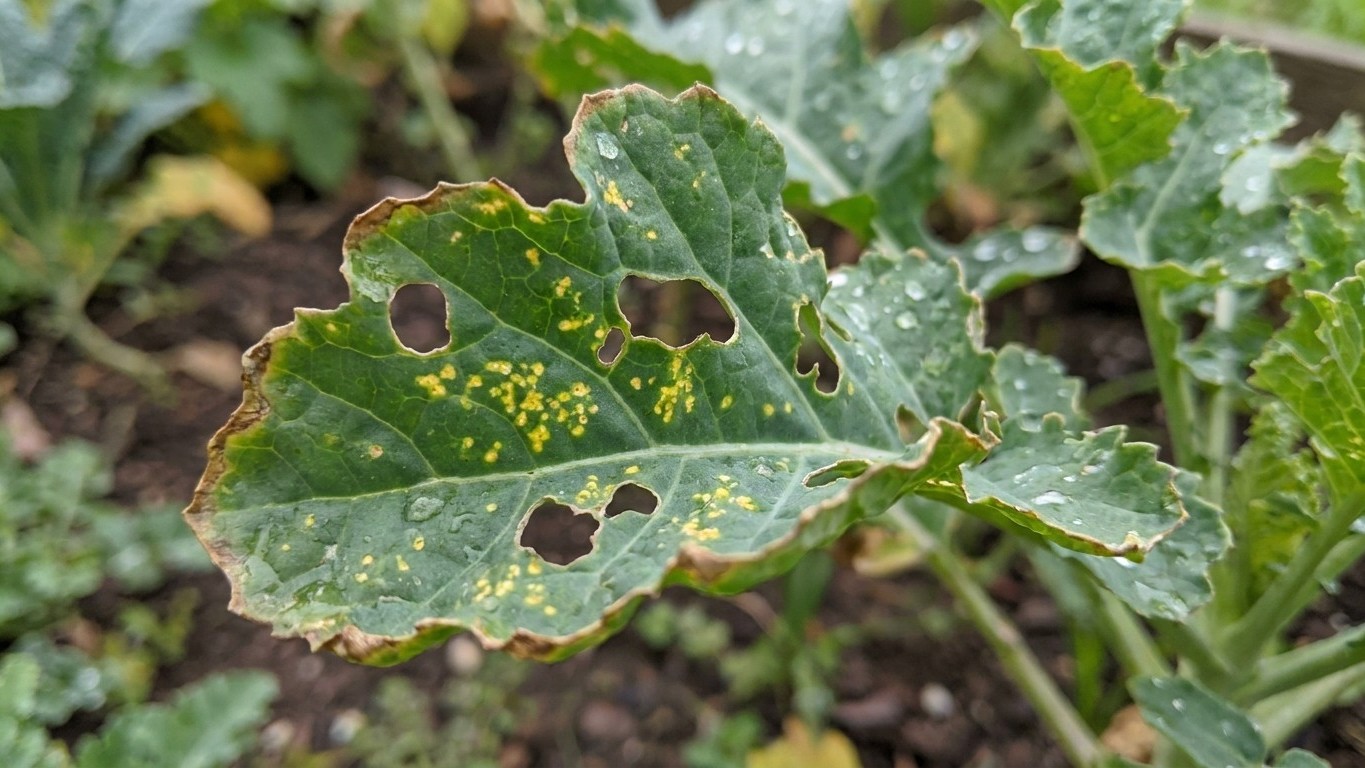

Nine species do most of the damage to summer squash in Virginia, and the list runs from egg-laying beetles that show up before the vines even spread to sap-suckers that peak during the state’s hottest weeks. Knowing which pest matches which symptom, and when it typically arrives, is what separates a squash patch that limps through August from one that collapses in July.
Which pests attack summer squash in Virginia

Virginia Cooperative Extension documents a specific set of insects that feed on vegetable crops statewide, and only some of them actually target summer squash. Sorting the full list down to what belongs on a squash vine matters, because a reader who spots the wrong bug on the wrong plant stops trusting the rest of the page.
The pests worth watching on summer squash are squash bug and squash vine borer, cucumber beetles, aphids, thrips and spider mites, stink bugs including brown marmorated, Tarnished plant bug, Japanese beetle, flea beetles, and black cutworm. The squash bug and squash vine borer pairing is the one growers fear most, since the borer works inside the stem where no spray reaches it once it has tunneled in. Cucumber beetles matter because they carry bacterial wilt, a disease that can take down a healthy-looking vine within days of the first bite marks. Aphids, thrips, and spider mites are sap feeders that build up fastest under heat stress, and stink bugs and tarnished plant bug move in once fruit and blossoms are on the vine. Japanese beetle adults chew leaves and blossoms in a broad window, flea beetles hit young seedlings hardest, and black cutworm cuts transplants off at the soil line before the plant has a chance to establish.
Cabbage looper, imported cabbageworm, cross-striped cabbageworm, Diamondback moth, and Harlequin bug are brassica feeders that target cabbage, broccoli, and related crops, not squash. Colorado potato beetle is a potato and eggplant specialist. Corn earworm and European corn borer feed on corn ears and, secondarily, tomato and pepper fruit, not squash vines. Mexican bean beetle sticks to beans, and tomato hornworm feeds on tomato and related nightshades. None of these belong in a summer squash pest guide, even though the extension service documents them for other crops grown in the same state.
When each one shows up, and what it does first
Timing in Virginia hinges on the frost window rather than a calendar month, since the growing season starts anywhere from March 20 to April 3 near the coast and runs weeks later inland toward the Blue Ridge and southwest Virginia. Summer squash typically goes in the ground once that frost risk has passed, and the pest sequence follows from there.
Flea beetles and black cutworm are the first threats a young squash planting faces, often within the first one to two weeks after transplanting or emergence, when stems are thin and leaves are tender. Flea beetles leave a scatter of tiny shot-hole punctures across the leaf surface, while cutworms show up as a seedling simply toppled over at the base, sometimes with no plant left standing at all. Cucumber beetles arrive close behind, often on the very first true leaves, chewing ragged holes and sometimes leaving a sticky trail of bacterial ooze if wilt disease has already taken hold.
Squash bugs and squash vine borer become visible as the vines start to run, generally a few weeks into the season once the plant has real leaf mass. Squash bug damage starts as yellow speckling on leaves that spreads into brown, papery patches, while squash vine borer announces itself with a small hole near the base of the stem and a pile of sawdust-like frass, usually well before the vine wilts outright. Aphids cluster on the undersides of new growth as temperatures climb, and thrips and spider mites become most active during the stretch of the year that averages 26 days at or above 90 degrees, when hot, dry conditions favor both. Stink bugs, tarnished plant bug, and Japanese beetle tend to arrive once fruit has set, leaving scarred or dimpled fruit surfaces and, in the beetle’s case, skeletonized leaves with only the veins left behind.
Telling the damage apart from Everything else
Not every wilted vine or blemished squash is an insect problem, and mistaking one for the other wastes a season. A vine that wilts in patches during the heat of the day but recovers overnight is more often stressed by the driest month in the region’s summer rainfall pattern, June’s typical 4.15 inches, than by squash vine borer. A vine that wilts and stays wilted, especially with a single runner collapsing while the rest of the plant looks fine, points more toward the borer or bacterial wilt carried in by cucumber beetles.
| Symptom | Possible insect cause | What else it could be | What tells them apart |
|---|---|---|---|
| Sudden vine collapse | Squash vine borer, bacterial wilt from cucumber beetle | Drought stress, root rot | Check the stem base for a frass-filled hole; slice a stem and look for tunneling or milky sap |
| Stippled, bronzed leaves | Spider mites, thrips | Nutrient deficiency, heat scorch | Tap a leaf over white paper; moving specks confirm mites |
| Skeletonized leaves | Japanese beetle | Fungal leaf disease | Beetles are visible in clusters feeding in daylight; disease leaves lesions instead of missing tissue |
| Scattered small holes | Flea beetle, cucumber beetle | Hail or mechanical damage | Insect holes cluster on new growth; mechanical damage is random across the plant |
| Scarred or dimpled fruit | Stink bug, tarnished plant bug | Sunscald, blossom end issues | Insect scarring shows a sunken puncture point; sunscald appears as a flat, bleached patch |
| Collapsed seedling at soil line | Black cutworm | Damping-off disease | Cutworm damage is a clean cut; damping-off leaves a mushy, discolored stem |
When the symptom is genuinely ambiguous, a local extension office is the right next call rather than guessing from a photo online.
What actually works here, and what is a waste of time
On a Virginia squash bed, timing beats treatment almost every time. Row cover installed right at planting, and removed once flowers open for pollination, is the single most reliable defense against flea beetles, cucumber beetles, and the adult moths that lay squash vine borer eggs, because it physically blocks the insect before it ever finds the plant. Once flowers need pollinators, though, the cover has to come off, which means the window for keeping it on is short and the timing has to be exact.
Handpicking squash bug egg clusters off the undersides of leaves works, but only if it happens before the eggs hatch, since a garden checked once a week during the vine-running stage catches far more than one checked monthly. Staggered planting, where a second round of squash goes in a few weeks after the first, can outrun a squash vine borer generation that hits the earlier planting hard. Trellising vines up rather than letting them sprawl on the ground reduces the humid, shaded conditions that stink bugs and slugs favor, and it makes daily inspection faster.
What tends to waste time is spraying on a fixed schedule regardless of what is actually present, since broad treatments that hit pollinators do nothing for a borer already inside the stem, and they can knock back the very insects that keep aphid populations in check. Pulling a wilted vine and assuming it is beyond saving before checking the stem for tunneling also throws away plants that could have been salvaged by slitting the stem and removing the larva. For anything beyond row covers and hand removal, the state’s extension service is the source that knows what is currently labeled for use in Virginia, and that answer changes over time in ways a general gardening site cannot track.
Where to check this for your own county
Virginia Cooperative Extension keeps county-level offices across the state, and the general portal at ext.vt.edu is the starting point for finding the one that covers a specific garden. A statewide pest list says what has been documented somewhere in Virginia, not what is active in one backyard, and the gap between those two things can be wide.
The state’s climate makes that gap especially real. A garden near the coast works with a frost-free season running from roughly March 20 to April 3 in spring through November 10 to 24 in fall, while a garden in the Blue Ridge or southwest Virginia starts weeks later and ends weeks earlier, shifting every pest’s arrival date along with it. USDA hardiness zones across the state span 5a to 8b, another sign of how much conditions vary from one county to the next even though the pest list itself stays the same statewide.
A county extension office can confirm whether a particular pest is active locally this season, check a photo or sample, and point to management options that are current and legal to use in that county. That local call is the next step once a symptom has been narrowed down but not identified with certainty.