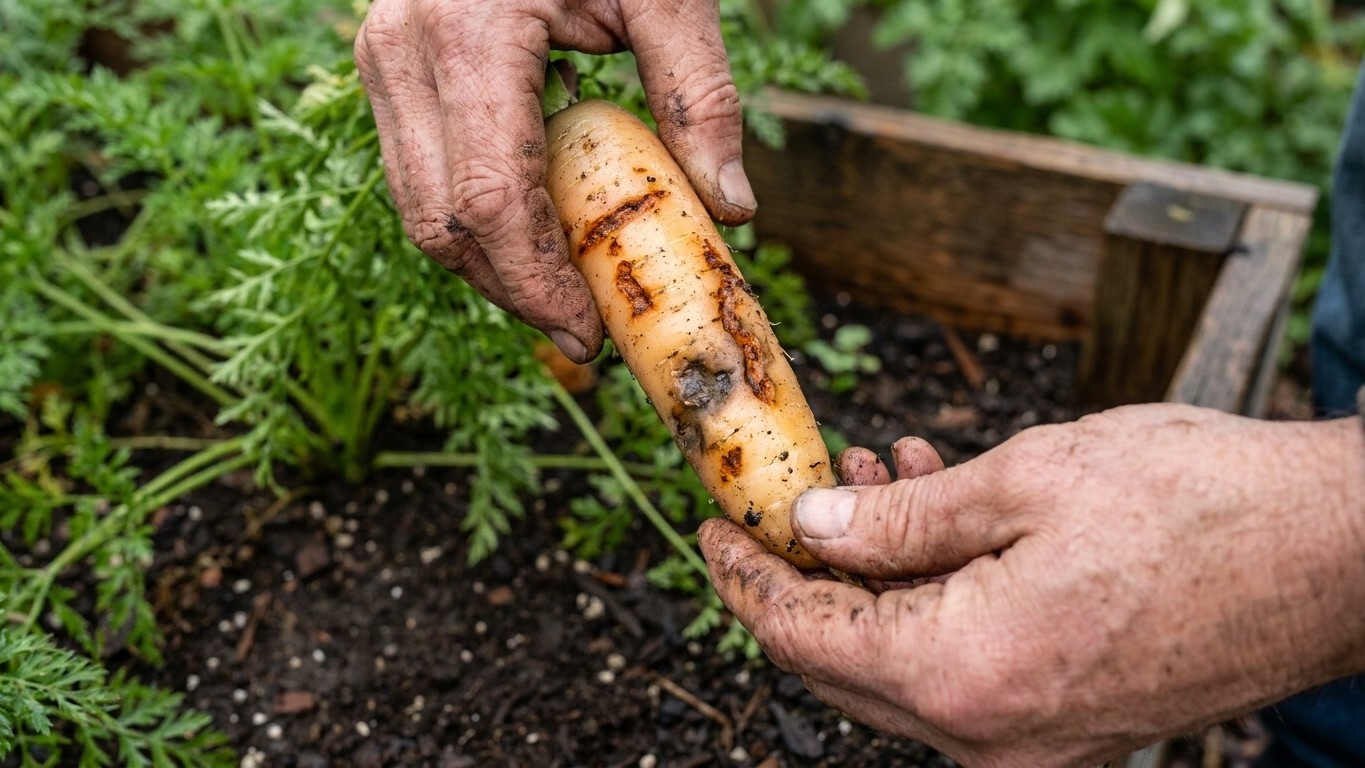

Carrot rust fly shows up in Washington in two distinct waves each year, one in spring and one in late summer, and it hits hardest west of the Cascades where cool, damp soil gives the larvae exactly what they need to survive. If your carrots, parsnips, or celery are coming up with rusty brown tunnels or a soft, scarred root, this pest is the most likely culprit in gardens from Bellingham to Olympia.
Where Carrot Rust Fly Thrives in Washington

This insect (Psila rosae) is a Pacific Northwest regular, not a random visitor. It needs moist, cool soil to complete its life cycle, which is exactly what the maritime side of the state offers for much of the growing season. Puget Sound gardens, the Olympic Peninsula, and coastal counties see far more pressure than the dry interior around Yakima or Spokane, where summer heat and lower humidity slow the fly down or stop it outright.
Soil type matters too. Heavy, water-retentive clay and rich garden loam hold moisture longer after rain or irrigation, and that’s where larvae survive winter in the highest numbers. Sandy, fast-draining beds in the same neighborhood can host noticeably less damage simply because the ground dries out between waterings.
Home gardeners east of the Cascades aren’t immune, but infestations there tend to be patchy and tied to unusually wet, cool stretches rather than a predictable yearly cycle.
The Timing: Two Generations, Two Windows
Carrot rust fly overwinters as larvae or pupae just below the soil surface, tucked in around old root debris. As soil warms in spring, the first adults emerge and start laying eggs at the base of young carrot foliage. In western Washington this typically lines up with the classic “carrots are up and growing” stage of the garden, roughly the stretch when soil temperatures climb into the workable range for spring planting.
Those eggs hatch into maggots that tunnel down and start feeding on root hairs and then the root itself. A second generation follows in late summer, often catching gardeners off guard because they assume the pest pressure ended with the spring batch. This second wave is the one that ruins fall harvest carrots, the ones people plan to store through winter.
Two generations a year is the standard pattern across the maritime Northwest. Some seasons with an extended cool spring or a mild fall can stretch the window on either end, which is part of why relying on a fixed calendar date instead of watching soil and weather conditions leads to missed timing on protective measures.
Why Fall Carrots Take the Bigger Hit
Roots that have been sitting in the ground longer give second-generation larvae more time and more root mass to tunnel through before harvest. A carrot pulled in July might show minor surface scarring, while the same variety left in the ground into October can carry visible rust-colored tunnels running through a good portion of the root. This is one reason gardeners in wetter parts of the state often report worse-looking carrots at fall harvest than in early summer.
Identifying the Damage
The adult fly itself is easy to miss. It’s small, shiny, and greenish-black with an orange-yellow head and legs, and it doesn’t announce itself buzzing around like a housefly. Most gardeners never spot the adult and instead find the damage after pulling roots.
Look for these signs when you harvest:
- Thin, winding tunnels with a rust-brown or reddish stain running through the flesh
- Small, dark maggots (up to about a third of an inch) inside the tunnels if the root is freshly damaged
- Stunted or forked roots on young plants where larvae fed on the tap root early
- Soft, rotting patches where secondary bacteria or fungi moved into old feeding tunnels
- Foliage that yellows or wilts on otherwise healthy-looking plants, a sign of root damage below
Carrots aren’t the only target. Parsnip, celery, celeriac, parsley, and even dill can host larvae, which matters for rotation planning since simply avoiding carrots one season doesn’t remove the food source if related crops are still in the bed.
What Actually Stops Carrot Rust Fly
Chemical controls exist, but home gardeners in Washington get more consistent results from physical exclusion and timing than from sprays, mainly because the damaging stage happens underground where insecticides applied to foliage never reach.
Row Covers Are the Single Best Tool
Floating row cover or fine insect mesh laid over carrot beds at planting time, and sealed at the edges with soil or boards, blocks adult flies from reaching the soil to lay eggs in the first place. This is the method most consistently recommended by extension services across the Pacific Northwest, and it works because it addresses the actual entry point of the problem rather than trying to kill larvae after they’re already inside a root.
The cover needs to stay on for the entire window when adults are active, which for western Washington gardeners often means from seeding through much of the growing season, not just the first few weeks. Removing it too early to weed or thin plants gives egg-laying females an opening.
Rotate Away From the Whole Carrot Family
Because larvae pupate in soil near where they fed, planting carrots or parsnips in the same bed year after year lets populations build up steadily. Moving root crops to a different part of the garden, and waiting at least two to three years before returning carrots to the same spot, breaks that cycle. This only works if celery, parsley, and other related crops are rotated along with the carrots, since they host the same pest.
Clean Up Root Debris After Harvest
Larvae and pupae overwinter in leftover root fragments and soil near old carrot rows. Pulling every root, including small or broken pieces left behind during harvest, and clearing old foliage removes a chunk of the overwintering population before it has a chance to emerge as spring adults. This step costs nothing but a few extra minutes at cleanup time and pays off the following season.
Time Plantings to Dodge Peak Activity
Because the fly needs cool, moist soil and a fairly narrow temperature window to lay eggs successfully, shifting planting dates can reduce exposure. Some western Washington gardeners delay spring carrot seeding by a few weeks past the earliest possible date, letting the first adult flight pass before tender seedlings are in the ground. It’s not foolproof given how variable Northwest spring weather can be, but combined with a row cover it adds another layer of protection.
Where Sprays and Biological Options Fit
Beneficial nematodes applied to soil can target larvae before they tunnel into roots, and some gardeners use them as a supplement to row covers rather than a standalone fix, since nematode survival depends heavily on soil moisture and temperature staying within a fairly specific range. Diatomaceous earth worked into the soil surface around seedlings has also been used to deter egg-laying adults, though it needs reapplication after rain or irrigation to stay effective.
Insecticide options exist for larger-scale plantings, but for a backyard garden bed, exclusion and rotation solve the problem more reliably than chemical treatment, and they avoid the timing precision that insecticide applications typically require to catch adults during the narrow egg-laying window.
What Washington Gardeners Get Wrong
The most common mistake is treating carrot rust fly as a one-time spring problem and dropping the row cover once carrots are established, right before the second generation shows up in late summer. Another frequent misstep is rotating carrots to a new bed but planting parsley or celery in the old carrot spot the same year, which keeps the pest supplied with host plants in the same location.
Storage carrots deserve extra attention in the maritime counties specifically because they sit in the ground the longest, giving the second generation the most time to do damage before harvest. Anyone planning to store carrots through winter in western Washington should keep row covers on later into the season than a gardener pulling carrots for immediate use in July.
For more detail on regional pest timing and identification, Washington State University’s tree fruit and small farms extension programs track pest activity across the state’s growing regions, and local county extension offices can confirm whether a given season’s weather is likely to push emergence earlier or later than typical.