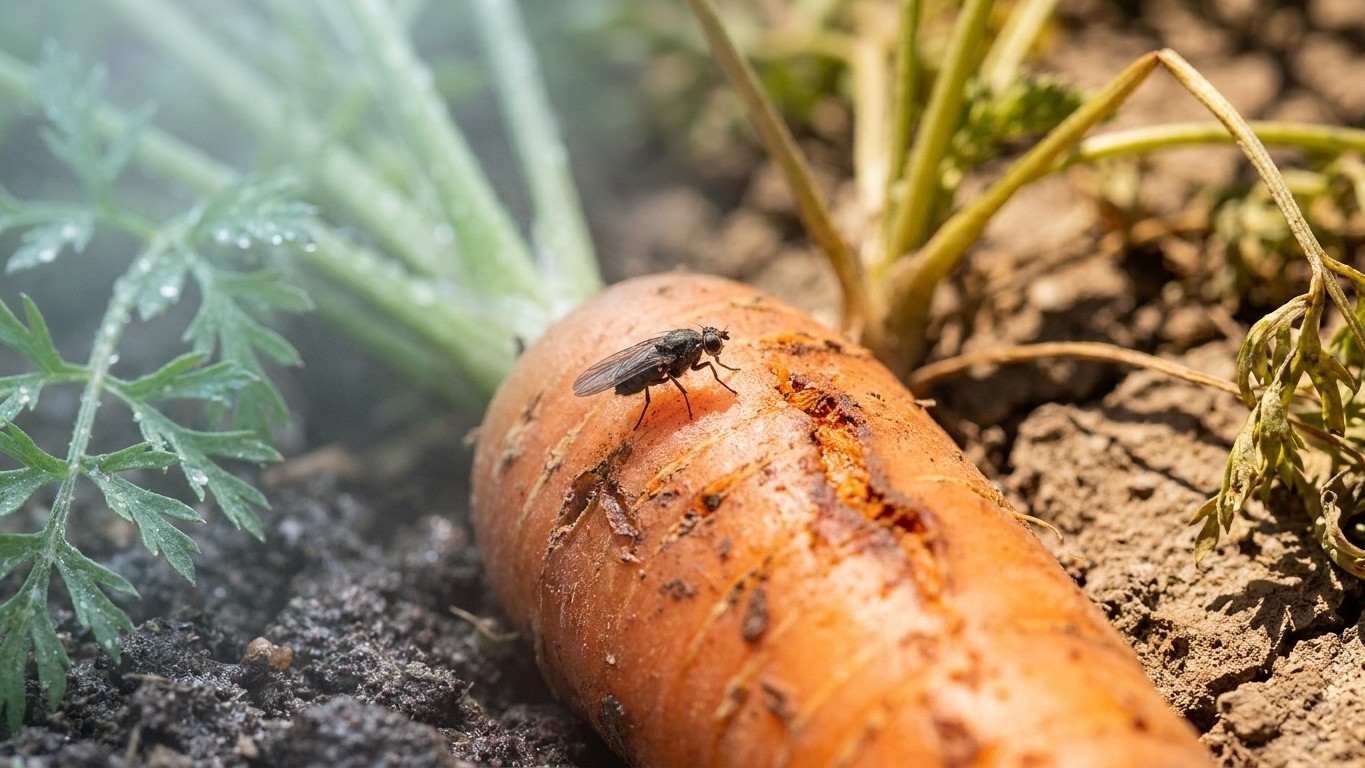

Carrot rust fly (Psila rosae) is a cool-climate pest, and that single fact explains almost everything about where it shows up in Idaho and when growers need to worry. This insect thrives in humid, moderate temperatures, not in the high desert heat that dominates much of the state. If you garden in the Idaho Panhandle or one of the cooler mountain valleys, you’re at real risk. If you’re growing carrots in the Treasure Valley or Magic Valley under a scorching July sun, the threat drops sharply, though it doesn’t disappear entirely.
Where Carrot Rust Fly Turns Up in Idaho

This pest is a long-established problem in the Pacific Northwest, particularly in the maritime and near-maritime zones of Oregon and Washington where mild, damp springs give it ideal conditions to complete its life cycle. Northern Idaho shares more climate DNA with those regions than the rest of the state does. Coeur d’Alene, Sandpoint, and the broader Panhandle sit in a transitional zone influenced by Pacific air masses, with cooler summer nights and more consistent moisture than southern Idaho sees.
South and east of the Panhandle, the picture changes fast. The Snake River Plain, home to Boise, Twin Falls, and Idaho Falls, runs hot and dry for most of the growing season. Carrot rust fly larvae need moist soil to survive, and adult flies are intolerant of prolonged heat above roughly 85°F. That doesn’t mean southern Idaho gardeners get a free pass, especially those irrigating heavily or growing in shaded, north-facing raised beds where soil stays cooler and wetter. But the pressure is lower, and outbreaks tend to be sporadic rather than annual.
Higher-elevation pockets, like parts of the Wood River Valley around Sun Valley or the mountain valleys near McCall, occupy a middle ground. Cooler nights and heavier snowmelt-fed soil moisture can create small windows of favorable conditions even outside the Panhandle.
The Timing That Actually Matters
Carrot rust fly overwinters as pupae buried a few inches down in the soil, often right where last year’s carrot patch stood. Adults emerge once the soil warms into the mid-40s to low-50s Fahrenheit, which in northern Idaho typically lands somewhere in April, sometimes stretching into early May in a cold spring. Growers who track this closely often use a rough date range rather than a single trigger point, because emergence can shift by two or three weeks depending on how the winter played out.
Once adults are active, females start laying eggs at the base of carrot foliage within a week or two, usually favoring cloudy, humid days over dry, windy ones. The eggs hatch into small cream-colored maggots that tunnel down into the soil and bore into the developing root. This first generation causes most of the visible damage on early and midseason carrots.
Idaho’s Panhandle season is generally long enough to support a second generation, with adults from the first brood emerging in late July through August and laying eggs that affect fall-harvested carrots. Southern Idaho’s shorter window of cool, moist soil conditions usually limits activity to a single, less predictable generation, if it happens at all in a given year.
Why the Calendar Beats the Calendar Date
Soil temperature drives this insect’s schedule far more reliably than the date on a wall calendar. A grower checking soil temp at a 4-inch depth with a simple soil thermometer gets a far better read on risk than assuming “carrot rust fly season starts April 20th” every single year. This is one of those cases where five dollars of equipment beats guesswork.
Spotting the Damage Before It’s Too Late
Above ground, infested carrot foliage rarely looks obviously sick, which is part of why this pest catches people off guard. The tell comes at harvest, when roots show rust-colored, corky tunnels just under the skin, sometimes running deep enough to reach the core. Secondary rot frequently follows, since the tunnels give soil-borne bacteria and fungi an easy entry point. A carrot that looked fine when pulled can turn slimy in storage within a week.
Parsley, parsnip, celery, and celeriac share the same vulnerability, since carrot rust fly isn’t picky about which member of the carrot family it targets. Anyone growing a mixed root-vegetable bed should watch all of these crops, not just the carrots themselves.
What Actually Stops It
Control for carrot rust fly leans heavily on prevention rather than rescue treatments, because once larvae are inside the root, nothing sprayed on the leaves is going to fix that carrot.
Row covers remain the single most effective tool available to home growers. A fine mesh cover, installed at seeding and sealed tight at the soil line, physically blocks adult flies from reaching the plants to lay eggs. This only works if the cover goes on before the first flight, which circles back to why tracking soil temperature in early spring matters so much. Gaps at the edges, even small ones, give adults an opening.
Crop rotation matters more here than with many garden pests, since pupae overwinter in the same soil where the host crop grew. Moving carrots, parsley, celery, and parsnip to a different bed each year, ideally with two to three years between plantings in the same spot, breaks the cycle of adults emerging right next to a fresh crop.
Timing the planting to dodge peak adult activity is a lower-effort option, especially in areas with a single generation per year. Delaying carrot seeding by two to three weeks past the typical local emergence window can mean the crop is still small and less attractive when adults are laying eggs, though this trades off against a shorter harvest window.
Biological and Cultural Options
Beneficial nematodes applied to the soil around root vegetables can reduce larval survival, since certain nematode species actively hunt soil-dwelling insect larvae. Results vary depending on soil moisture and temperature at application, and this works best as one layer in a broader strategy rather than a standalone fix.
Clearing crop debris after harvest removes overwintering sites, since leftover roots and foliage left in the ground give pupae a sheltered spot to survive winter. Deep tilling in fall can also expose pupae to weather and predators, though this needs to be balanced against soil health goals for gardeners who prefer no-till or low-till approaches.
Interplanting with strongly scented companion plants, such as onions or certain alliums, gets mentioned frequently in home gardening circles as a way to confuse egg-laying females. The evidence for this is thinner than for row covers or rotation, so treat it as a minor supplement rather than a primary defense.
When to Consider a Targeted Insecticide
Products containing spinosad, applied to the soil surface around the base of plants during peak adult flight, can reduce egg-laying success in cases where row covers weren’t installed in time or failed. Timing is everything with this approach: applying it after larvae have already tunneled into roots does nothing, since the insecticide needs to contact adults or newly hatched larvae before they burrow in. Idaho gardeners considering any insecticide option should check current product labels carefully, since registration and approved uses shift over time, and always follow the label’s specific timing and rate instructions rather than general online advice.
A Realistic Approach by Region
Panhandle growers dealing with consistent, multi-year pressure are usually best served by combining row covers with a strict rotation schedule, treating this pest as a near-annual expectation rather than an occasional nuisance. Southern Idaho gardeners can often get away with lighter measures, monitoring soil temperature and watching for the telltale rust-colored tunnels at harvest, then escalating to row covers only if damage shows up two years running.
One detail that surprises a lot of home gardeners: harvesting carrots slightly earlier than the “perfect” size, even a bit immature, can dodge a second-generation infestation in Panhandle gardens where the fall brood is active. A smaller carrot with clean flesh beats a full-sized one riddled with rusty tunnels, and that trade-off is worth considering when the calendar and soil temps signal a fall flight is underway.