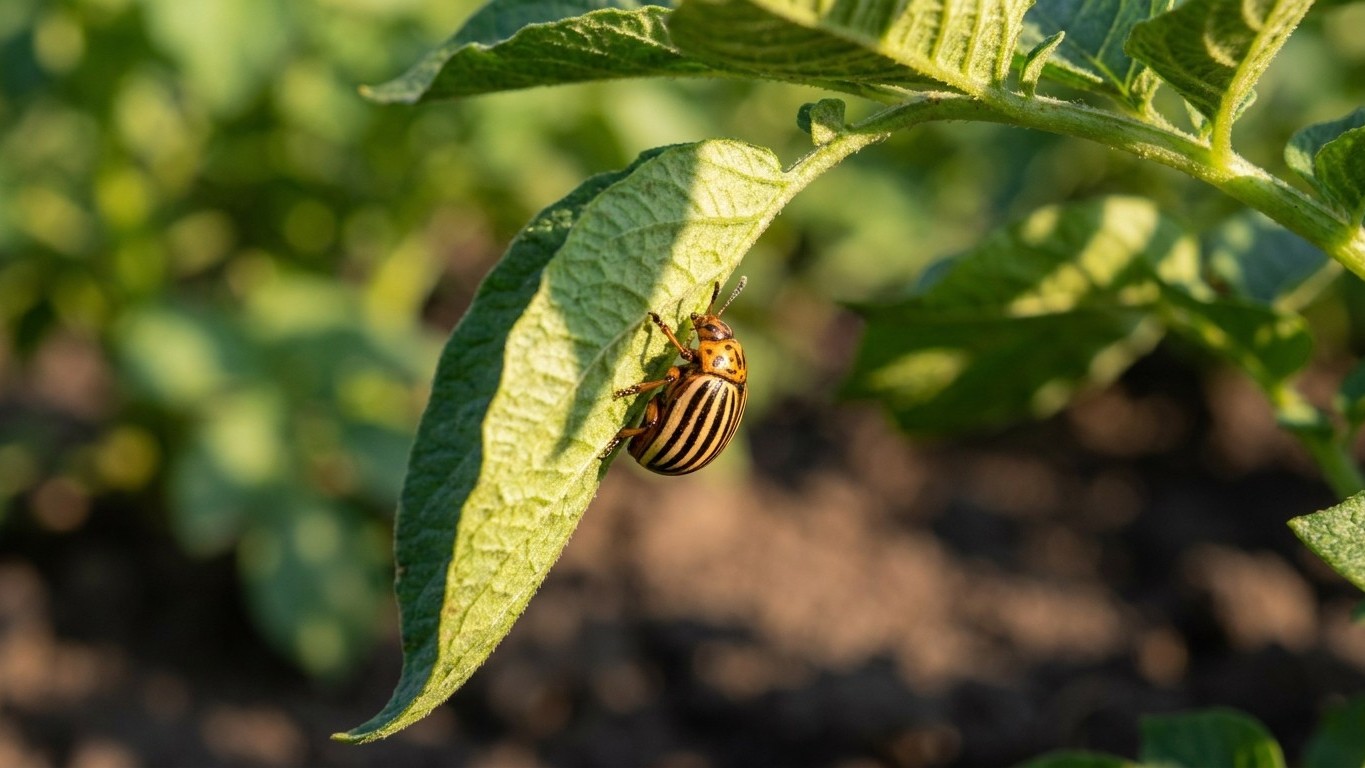

Colorado potato beetle adults break dormancy in West Virginia soil once daytime temperatures hold above roughly 60°F for several days running, which typically lands somewhere between late April in the Eastern Panhandle and mid-May in the higher elevations of the Allegheny Mountains. That timing window is the single most useful piece of information for anyone growing potatoes, tomatoes, or eggplant in the state, because it tells you exactly when to start scouting before the beetles start laying eggs on the undersides of leaves.
Why This Pest Is a West Virginia Problem, Not Just a Rocky Mountain One

The name is misleading. Colorado potato beetle (Leptinotarsa decemlineata) was first documented on wild nightshade in the Rocky Mountain region back in the 1800s, but it spread east with commercial potato farming and now shows up in nearly every state where solanaceous crops grow, including every county in West Virginia that has ever grown a backyard tomato patch. The insect overwinters as an adult, burrowed six to eight inches into loose garden soil or field edges, and it doesn’t care whether that soil sits in Berkeley Springs or Beckley.
What does matter is elevation and soil type. Sandy, well-drained garden beds in the Ohio Valley warm up faster in spring, so beetles there tend to emerge a week or two ahead of gardens in the higher, clay-heavy soils around Pocahontas or Randolph County. Home growers who track soil temperature with a simple probe thermometer, rather than relying on the calendar, catch the emergence window more accurately than anyone guessing from last year’s date.
Life Cycle: What to Watch for and When
Once adults emerge, they feed briefly, mate, and the females start laying clusters of 20 to 40 bright orange-yellow eggs on the underside of foliage, usually within one to two weeks of emergence. Those eggs hatch into soft-bodied, hump-backed larvae that go through four growth stages over roughly two to three weeks, and this larval stage is where the real crop damage happens. A single generation from egg to adult takes about a month under warm conditions, and most of West Virginia sees two full generations per growing season, sometimes a partial third in a warm year in the southern counties.
That second generation is the one that catches gardeners off guard. Growers who beat back the first wave in May often relax by July, right when a fresh batch of adults is emerging to lay another round of eggs. Skipping a scouting trip in mid-summer is the most common reason a potato patch that looked fine on the Fourth of July is stripped to bare stems by early August.
Identifying the Insect at Each Stage
Adults are about 3/8 inch long, with a rounded, yellow-orange body and ten black stripes running lengthwise down the wing covers, which is where the species name decemlineata comes from. Larvae start out dark red with black heads and grow more orange as they mature, developing two rows of black spots along each side. The egg clusters are the easiest early warning sign: flip a few leaves over every few days starting in early May, and those bright orange clumps stand out against green foliage almost immediately.
Damage Patterns and Which Crops Are at Risk
Potato is the primary host, but the beetle also attacks tomato, eggplant, and pepper, along with wild relatives like horsenettle and jimsonweed that grow along fence rows and field edges throughout West Virginia. Larvae do the bulk of the feeding damage, chewing through leaf tissue from the underside outward, and a heavy infestation can defoliate a potato plant in under a week. Because potatoes rely on leaf area to bulk up tubers underground, defoliation early in the season, before flowering, causes far more yield loss than the same damage showing up after tubers have already sized up.
Eggplant tends to suffer worse cosmetic and structural damage than tomato, since eggplant foliage is thinner and beetles will move onto fruit-adjacent stems when leaf material runs short. Home gardeners growing all three crops in the same bed, a common layout in small West Virginia vegetable gardens, should expect the beetle to work through potato foliage first, then shift pressure to eggplant once potato leaves get scarce.
Control Strategies That Actually Work
Hand-picking remains one of the most effective tools for small plantings, particularly early in the season before populations build. Knocking adults and larvae into a bucket of soapy water twice a week, combined with crushing egg clusters on sight, can keep a backyard plot under control without a single spray. This works because the beetle’s low mobility as a larva means it can’t quickly recolonize a cleaned plot the way flying pests can.
Crop rotation matters more than most gardeners realize. Overwintering adults emerge in the same spot they burrowed into the previous fall, so planting potatoes in a different bed each year, ideally at least 50 feet from the previous season’s location, forces beetles to travel further to find a host and cuts survival rates significantly. Straw mulch around potato plants has also shown value in university trials by making it harder for emerging adults to locate host plants by scent and sight.
Row covers installed at planting and removed only for pollination-dependent crops like eggplant keep the first wave of overwintered adults from ever reaching young plants. For potatoes, which don’t need pollinator access for tuber production, covers can stay on until harvest in many cases.
Biological and Chemical Options
Products based on Bacillus thuringiensis subspecies tenebrionis (often labeled Btt) target young larvae specifically and leave beneficial insects unharmed, making them a solid first-line option for organic growers. Spinosyn-based insecticides and certain diamide chemistries also show good activity against Colorado potato beetle larvae when applied at the right growth stage, generally when larvae are small and actively feeding rather than after they’ve reached full size and stopped eating as much.
Neonicotinoid seed treatments and soil-applied products have historically provided season-long protection for commercial potato growers, but their use has declined in some regions due to pollinator concerns and, more relevant here, because the beetle has developed resistance to neonicotinoids in multiple states through repeated single-chemistry use.
Resistance Is the Real Long-Term Problem
Colorado potato beetle holds the distinction of being one of the most insecticide-resistant agricultural pests documented in North America. Populations in various states have developed resistance to organophosphates, carbamates, pyrethroids, and neonicotinoids over the decades, largely because growers relied on the same chemical class year after year without rotating modes of action. Research from land-grant universities studying the species has consistently found that resistance develops fastest where a single insecticide class gets applied multiple times per season across multiple years in the same fields.
For West Virginia growers, this means rotating between different insecticide groups (IRAC classification numbers, found on any product label) rather than reaching for the same bottle every time. A grower who alternates a Btt product, a spinosyn, and a diamide across a season, using each only once or twice, slows resistance development far more effectively than someone who sprays a single neonicotinoid three times because it’s what’s on the shelf.
Home gardeners with just a few plants have an advantage here that commercial operations don’t: hand-removal and physical barriers can replace chemical control entirely in many cases, sidestepping the resistance question altogether. Anyone managing a larger plot or a small commercial planting should check current product labels and resistance guidance through the EPA’s pesticide resources or contact their local West Virginia University Extension office, since recommended rotations shift as resistance patterns change from year to year.
Timing Your Response Through the Season
Late April through mid-May: scout weekly for overwintered adults on newly emerged potato foliage, especially near garden edges and previous nightshade weed patches. Early June: check for egg clusters and first-generation larvae, since this is the window where hand-removal and Btt applications are most effective. Mid-to-late July: watch for the second generation, which often arrives when gardeners have shifted attention to tomatoes and squash and stop checking potato and eggplant beds as closely.
Beetles that survive into September in the southern counties, where warm falls extend the growing season, will burrow into soil for the winter rather than starting a third generation, so late-season control mainly matters for protecting a final harvest rather than preventing future population growth. Cleaning up plant debris and tilling potato beds after harvest disturbs some of those overwintering sites, though the beetle’s habit of burrowing along field margins and fence rows means a portion of the population always escapes tillage and returns the following spring regardless of how thorough the fall cleanup was.