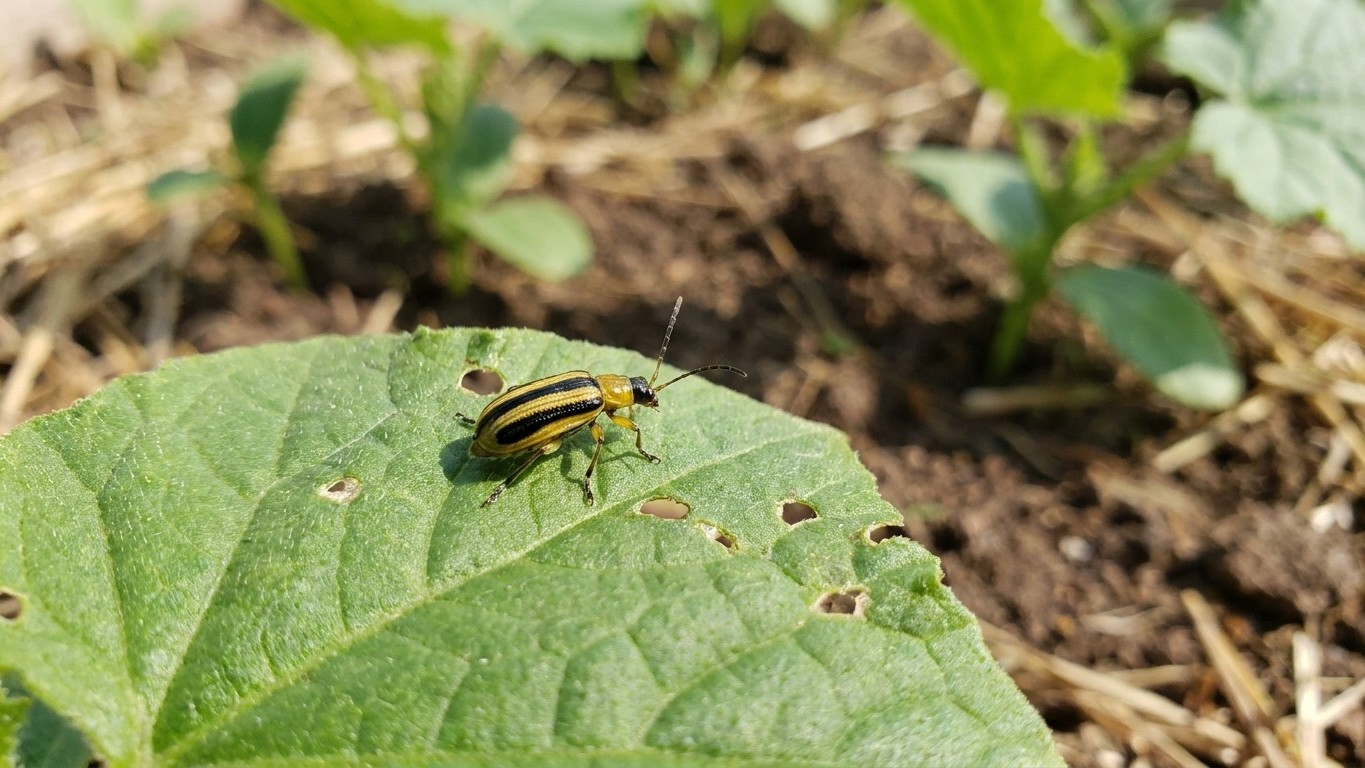

Cucumber beetles show up in Nebraska gardens once soil temperatures climb past 65°F, which typically lands between mid-May and early June depending on where you are in the state. Eastern Nebraska, with its warmer springs and higher humidity, usually sees them first. Western and panhandle counties often lag one to two weeks behind because the ground takes longer to warm. Once they arrive, the real threat isn’t the chewed leaves. It’s the disease they carry.
When Cucumber Beetles Emerge in Nebraska

Both species found in Nebraska, the striped cucumber beetle (Acalymma vittatum) and the spotted cucumber beetle (Diabrotica undecimpunctata), overwinter as adults. They tuck into leaf litter, fence rows, or the edges of tree lines and wait out the cold. When spring soil hits that 65°F mark, they crawl out hungry and start looking for young cucurbit seedlings, cucumbers, squash, melons, and pumpkins are all fair game.
The striped variety tends to dominate in Nebraska and much of the northern Plains, while the spotted cucumber beetle (also called the southern corn rootworm in its larval stage) becomes more common as you move south and east across the state. Gardeners in Omaha or Lincoln might see both species in the same season; growers in the Sandhills or panhandle counties usually deal mostly with striped beetles.
Nebraska’s growing season is long enough for a second generation to hatch out by late July or August. That second wave often does more damage than the first, especially on late-planted squash and fall pumpkins, because populations have had a full generation to build up. If you planted a second cucumber succession in early July hoping to dodge the first wave, don’t assume you’re clear. The August generation can hit just as hard.
Regional Timing Differences Across the State
Soil temperature, not the calendar, drives emergence. A cool, wet spring in central Nebraska can push first sightings into the first week of June, while a warm, dry spring in the southeast corner might bring beetles out by mid-May. County extension offices track soil temperature data, and checking that number before transplanting is more useful than relying on a fixed date.
Why They’re a Bigger Problem Than the Damage Looks
A handful of beetles chewing on cotyledon leaves looks manageable. It isn’t, because striped and spotted cucumber beetles both transmit Erwinia tracheiphila, the bacterium behind bacterial wilt. Once a plant is infected, there’s no cure. Vines wilt from the tip inward, and within one to two weeks the whole plant can collapse, even if it looked healthy days earlier.
Cucumbers and muskmelons are the most vulnerable to bacterial wilt. Squash and pumpkins have some natural resistance, though they’re not immune. Cucumber beetles also spread squash mosaic virus, which stunts plants and mottles fruit without necessarily killing the vine outright, a slower, less dramatic loss but a loss all the same.
Research from land-grant universities across the Midwest has shown that a single infected beetle feeding on a cucumber seedling for as little as an hour can be enough to introduce the wilt bacterium. That’s why Nebraska Extension recommends acting on the first beetles you see rather than waiting to gauge how bad an infestation becomes. Young seedlings, with just one or two true leaves, are the most vulnerable window. A plant that survives past that stage with a strong root system and four or more leaves has a much better shot at outrunning both the feeding damage and the disease risk.
What Actually Stops Cucumber Beetles in Nebraska Gardens
No single tactic wins this fight on its own. The gardeners and small-scale growers who keep beetle damage low in Nebraska typically stack two or three methods together, starting before the beetles even arrive.
Timing and Physical Barriers
Delaying planting by even a week or two, so seedlings emerge after the first wave of overwintered adults has already searched for food elsewhere, can cut early damage significantly. Floating row covers are the most reliable physical barrier. Laid over seedlings immediately after planting and sealed at the edges with soil or landscape staples, they block adult beetles from reaching young plants during that vulnerable early stage.
The catch: row covers have to come off once flowers appear, because cucurbits need pollinators to set fruit, and covers keep bees out along with beetles. That timing gap, right when covers are removed, is exactly when growers should be watching closest and ready with a backup plan.
Trap Crops and Yellow Sticky Traps
Cucumber beetles show a strong preference for certain squash varieties, particularly Blue Hubbard squash, over cucumbers and melons. Planting a border of Blue Hubbard around the perimeter of a cucumber or melon patch draws beetles away from the main crop, a technique sometimes called perimeter trapping. Growers then treat only the trap crop with an insecticide if needed, reducing chemical use on the food crop itself.
Yellow sticky traps placed at plant height help monitor beetle arrival and can trap moderate numbers, though they work better as an early-warning tool than a standalone control method for larger plantings.
Resistant Varieties and Crop Rotation
Some cucumber varieties, bred with resistance to bacterial wilt or with lower attractiveness to beetles due to reduced cucurbitacin compounds, hold up better under pressure. Cucurbitacins are the bitter compounds that actually attract cucumber beetles in the first place; varieties bred to be less bitter also tend to draw fewer beetles.
Rotating cucurbit plantings to a different part of the yard or garden each year matters more than most home gardeners realize. Overwintering adults emerge close to where they fed the previous fall. A cucumber patch planted in the same spot three years running is basically a welcome mat for beetles that never had to travel far.
Organic and Chemical Options
For gardeners who prefer to avoid synthetic insecticides, kaolin clay sprayed on foliage creates a barrier that makes plants less recognizable and less palatable to feeding beetles. Beneficial nematodes applied to soil can target overwintering larvae and reduce the following season’s population, though results vary by soil type and moisture.
Where beetle numbers threaten to overwhelm young plants, targeted insecticide applications, timed to early morning or evening when bees are less active, remain an option. Nebraska Extension recommends checking product labels for cucurbit-specific rates and pollinator precautions before applying anything during bloom.
Watching for Bacterial Wilt Symptoms Early
Because there’s no treatment once bacterial wilt sets in, the only real defense is catching beetle feeding before infection spreads. A simple test: cut a wilting stem near the base and press the cut ends together, then slowly pull apart. If you see thin, sticky strands of bacterial ooze stretching between the two halves, that’s a strong sign of bacterial wilt rather than drought stress or normal wilting from heat.
Infected vines should be removed and disposed of away from the garden, not composted on-site, since the bacteria can persist in plant debris. Removing infected plants promptly also reduces the chance that beetles feeding on dying vines will carry the pathogen to healthy plants nearby.
Nebraska’s beetle pressure isn’t uniform even within a single county. A garden bordered by tree lines or unmowed grass, both common overwintering sites, tends to see earlier and heavier beetle activity than an open, isolated plot. Clearing garden-adjacent leaf litter each fall, while not a complete solution, removes some of the winter shelter these beetles depend on to survive Nebraska’s cold months.
Related guides
- Cucumber beetles in South Dakota: When It Shows Up and What Stops It
- Cucumber beetles in Missouri: When It Shows Up and What Stops It
- Cucumber beetles in Oklahoma: When It Shows Up and What Stops It
- Cucumber beetles in Oregon: When It Shows Up and What Stops It
- Cucumber beetles in Utah: When It Shows Up and What Stops It
- Cucumber beetles in Virginia: When It Shows Up and What Stops It