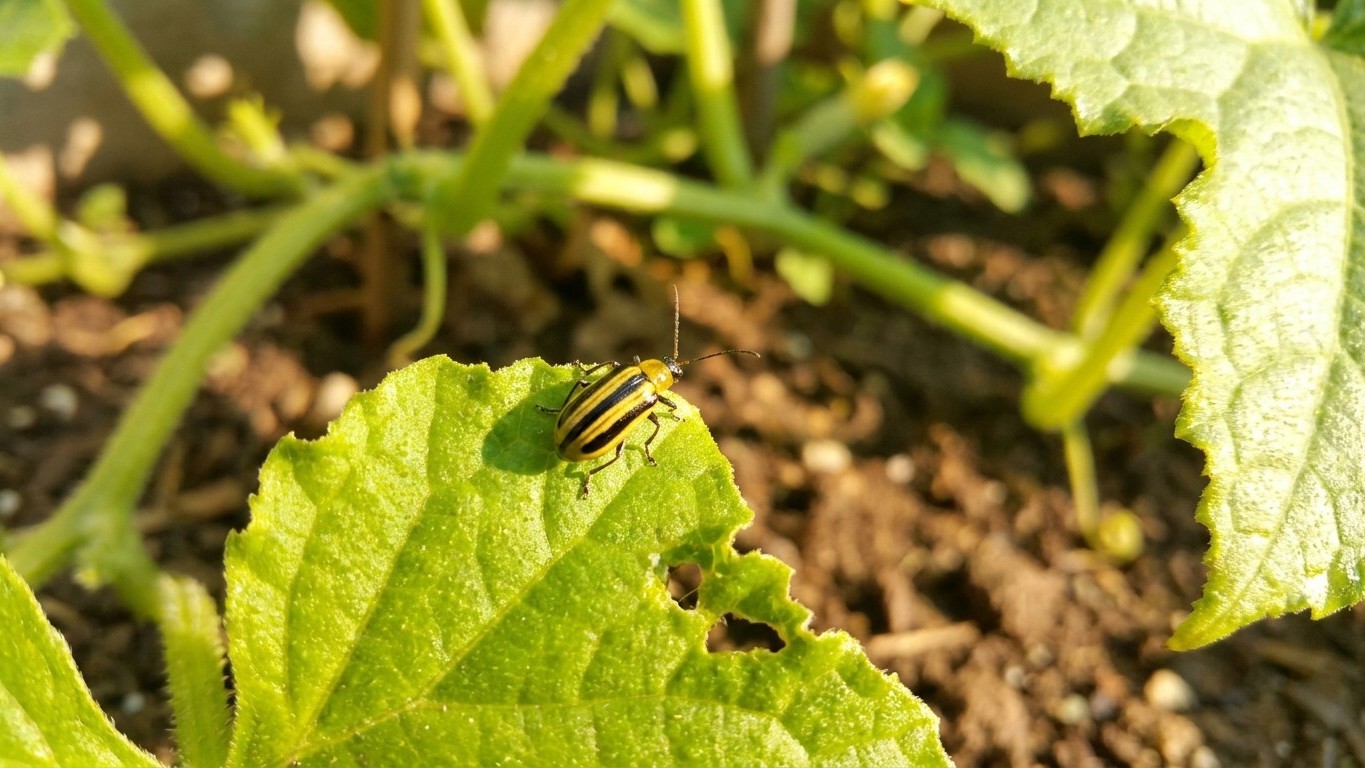

Cucumber beetles show up in Wisconsin gardens right around Memorial Day in the southern counties, a bit later up north, and they don’t wait around to start feeding. The striped and spotted species that plague the state overwinter as adults in leaf litter and woodlot edges, then move into gardens the moment soil temperatures climb into the mid-50s. Stopping them means combining timing, physical barriers, and sanitation, not reaching for a single spray and calling it done.
When Cucumber Beetles Arrive in Wisconsin

Wisconsin sits at the northern edge of cucumber beetle range, which actually works in gardeners’ favor compared to states farther south. The insects can’t survive hard freezes as larvae or eggs here, so every spring’s population starts fresh from adults that tucked themselves into plant debris, fence rows, and the edges of woodlots the previous fall. Once daytime temperatures hold steady above 55 degrees, usually mid-to-late May around Madison and Milwaukee and closer to early June in Wausau or Green Bay, those overwintered beetles wake up and go looking for the first tender cucurbit seedlings they can find.
A second wave follows in July and August. Beetles that survived the spring lay eggs at the base of squash, melon, and cucumber plants, and those eggs hatch into root-feeding larvae before emerging as a fresh crop of adults later in summer. This second generation is often the one that catches gardeners off guard, since they assume the threat passed once early plants got established. Wisconsin’s pickling cucumber growers, and the state consistently ranks among the top producers in the country, plan their spray and monitoring schedules around both generations rather than just the spring emergence.
Striped or Spotted? Telling Wisconsin’s Two Culprits Apart
Two species do the damage across the state, and they behave differently enough that identification matters for control decisions. The striped cucumber beetle is about a quarter-inch long, yellow with three bold black stripes running lengthwise down its back. It’s the more aggressive of the two in Wisconsin gardens and the primary carrier of a disease that kills plants outright.
The spotted cucumber beetle, sometimes called the southern corn rootworm in its larval stage, is similarly sized but yellow-green with a dozen black spots scattered across its wing covers. It feeds on a wider range of plants beyond cucurbits, including beans and corn silk, which means a spotted beetle problem in the garden often signals broader pest pressure rather than a cucurbit-specific issue. Both species chew ragged holes in leaves and scar the surface of young fruit, but the striped beetle’s habit of feeding right at the base of seedlings makes it the bigger threat to plant survival.
Why a Few Beetles Cause Outsized Damage
Leaf damage alone rarely kills a healthy cucumber or squash plant. The real danger is bacterial wilt, caused by a bacterium called Erwinia tracheiphila, which the striped cucumber beetle carries in its gut and spreads through feeding wounds and its droppings. The bacteria clog the plant’s vascular system, and within a week or two of infection a thriving vine can collapse and die with no warning beyond a slight midday wilt that doesn’t recover overnight like drought stress does.
This is why extension entomologists set the action threshold so low for young plants, often just one beetle per seedling at the cotyledon stage. It’s not that one beetle eats enough to matter. It’s that one infected beetle feeding on a two-week-old cucumber can doom the entire plant before the gardener notices anything wrong. Cucumbers and muskmelons are the most vulnerable to wilt. Winter squash and pumpkins vary by variety, with butternut types showing more natural resistance than acorn or delicata squash.
Fruit scarring is the other visible cost. Beetles feeding on young squash and cucumber skin leave rough, callused patches that don’t affect eating quality but knock produce out of the running for farmers market sales or county fair entries, where appearance counts.
What Actually Stops Cucumber beetles in Wisconsin Gardens
No single tactic handles this pest well on its own. The combination that works best in Wisconsin’s climate leans on excluding beetles during the vulnerable seedling stage, then managing the population once plants are large enough to tolerate some feeding.
Timing and Physical Barriers
Floating row covers, laid directly over the soil at planting and sealed at the edges with soil or landscape staples, keep the first wave of overwintered beetles off seedlings entirely. The catch is that cucumbers, squash, and melons need pollinators to set fruit, so covers have to come off once flowers appear, usually three to four weeks after emergence. That timing gap is exactly where a lot of home gardens run into trouble, because pulling the cover too early hands the plants right back to hungry beetles before they’ve built up enough leaf mass to withstand feeding.
Delaying planting by even one to two weeks past the usual last-frost date can help sidestep the earliest and often heaviest push of overwintered beetles, though it trades off some growing season. Gardeners in southern Wisconsin who transplant rather than direct-seed also get an advantage, since transplants arrive at the garden already past the most fragile cotyledon stage where wilt transmission does the most damage.
Trap cropping works well for larger plots. Blue Hubbard squash is intensely attractive to cucumber beetles, more so than the cucumbers or melons a gardener actually wants to protect. Planting a perimeter ring of Blue Hubbard a week or two before the main crop draws beetles away from the primary planting, and that perimeter ring can then be treated or removed once it’s done its job.
When You Need to Treat
Yellow sticky traps placed at plant height give an early read on beetle pressure before damage becomes visible, which matters because waiting for obvious feeding scars means the wilt bacteria may already be spreading. Kaolin clay products, applied as a spray that dries into a fine white film on leaves, make plants less recognizable and less palatable to beetles without killing pollinators, and they wash off before harvest.
Chemical options exist, and some commercial growers rely on neonicotinoid seed treatments, but pollinator advocates and several state extension programs have raised concerns about their effect on bees visiting cucurbit flowers. Home gardeners looking for a targeted spray generally do better with a short-residual insecticide applied in the evening after flowers close, which limits exposure to bees while still hitting beetles active on the foliage.
Fall cleanup rounds out the strategy. Because adult beetles overwinter in garden debris, pulling spent cucurbit vines promptly after harvest and clearing leaf litter from nearby fence rows reduces the local population available to restart the cycle the following May. A handful of resistant cucumber varieties bred with lower cucurbitacin content, the compound that makes cucurbits taste bitter but also attracts beetles, give an additional edge, though yields and flavor can differ from standard varieties.
None of these tactics eliminates cucumber beetles from a Wisconsin garden completely, and that’s not really the goal. A few beetles on a mature, established plant rarely cause serious harm. The real work is protecting that narrow window between germination and the plant’s fourth or fifth true leaf, when a single bite carries the risk of a dead vine by midsummer.