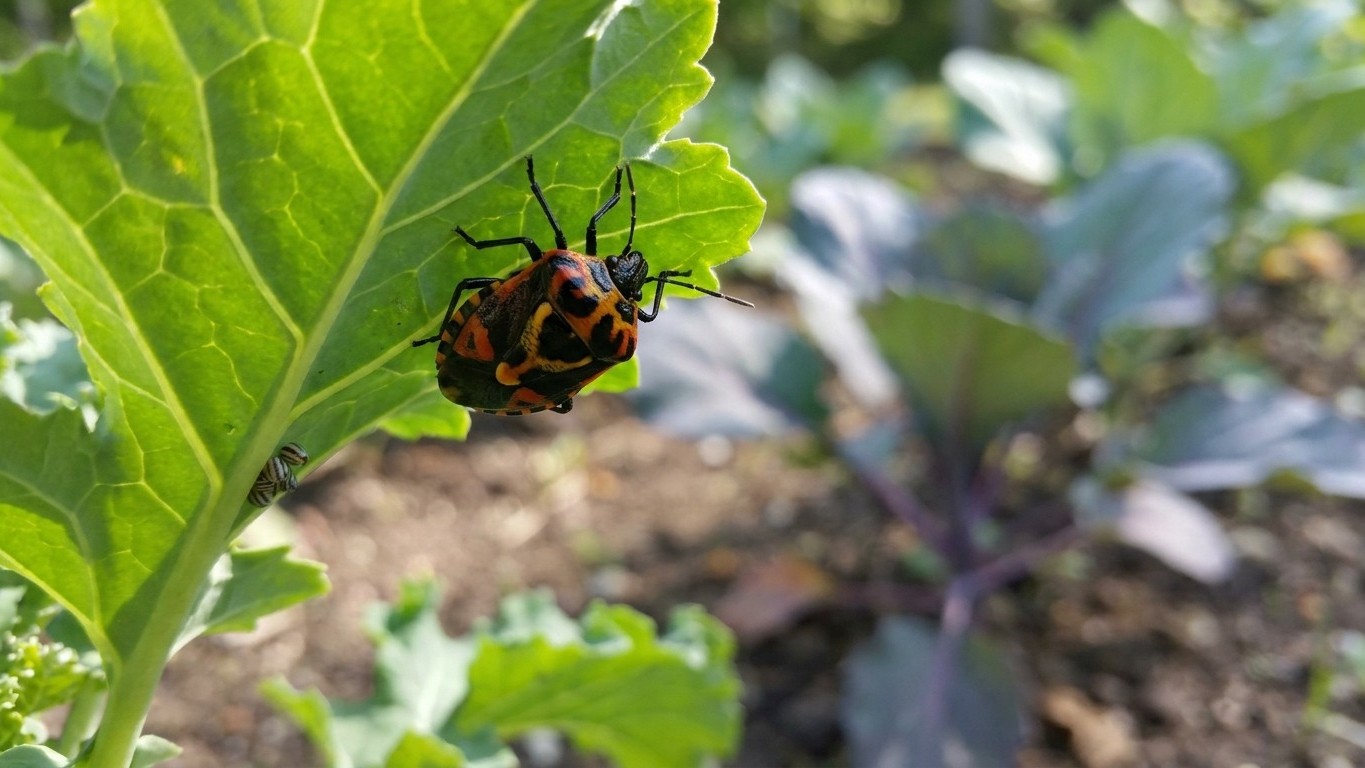

Harlequin bugs start showing up in West Virginia gardens in late April to early May, right when brassica seedlings go into the ground, and they stick around through October in a warmer fall. The insect itself is easy to spot once you know the pattern: a shield-shaped body about 3/8 inch long, glossy black with bold orange, red, or yellow blotches arranged almost like a stained-glass window. Stopping them means combining early scouting, physical removal, trap crops, and targeted insecticides before populations build past a second generation.
What the Harlequin Bug Looks Like and Why It Targets Your Garden

Murgantia histrionica, the harlequin bug’s scientific name, belongs to the stink bug family, and it shares that family’s habit of releasing a sharp odor when disturbed. Adults are flat, shield-backed, and patterned in a way that no other West Virginia garden pest quite matches. Nymphs look similar but rounder and smaller, often clustered together on the underside of leaves.
The eggs are the real giveaway if you’re trying to catch an infestation early. They’re barrel-shaped, black and white striped, laid in tight double rows of about a dozen, usually on the underside of a leaf. Find a cluster of those, and you’ve got two weeks before they hatch into feeding nymphs.
This pest feeds almost exclusively on plants in the cabbage family. Cabbage, kale, collards, broccoli, Brussels sprouts, mustard greens, turnips, and radish are all fair game. Ornamental brassicas and even some wild mustard growing along fence lines can host a population that later moves into a vegetable patch. A single feeding session leaves whitish or yellow blotches where the bug has sucked out plant juices, and heavy feeding can wilt or kill young transplants outright.
When Harlequin Bugs Show Up in West Virginia
West Virginia spans USDA hardiness zones 5b through 7a, with the eastern panhandle and lower elevations along the Ohio River running warmer than the higher ridges of Pocahontas or Randolph counties. That range matters because harlequin bugs don’t survive hard freezes as eggs. They overwinter as adults, tucked into leaf litter, old cabbage stalks, or garden debris, and they wake up once soil temperatures climb into the 60s.
In the Eastern Panhandle and the Ohio Valley, that typically means late April. Higher elevations in the Allegheny Highlands push the first sightings into mid-May. Gardeners can check their exact zone through the USDA Plant Hardiness Zone Map to get a rough sense of local timing.
West Virginia’s growing season is long enough for two full generations most years, sometimes a partial third in a mild fall. The first generation feeds on early spring brassicas. The second, usually appearing in July, is the one that does the most damage because it coincides with fall brassica plantings just getting established. By late September, adults start looking for overwintering sites again, which is exactly when fall cleanup becomes a control tactic rather than just tidiness.
Why Some Years Are Worse Than Others
A mild winter with little snow cover lets more adults survive to spring. A wet, cool spring slows nymph development and gives predators like spined soldier bugs more time to catch up. Gardeners who track this pest year to year often notice that a rough harlequin bug season follows a rough winter for other reasons entirely, mostly because fewer hard freezes mean fewer dead overwintering adults.
What Stops the Harlequin Bug
No single method clears out a harlequin bug population on its own. The combination that works best pairs habitat disruption with direct removal and, when needed, a targeted spray.
Cultural Controls That Actually Reduce Numbers
Clearing out old brassica plants and nearby weeds like wild mustard at the end of each season removes the overwintering sites the adults depend on. Leave those stalks standing through winter, and you’re running a bed and breakfast for next year’s first generation.
Crop rotation helps too, though less than it does with soil-borne pests, since adult harlequin bugs fly and will find brassicas wherever they’re planted. Still, moving cabbage-family crops to a different bed each year makes it slightly harder for emerging adults to locate a host immediately.
Trap cropping is where a lot of West Virginia growers see real results. Planting a border of mustard or an early-sown row of collards a few weeks ahead of the main crop draws harlequin bugs to a sacrificial planting. Once the trap crop is loaded with adults and egg masses, it gets pulled and destroyed, taking a large chunk of the population with it before the main garden is even at risk.
Physical Removal Still Works
Hand-picking adults and nymphs into a bucket of soapy water remains one of the most effective tactics for a home garden, especially in a small plot where you’re checking plants every few days anyway. Crushing egg masses on sight prevents an entire cluster from hatching. This sounds tedious, and it is, but a five-minute check every other morning in May and June keeps a small problem from becoming an infestation by July.
Floating row covers installed at transplant time block adults from reaching young plants during the vulnerable seedling stage. They need to come off once flowering starts on crops that require pollination, but for leafy brassicas like kale and collards, covers can often stay on for the whole harlequin bug season.
When to Reach for a Spray
Insecticidal soap and neem oil knock down nymphs effectively if applied directly to the insects, though they have little effect on hardened adults. For heavier infestations, products containing spinosad or pyrethrin offer stronger control and are commonly recommended by extension services for home vegetable gardens, provided label directions on timing and pre-harvest intervals are followed closely.
Spraying works best in early morning or evening when bugs are less active and pollinators aren’t foraging. Since harlequin bugs cluster on the underside of leaves, coverage there matters more than a quick pass over the top of the plant. Skipping that detail is the most common reason a spray “doesn’t work.”
Natural Predators Already Working in Your Favor
West Virginia gardens already host some natural checks on harlequin bug numbers. Spined soldier bugs, a beneficial stink bug relative, prey on harlequin bug nymphs. Parasitic wasps in the genus Trissolcus target the egg masses, sometimes wiping out a third or more of eggs laid in a given patch. Birds, particularly during nesting season when they need protein-rich food for chicks, will pick adults off plants too.
None of that means you can skip active management. But it does mean broad-spectrum insecticides, the kind that kill everything on contact, tend to backfire by wiping out the predators keeping harlequin bug numbers in check while doing little long-term good against the pest itself, since surviving adults simply fly back in from elsewhere.
Timing a Fall Garden Around the Second Generation
Fall brassica plantings across West Virginia typically go in during late July through August, which lines up almost exactly with the harlequin bug’s second generation. Delaying fall planting by even two weeks, when the schedule allows it, can let the peak of that generation pass before tender seedlings are in the ground. Gardeners in the Eastern Panhandle with a longer frost-free window have more flexibility here than those at higher elevations, where a late planting risks running out of season before frost.
Covering fall transplants immediately with row cover, rather than waiting to see if bugs show up, tends to prevent the worst damage. Once a fall planting gets hit hard by a second-generation wave, there often isn’t enough growing season left to recover before frost ends things anyway.
Scouting twice a week from late April through early October catches both generations before they establish, and it costs nothing but a few minutes with a garden trowel to flip leaves and check the undersides where adults, nymphs, and egg clusters all tend to hide.
Related guides
- Harlequin bug in Maryland: When It Shows Up and What Stops It
- Harlequin bug in Virginia: When It Shows Up and What Stops It
- Harlequin bug in Colorado: When It Shows Up and What Stops It
- Harlequin bug in Delaware: When It Shows Up and What Stops It
- Harlequin bug in Kansas: When It Shows Up and What Stops It