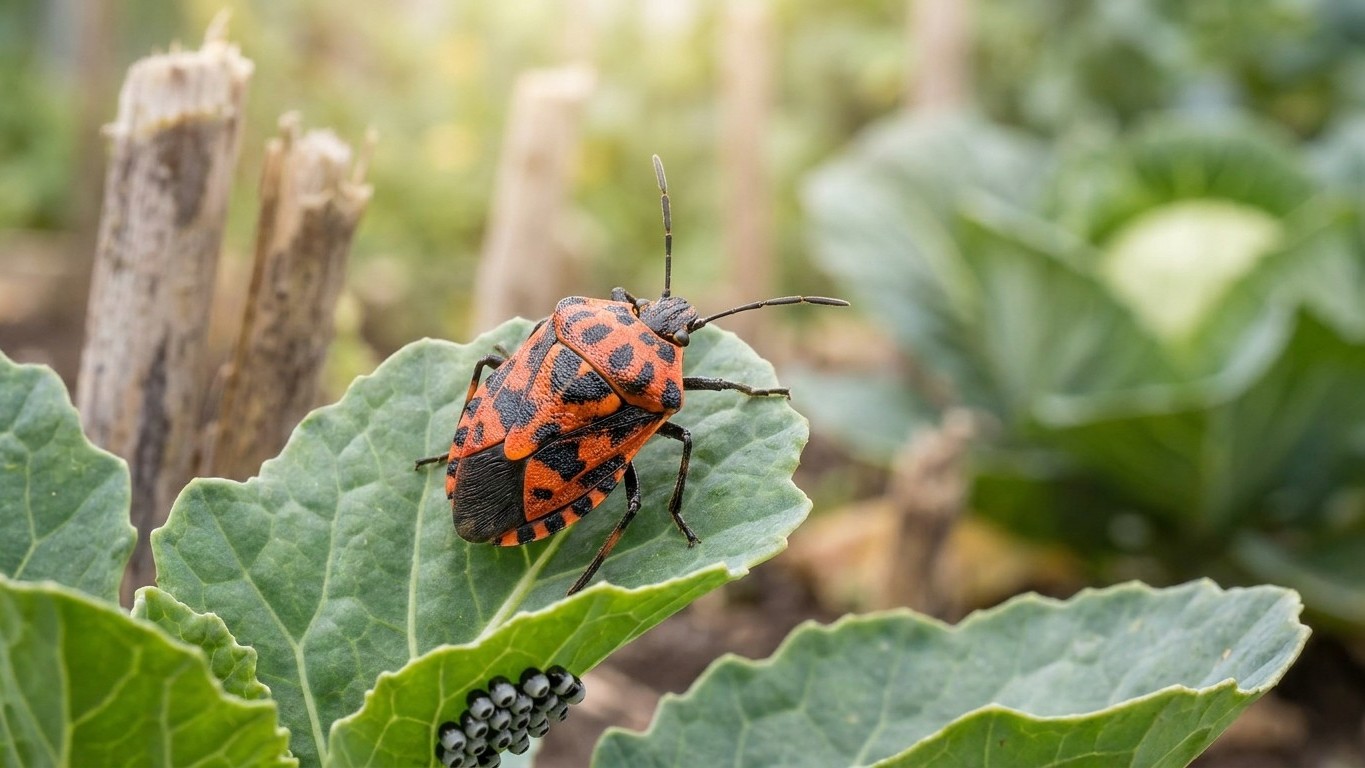

Harlequin bugs start showing up in Virginia gardens as early as mid-April in the warmer Tidewater and Hampton Roads regions, and by late May almost everywhere else in the state. What stops them isn’t a single spray but a combination of timing, plant choice, and old-fashioned hand removal. The insects overwinter as adults in garden debris, so the single most effective control happens months before you ever see a bug: cleaning up last season’s brassica plants in fall.
Life Cycle and Timing in Virginia’s Climate

Murgantia histrionica, the harlequin bug’s scientific name, is a shield-shaped stink bug relative marked with bold orange, red, and black patterns. It didn’t originate here. The species moved north from Mexico and Central America sometime in the 1800s and found the mid-Atlantic’s long, humid growing season to its liking. Virginia sits right in the zone where this pest does well: hot enough summers to support two to four generations a year, mild enough winters that adults survive to start the cycle again.
Adults spend winter tucked into plant litter, mulch, or the leftover stalks of cabbage and collard plants left standing after harvest. Once daytime temperatures climb into the 60s, usually April in eastern Virginia and closer to May in the Shenandoah Valley and western counties, those adults wake up and start feeding on any brassica they can find. Females lay clusters of black-and-white striped eggs, often described as looking like tiny barrels, on the underside of leaves. Eggs hatch in about a week during warm weather, and nymphs go through five molts before reaching adulthood, a process that takes roughly six to eight weeks depending on temperature.
Here’s the part that catches a lot of home gardeners off guard: because Virginia’s growing season runs long, a single spring infestation can turn into three or four overlapping generations by September. That means the population you’re fighting in July isn’t the same one you saw in May. It’s bigger.
Regional Differences Across the State
Pressure isn’t even across Virginia. Coastal and southeastern counties, where winters rarely dip hard enough to kill overwintering adults, tend to see earlier arrivals and heavier late-summer numbers. The Piedmont and central Virginia fall somewhere in the middle. Mountain and far southwestern counties still get harlequin bugs, but colder winters knock back the overwintering population, so infestations tend to start later and stay smaller, at least in most years.
Host Plants That Attract Harlequin Bugs
These insects are specialists. They feed almost exclusively on plants in the Brassicaceae family, which narrows down what’s actually at risk in a typical Virginia vegetable patch. The main targets include:
- Cabbage, collards, and kale
- Broccoli, cauliflower, and Brussels sprouts
- Mustard greens and turnips
- Radishes
- Ornamental brassicas grown for fall color, like flowering kale
Mustard is worth calling out on its own because it’s not just a victim, it’s also the bait gardeners use on purpose. More on that shortly.
Signs of an Infestation
Damage from harlequin bugs looks different from chewing insects like caterpillars. These are piercing-sucking feeders, so instead of holes, you’ll see leaves with pale blotchy patches, wilting, and a stippled or scorched look, especially along the veins. Heavily fed-upon leaves can turn brown and papery, and in bad infestations whole seedlings collapse before they get a chance to establish. Check the undersides of leaves for the striped egg masses and clusters of nymphs, which look like miniature, softer-bodied versions of the adults in shades of black and orange.
One detail that surprises people: harlequin bugs release a distinct, somewhat unpleasant odor when disturbed, similar to other stink bugs. If you brush against infested plants and catch that smell, it’s a decent field confirmation before you even spot the insects themselves.
What Actually Stops Harlequin Bugs
Control works best as a layered approach rather than a single fix, and timing matters more than the method itself.
Fall and Winter Sanitation
Because adults overwinter in plant debris, pulling and destroying old brassica plants at the end of the season removes their shelter before cold weather sets in. Composting infested plant material in a home pile that doesn’t reach high sustained temperatures isn’t reliable, since adults can survive and simply relocate. Bagging and disposing of heavily infested plants, or burying them deep, breaks the cycle more effectively than leaving stalks standing through winter, which is a common habit in home gardens.
Trap Cropping
Mustard and collards planted a few weeks before the main crop act as a magnet, drawing harlequin bugs away from cabbage and broccoli that gardeners actually want to harvest. Once the trap crop is loaded with bugs, it gets destroyed, egg masses and all, rather than left in place. This technique has decades of use behind it in commercial brassica production and scales down fine for a backyard bed.
Hand-Picking and Egg Removal
Sounds tedious, works well. Because harlequin bugs are large, slow-moving, and brightly colored, they’re easy to spot and remove by hand, especially in the cooler morning hours when they’re sluggish. Dropping adults and nymphs into soapy water kills them quickly. Checking leaf undersides every few days for the barrel-shaped egg clusters and scraping them off prevents the next generation from ever hatching. For a small home garden, this single habit, done consistently through spring and early summer, often keeps populations from ever reaching damaging levels.
Physical Barriers
Floating row covers installed at planting time and sealed at the edges keep adults from reaching young plants in the first place. This works especially well for spring plantings, before the covers need to come off for pollination on crops like broccoli. Fall plantings of quick-maturing greens like mustard or turnip greens can sometimes stay covered their entire cycle, since they don’t need pollinators.
Insecticidal Options When Pressure Is High
When hand-picking and trap crops aren’t keeping pace, insecticidal soap and horticultural oils give some control on nymphs, though they’re less effective against tough-shelled adults. Pyrethrin-based products offer a stronger knockdown for both stages but break down quickly in sunlight, meaning reapplication is often necessary and timing sprays for early morning or evening improves results. Broad-spectrum synthetic insecticides labeled for stink bugs and harlequin bugs provide the most reliable knockdown in heavy infestations, but they also kill beneficial insects that would otherwise help manage other garden pests, so they’re best reserved for situations where cultural controls have clearly fallen short. Always check current product labels for crop-specific approval, since brassica greens harvested for eating have shorter pre-harvest intervals on many labels than ornamental plants.
Timing Your Defense Around Virginia’s Calendar
Fall cleanup in October and November matters more than most people realize, since it directly limits how many adults survive to start the spring population. Early spring, roughly April in the east and into May further west and in the mountains, is the window for row covers and the first rounds of hand-picking, before egg-laying ramps up. By midsummer, when overlapping generations start stacking on top of each other, trap crops and consistent scouting become the main tools keeping populations from spiraling. Late-season brassica plantings for fall harvest, common across Virginia gardens from August into September, tend to face the heaviest pressure of the year, since that’s when populations peak, making early intervention on these plantings especially worthwhile.
One practical note for anyone growing brassicas as a fall crop in Virginia: starting seedlings indoors or in a protected cold frame and transplanting slightly larger, more established plants outdoors gives them a better chance of outgrowing early feeding damage than direct-seeded rows exposed to bugs from the moment they germinate.