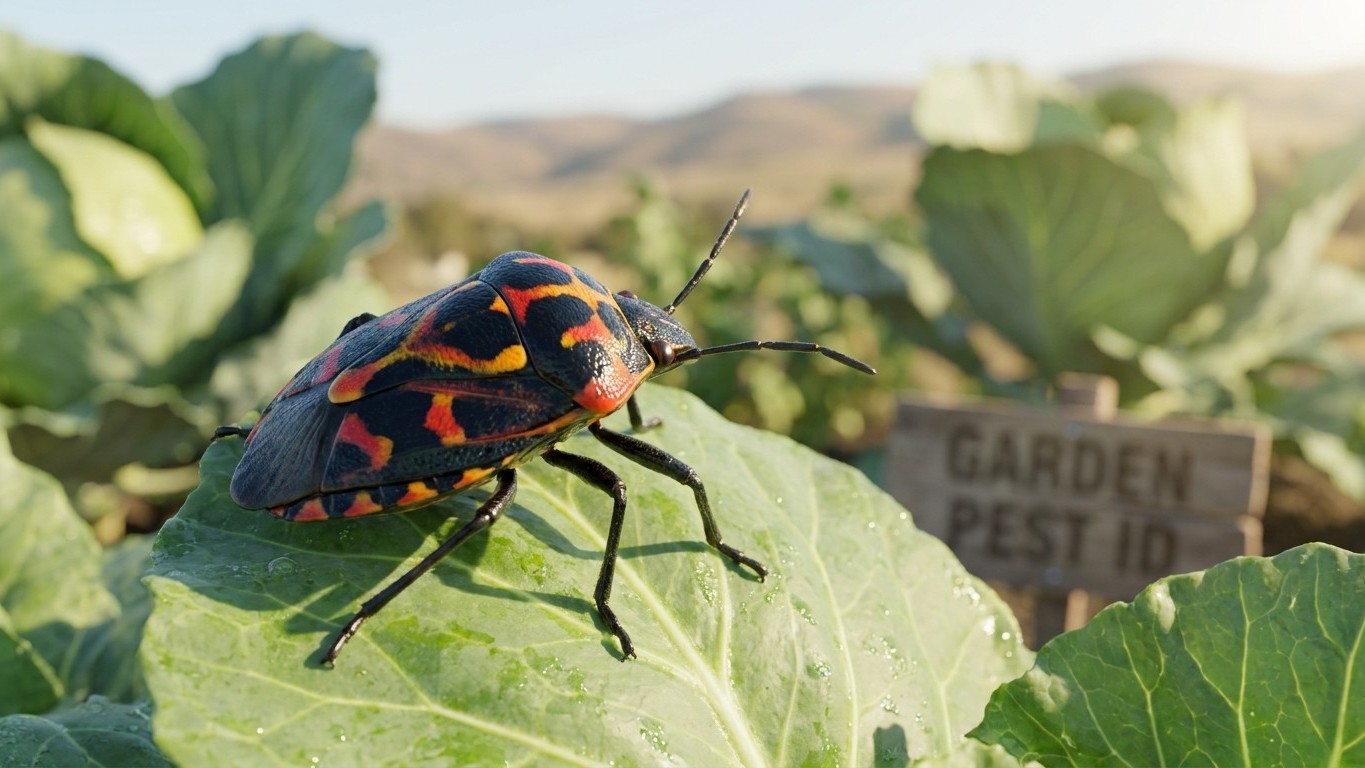

Harlequin bugs show up in Colorado gardens mainly in late spring through summer, typically from May through August, concentrated along the Front Range in Denver, Colorado Springs, and Pueblo where warmer microclimates let this southern pest survive. Row covers in early spring, prompt removal of mustard-family weeds, and handpicking adults and egg clusters remain the most reliable ways to stop an infestation before it spreads through a brassica patch.
A Southern Pest That Found Its Way North

The harlequin bug (Murgantia histrionica) is a true bug in the stink bug family, and it looks the part of a warning label. Adults measure about 3/8 inch long, shield-shaped, with a glossy black body splashed in red, orange, and yellow blotches. There’s no mistaking one for a beneficial insect once you’ve seen the pattern up close.
This species originated in Mexico and Central America and spread through the warmer states of the South and Southwest over the past century. Colorado sits near the northern edge of its comfortable range. Cold winters at higher elevations kill off overwintering adults, which is why the bug shows up reliably in low-elevation urban gardens along the Front Range but stays rare or absent in mountain towns like Breckenridge or Steamboat Springs. Milder winters over the past decade, combined with nursery stock and produce shipped in from warmer states, have given the insect more chances to establish itself in Denver-area backyards than it had a generation ago.
When Harlequin Bugs Actually Show Up in Colorado
Timing matters more with this pest than with most garden insects, because Colorado’s shorter growing season limits it to one or two generations a year instead of the four or five it can produce in Texas or Florida.
Adults that survived winter under garden debris, mulch, or dead weed stalks become active once daytime temperatures settle into the 70s, usually by mid to late May in the Denver metro area. Females start laying eggs almost immediately on the undersides of cabbage-family leaves. The eggs are distinctive: barrel-shaped, black and white striped, laid in two neat rows of about a dozen. That egg-laying period runs through June and into July, and it’s the single best window for catching an infestation before nymphs scatter across a bed.
By late July and into August, you’ll typically see the heaviest nymph and adult activity, coinciding with peak growth on kale, broccoli, and Brussels sprouts. A second, smaller generation can appear in early fall in the warmest years, but a hard frost, which usually arrives in the Denver area by early to mid October, ends activity for the season. Gardeners in Pueblo and other slightly warmer pockets sometimes see activity linger a week or two longer than those closer to the foothills.
Where in Colorado They’re Most Likely to Appear
Reports cluster heavily in urban and suburban vegetable gardens below about 6,000 feet elevation. Community gardens in Denver, Aurora, and Colorado Springs have logged the insect more often than rural farms at higher elevations, partly because urban heat islands push local temperatures a few degrees warmer than surrounding open land. If your property sits above roughly 7,000 feet, the odds of a harlequin bug problem drop sharply, though it’s not impossible given how easily nymphs and eggs travel on transplants bought from big-box garden centers.
What Harlequin Bugs Actually Damage
This insect has a narrow but painful diet. It feeds almost exclusively on plants in the mustard family, which happens to include some of the most common vegetables grown in Colorado backyard gardens.
- Cabbage, kale, and collard greens
- Broccoli, cauliflower, and Brussels sprouts
- Radish, turnip, and mustard greens
- Wild mustard, shepherd’s purse, and other weedy relatives
Both nymphs and adults feed by piercing plant tissue and sucking out fluids, which leaves behind white or yellow blotchy patches on leaves. Heavy feeding on young seedlings can kill the plant outright within days, since a small transplant doesn’t have the leaf mass to absorb that kind of damage. On established plants, the visible symptom is usually wilted, discolored foliage that looks scorched rather than chewed, a giveaway that separates harlequin bug damage from caterpillar or beetle feeding.
Interestingly, the weedy relatives on that list matter as much as the crops. Wild mustard and shepherd’s purse growing along fence lines or in neglected garden corners act as a reservoir, letting the bug survive and breed even in years when a gardener rotates brassicas out of the vegetable bed entirely.
What Actually Stops Harlequin Bugs
Control comes down to disrupting the life cycle at multiple points rather than relying on a single tactic, since adults have a tough exoskeleton that shrugs off light insecticide applications.
Cultural Controls That Work Best in Colorado’s Climate
Fall garden cleanup matters more here than in southern states, precisely because Colorado’s cold winters are the main natural check on this pest. Removing dead brassica stalks, weeds, and mulch piles where adults shelter through winter cuts down the population that emerges the following spring. Rotating brassica crops to a different bed each year, even a modest 10 to 15 foot shift, reduces the chance that overwintering adults wake up right next to a fresh food source.
Row covers deployed in early May, before adults become active, physically block females from reaching young transplants to lay eggs. Once temperatures climb enough that pollination is needed on flowering crops, covers need to come off, so this tactic works best on crops like cabbage and broccoli that don’t rely on insect pollination for the harvestable part of the plant.
Handpicking and Trap Crops
Because Colorado only sees one or two generations a year, catching the first wave makes an outsized difference. Checking leaf undersides weekly starting in late May and crushing egg clusters by hand, or dropping them into a bucket of soapy water, keeps populations from ever reaching the damaging nymph stage. Adults are slow-moving and easy to knock into a jar of soapy water in the cool of early morning when they’re least active.
Trap cropping is a technique borrowed from farmers in warmer states that translates well to Colorado home gardens. Planting a small patch of mustard greens or radish a few weeks earlier than the main brassica crop lures adults to concentrate on that sacrificial planting. Once the bugs gather there, that trap patch gets pulled and destroyed (or sprayed heavily), taking a large chunk of the local population with it before it can spread to the main crop.
When to Reach for a Spray
Insecticidal soap and neem oil work reasonably well against young nymphs, whose softer bodies haven’t developed the thick cuticle that protects adults. Timing the application to shortly after eggs hatch, rather than waiting for full-grown adults to appear, gets far better results. Pyrethrin-based products can knock down adult populations in a pinch, but repeated use isn’t advisable given the collateral damage to bees and other pollinators working the same garden. The Colorado State University Extension service, along with most land-grant university extension programs, generally recommends starting with cultural and mechanical controls before moving to any spray, precisely because this pest’s patchy distribution in Colorado means most home gardens never reach the infestation levels seen in Texas or the Deep South.
One detail worth knowing: harlequin bugs release a distinct, somewhat unpleasant odor when crushed or disturbed, similar to other stink bugs. That’s a useful identification cue if you’re not sure whether the shield-shaped bug on your kale is a harlequin bug or a look-alike species, and it’s also a fair warning before you decide to squash one between your fingers rather than dropping it into soapy water.