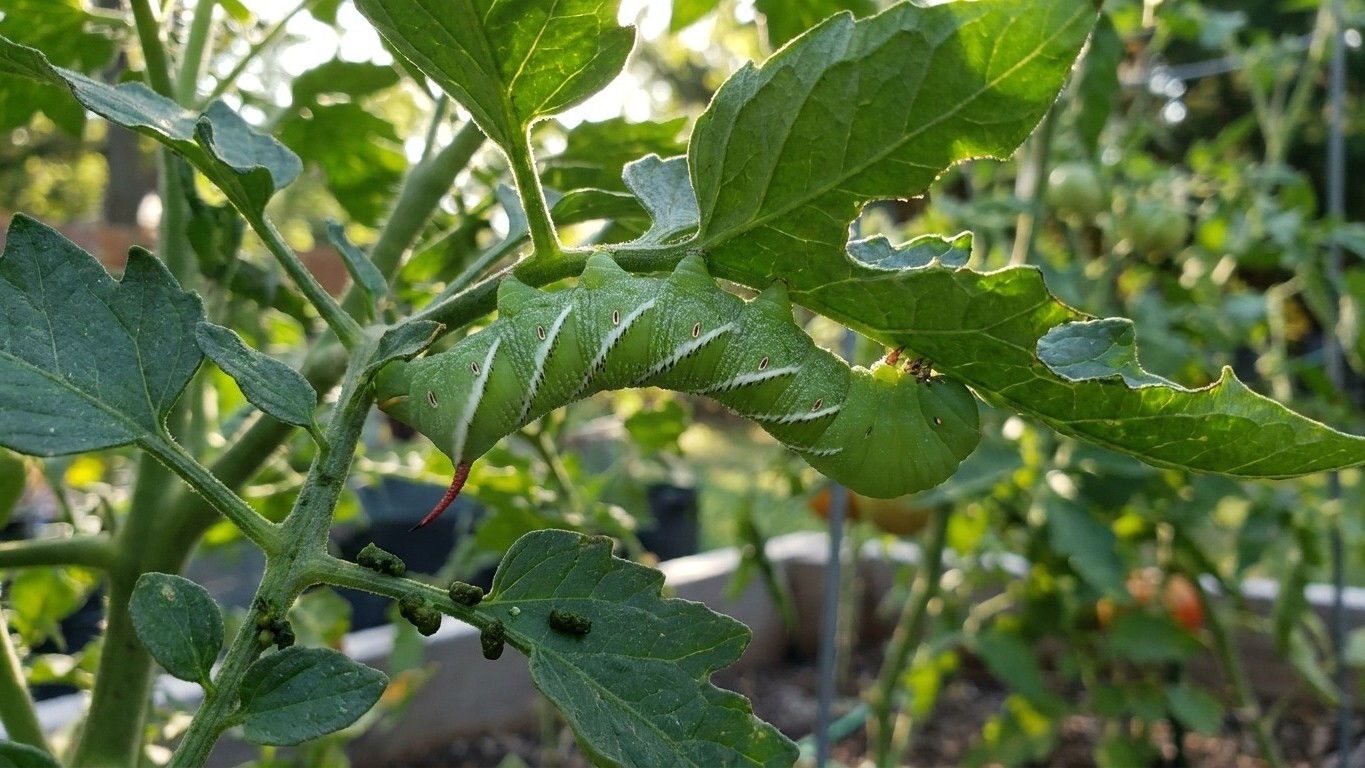

Tobacco hornworms show up in West Virginia gardens starting in late June and stick around through September, with the heaviest damage usually hitting tomato plants in July and August. If you’re seeing chewed leaves and dark green droppings on your tomato stems right now, there’s a decent chance one of these caterpillars is hiding on the underside of a nearby branch.
Identifying a Tobacco Hornworm (Not Its Tomato Cousin)

Two species get lumped together constantly in home gardens, and honestly, most people never bother to tell them apart. The tobacco hornworm (Manduca sexta) has seven diagonal white stripes running down its green body with no dark edging, and a curved horn on its rear end that’s usually red or orange. Its close relative, the tomato hornworm (Manduca quinquemaculata), has eight V-shaped white marks and a black or dark blue horn instead.
Does the distinction matter for control purposes? Not really. Both caterpillars eat the same plants, cause the same type of damage, and respond to the same treatments. But if you’re trying to figure out which one is stripping your pepper plants, flip it over and check the horn color. Red horn, tobacco hornworm. Black horn, tomato hornworm.
Adults are just as easy to spot once you know what to look for. The moth stage, sometimes called a sphinx moth or hawk moth, has a wingspan that can stretch four to five inches, with a mottled gray-brown body and orange spots along the abdomen. They fly at dusk and are often mistaken for hummingbirds because of how they hover at flowers.
When It Shows Up in West Virginia
Timing depends heavily on where you garden. West Virginia spans USDA hardiness zones 5b through 7a, according to the USDA Agricultural Research Service plant hardiness map, and that elevation swing changes the hornworm calendar by two to three weeks depending on your county.
In the lower elevations of the Eastern Panhandle and the Ohio River valley counties, overwintered moths emerge from the soil in late May once ground temperatures climb into the upper 50s. Eggs get laid within days, and the first generation of caterpillars starts feeding by mid-June. Up in the higher mountain counties like Pocahontas or Randolph, that same emergence often doesn’t happen until early to mid-June, pushing the caterpillar damage back accordingly.
West Virginia’s growing season is usually long enough to support two generations per year in most of the state, sometimes a partial third generation in the warmer southern counties if fall stays mild. That second generation is the one that catches people off guard. Gardeners deal with the first wave in July, think they’ve won, then get blindsided by a fresh batch of caterpillars in late August just as tomatoes are peaking.
The caterpillars pupate in the soil, and the pupal case overwinters four to six inches below the surface. This is why tilling garden beds in fall matters more than most people realize, a point worth revisiting later.
What It Damages and Why West Virginia Gardens Are Vulnerable
Tobacco hornworms feed exclusively on plants in the nightshade family. In a typical backyard garden, that means:
- Tomatoes (by far the most common target)
- Peppers
- Eggplant
- Potatoes
- Tobacco, where it’s still grown in small patches in southern counties
A single mature hornworm can defoliate a mid-sized tomato plant in a matter of days. These caterpillars grow to nearly four inches long and eat almost constantly during their final larval stage, which lasts about a week before they drop to the soil to pupate. The damage pattern is distinctive: entire branches stripped down to bare stems, with the fruit itself usually left alone unless the infestation is severe.
West Virginia’s climate, warm humid summers with reliable rainfall, supports lush foliage growth on tomato and pepper plants, which in turn gives hornworms plenty of cover. Home gardens with dense plantings and minimal spacing between nightshade crops tend to see worse outbreaks than gardens with more airflow and separation, simply because moths have an easier time finding host plants clustered together.
The Camouflage Problem
Part of why hornworm damage seems to appear overnight is that the caterpillars are genuinely hard to see. Their green coloring matches tomato foliage almost exactly, and they tend to rest along the stem rather than out on leaf edges. Gardeners often find the caterpillar by following the trail of dark, pellet-shaped droppings on lower leaves and the ground, then scanning upward from there.
Natural Predators Already Working in Your Favor
Before reaching for any treatment, it’s worth checking hornworms for something that looks like white grains of rice stuck to their back. Those are the cocoons of a parasitic braconid wasp, and a hornworm carrying them is already dying and no longer feeding much. Killing that caterpillar actually removes a generation of beneficial wasps that would otherwise go on to parasitize more hornworms. Leave those alone.
Paper wasps and yellowjackets also hunt hornworms actively, tearing off small chunks to feed their colonies. Birds, particularly cardinals and other insect-eating songbirds common in West Virginia backyards, will pick caterpillars off plants when populations aren’t too dense. Gardens near wooded edges or brushy borders tend to have better natural predator activity than isolated raised beds in open lawns, which is one more reason hornworm severity varies so much from yard to yard even within the same neighborhood.
Control Methods That Actually Work
Hand-Picking
For most home gardens, this remains the most effective single method. Check plants in early morning or evening when caterpillars are most active and easiest to spot against the darker green of shadowed foliage. Drop them into soapy water or relocate them far from the garden. It sounds tedious, but a five-minute check every couple of days during peak season (mid-July through August) usually keeps damage manageable without any spraying at all.
Bacillus thuringiensis (Bt)
Bt kurstaki is a naturally occurring soil bacterium that’s toxic to caterpillars but harmless to bees, birds, pets, and beneficial insects. It needs to be ingested, so it works best applied directly to foliage where hornworms are actively feeding, and it breaks down within a week or so of application, meaning reapplication is often necessary during a heavy infestation. It’s one of the few treatments organic gardeners can use without hesitation.
Spinosad
Derived from a soil bacterium as well, spinosad works faster than Bt and holds up slightly better against rain. It’s more broadly toxic to insects than Bt, including some beneficials if they’re directly sprayed while wet, so applying it in the evening after bees have stopped foraging cuts down on unintended harm.
Fall Tillage
Since pupae overwinter in the soil, turning over garden beds in October or November after harvest exposes those pupal cases to freezing temperatures and hungry birds. This single step, often skipped by gardeners eager to be done for the season, meaningfully reduces the number of moths emerging the following spring in that same plot.
Companion Planting and Trap Crops
Dill, borage, and marigolds planted near tomatoes attract the parasitic wasps that keep hornworm populations in check naturally. Some West Virginia gardeners also plant a few sacrificial tomato or tobacco plants at the garden’s edge specifically to draw egg-laying moths away from the main crop, checking those trap plants more frequently and removing caterpillars before they wander toward the plants meant for harvest.
Crop rotation helps too, though it’s less practical in small backyard plots than in larger operations. Moving nightshade crops to a different section of the yard each year, even a modest 15 to 20 feet, reduces the odds that emerging moths find host plants right where last year’s infestation started.