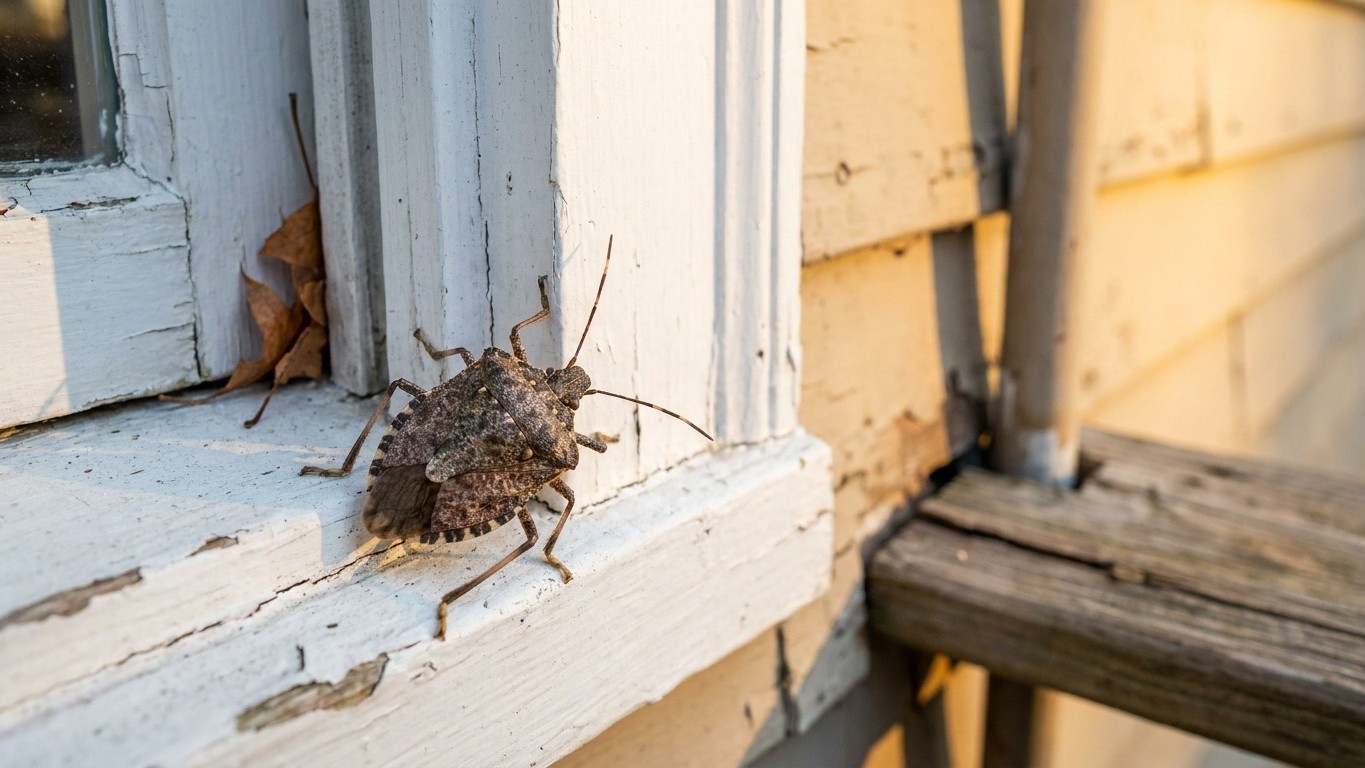

Brown marmorated stink bugs show up in Connecticut homes twice a year on a predictable schedule: a spring emergence around late April through May, and a much bigger fall invasion from mid-September through October when the insects hunt for a warm place to spend winter. Sealing cracks, gaps around utility lines, and window frames before that fall push stops most home infestations before they start. Insecticide sprays rarely work well against this insect and aren’t recommended as a first line of defense.
How This Insect Got Into Connecticut Homes and Farms

Halyomorpha halys, the scientific name for the Brown marmorated stink bug, isn’t native to North America. It arrived from East Asia and was first documented in the United States in Allentown, Pennsylvania, back in 1998. From there it spread north and south along the mid-Atlantic and into New England, riding along in shipping containers, moving vans, and even luggage.
Connecticut confirmed established populations years ago, and the Connecticut Agricultural Experiment Station has tracked the insect’s spread across the state since then, using pheromone traps in orchards and field crops to monitor how numbers change season to season. The bug is now considered established statewide, meaning it’s not a rare sighting but a recurring visitor in most counties, from Fairfield to Windham.
What makes this insect different from the stink bugs already living in Connecticut is size and behavior. Native stink bug species tend to stay outdoors and cause little trouble. The brown marmorated version is roughly three-quarters of an inch long, mottled brown with white bands on its antennae, and it actively seeks shelter inside structures once outdoor temperatures drop. That single behavioral quirk is why this particular species became a household name while dozens of other stink bug species stayed anonymous.
The Connecticut Calendar: When Stink Bugs Move In
Timing matters more than most homeowners realize. Knowing the calendar lets you act before the bugs are already behind your siding.
Spring: Waking Up and Spreading Out
Adults that overwintered in attics, wall voids, or barns start stirring once daytime temperatures consistently climb into the 60s, which in Connecticut usually lands sometime in late April or May depending on the year. They emerge from hiding spots, mate, and head outdoors to feed on developing plant tissue. This is when homeowners sometimes find a straggler bug wandering across a windowsill, weeks after they thought the invasion was over.
Summer: Feeding and Building Numbers
Through June, July, and August, the insects feed on a wide range of plants and lay eggs in clusters on the undersides of leaves. Connecticut’s climate typically supports one full generation per year, though a partial second generation can develop during unusually warm stretches. Population size in any given year depends heavily on how mild the previous winter was and how much host plant material was available during summer.
Fall: The Big Push Indoors
This is the season most Connecticut residents actually notice the problem. As temperatures drop in September and October, adult stink bugs go looking for protected spaces to survive winter. Unlike many insects that burrow into soil or leaf litter, this species prefers human structures: attics, soffits, wall cavities, sheds, and garages. They’re drawn to warm, south-facing walls that catch late afternoon sun, which is why swarms often cluster on the sunny side of a house before finding a way in through gaps as small as a nickel’s width.
Once inside, they go dormant and mostly stay put until spring, though a warm spell in January or a heated living space can trick a few into becoming active early, showing up on ceilings or near light fixtures in the dead of winter.
What Actually Stops Them From Getting In
Sealing the building is the single most effective step, and it’s also the cheapest. Walk the exterior of the house before the end of September and caulk gaps around window and door frames, utility pipe entries, chimney flashing, and where siding meets the foundation. Attic vents and soffit openings should get fine mesh screening, since those are common entry points that homeowners overlook because they’re rarely at eye level.
A few practical, low-cost measures make a real difference:
- Replace worn weatherstripping on exterior doors, including garage service doors
- Install or repair screens on attic and foundation vents
- Check and seal gaps around dryer vents and cable/utility line entry points
- Trim tree branches touching the roofline, since limbs act as bridges to the attic
- Remove or repair damaged window screens before cool nights set in
Indoor removal is simple once bugs are found: a vacuum with a disposable bag works better than crushing them, since crushed brown marmorated stink bugs release a strong, unpleasant odor from glands on their abdomen. That smell is the origin of the “stink bug” name and it’s also why pest control professionals generally advise against squashing large numbers of them in living spaces.
Light traps and pheromone-baited traps can reduce numbers around a home’s perimeter but won’t eliminate an established population on their own. Broad insecticide spraying around foundations has shown limited long-term effectiveness against this species, partly because the bugs can simply move to an untreated section of the same wall. Extension entomologists in the Northeast generally frame chemical treatment as a supplement to sealing, not a replacement for it.
Beyond the Nuisance: The Agricultural Side in Connecticut
Homeowners see the fall swarms, but growers deal with a different kind of problem all season long. Brown marmorated stink bugs feed by piercing fruit, vegetables, and seed pods with a needle-like mouthpart, leaving behind discolored, dimpled, or corky tissue underneath the skin. Apples, peaches, sweet corn, and tomatoes are among the crops most commonly affected in Connecticut, and even light feeding can make produce unmarketable for fresh sale even when the fruit is technically safe to eat.
The Connecticut Agricultural Experiment Station and regional partners in the Northeastern IPM Center’s brown marmorated stink bug working group have coordinated trap monitoring across the mid-Atlantic and New England for over a decade, tracking population trends and testing management tactics for growers. That regional data helps orchard and vegetable operations decide when populations justify targeted treatment rather than routine spraying, which matters both for cost and for protecting beneficial insects like pollinators. More detail on the regional monitoring effort is available through stopbmsb.org, the multi-state resource maintained by university and USDA researchers working on this species.
One somewhat encouraging development for Connecticut has been the natural spread of the samurai wasp, a tiny parasitic wasp that attacks stink bug egg masses and arrived in the Northeast on its own, without being deliberately released. Researchers have found it established in several states along the same corridor where the stink bug itself first spread, and its presence may help suppress populations over the long run, though it hasn’t eliminated the need for the sealing and monitoring practices growers and homeowners already use.
What to Do If You Already Have a Fall Swarm
If bugs are already clustering on siding or slipping indoors, the priority shifts from prevention to containment. Check attic insulation and soffit gaps first, since that’s where large numbers typically settle once inside. A shop vacuum with a long hose reaches into corners and behind stored boxes without requiring direct contact.
Outdoor lighting also plays a role worth adjusting. Porch and garage lights left on during September evenings attract stink bugs from a wide radius, so switching to motion-activated fixtures or simply turning off unnecessary exterior lighting during peak fall activity cuts down on the number landing near entry points in the first place.
None of this requires professional pest control in most residential cases. A pest control service becomes worth calling when an infestation is already established inside wall voids across multiple rooms, or when a homeowner is dealing with a rental property and needs a documented treatment plan. For everyone else, a fall weekend spent with a caulk gun and a can of screen mesh does more than most store-bought sprays ever will.