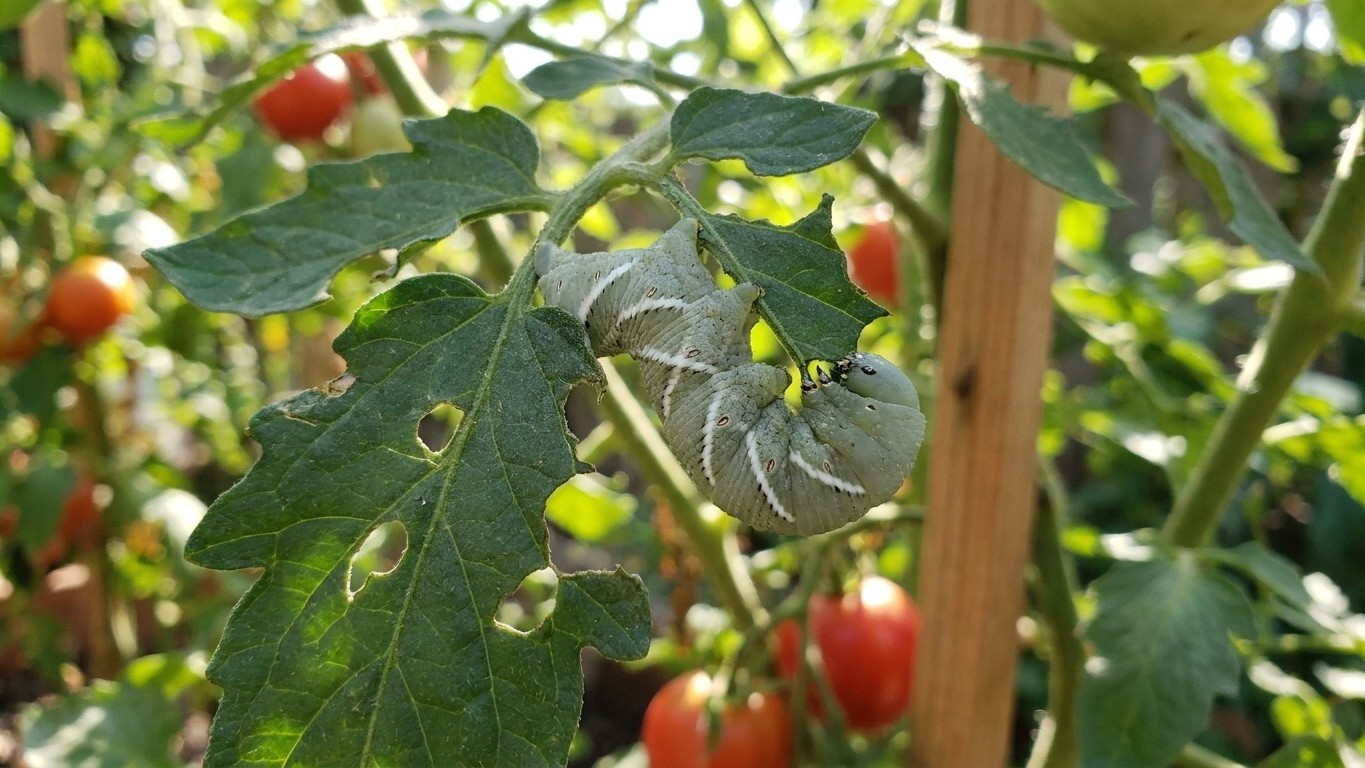

Tobacco hornworms turn up in New Jersey gardens from late June through September, with the heaviest feeding damage hitting in July and August. They’re less common here than their cousin, the tomato hornworm, but any yard growing tomatoes, peppers, eggplant, or potatoes can host one. The fastest way to stop them is a combination of hand removal, Bacillus thuringiensis (Bt) spray on young larvae, and letting parasitic wasps do their work rather than reaching for a broad insecticide.
When Tobacco Hornworms Appear in New Jersey

New Jersey sits in USDA hardiness zones 6 and 7, which gives the tobacco hornworm (Manduca sexta) enough warm-season length for one full generation and, in a hot year, a partial second brood. Moths emerge from overwintering pupae in the soil around late spring, usually mid-May to early June once soil temperatures climb consistently above 60°F. Females lay pale green, single eggs on the undersides of leaves within a few days of mating.
Those eggs hatch in two to four days. The caterpillar then works through five feeding stages, called instars, over roughly three to four weeks, growing from a speck the size of a grain of rice to a caterpillar as thick as a finger. Peak visibility, meaning the point when gardeners actually notice the damage and the caterpillar itself, tends to land in mid-to-late July. A second, smaller wave can show up in September if the season stays warm, though frost usually ends activity by early-to-mid October.
Adults are the Carolina sphinx moth, a heavy-bodied gray-brown flier with a wingspan near 4 to 5 inches, often mistaken for a hummingbird at dusk when it hovers at flowers like petunia or moonflower. If you’re seeing that moth around your porch light in June, expect eggs on your solanaceous plants within days.
Identifying a Tobacco Hornworm (and Telling It Apart from the Tomato Hornworm)
Both hornworm species live in New Jersey and both attack the same plants, which causes constant mix-ups. The tobacco hornworm is bright green with seven diagonal white stripes running down each side, and its rear horn is red or orange with a slight curve. The tomato hornworm (Manduca quinquemaculata), which is actually the more frequent visitor in New Jersey tomato patches, has eight V-shaped white marks instead of straight diagonals, and its horn is black or dark blue and fairly straight.
Size at maturity runs close for both, around 3 to 4 inches long, and both can strip a tomato plant of foliage in a matter of days once they hit their final instar. If you’re staring at a caterpillar and can’t tell the stripe pattern in low light, the horn color is the quickest tell: orange-red points to tobacco hornworm, black points to tomato hornworm.
Neither species bites or stings despite the intimidating horn, which is purely decorative and has no venom or spine function. The panic reaction people have when brushing against one in the garden is understandable given the size, but handling them barehanded is safe.
Host Plants and What Damage Looks Like
Tobacco hornworms feed almost exclusively on plants in the nightshade family. In a home garden that means tomato, pepper, eggplant, and potato foliage, along with ornamental relatives like petunia and datura. Despite the name, they don’t require actual tobacco plants to establish, which explains why they show up in New Jersey backyards where nobody grows tobacco commercially, the crop being far more associated with states like Connecticut, Virginia, and Kentucky.
Damage shows up as irregular holes chewed through leaves, followed by entire leaflets and stems stripped bare as the caterpillar matures and its appetite scales up. A single hornworm in its final instar can eat several leaves a day. Gardeners often spot the black, pellet-shaped droppings on lower leaves or the ground before they spot the caterpillar itself, since the green body blends in remarkably well against tomato foliage.
Fruit damage is less common than leaf damage but does happen, particularly on tomatoes and peppers, where the caterpillar chews shallow gouges into the exposed side of the fruit. Unlike some pests, hornworms don’t tunnel inside the fruit, so the damage stays visible and easy to identify.
What Stops It: Predators, Timing, and Direct Control
The single most effective natural check on tobacco hornworm populations in New Jersey is a parasitic braconid wasp, Cotesia congregata. Adult wasps inject eggs directly into a hornworm’s body, and the wasp larvae later emerge to pupate on the caterpillar’s back, forming small white, rice-grain-shaped cocoons. A hornworm covered in these cocoons is already dying and will stop feeding within days. Gardeners who spot this should leave the caterpillar in place rather than squashing it, since destroying it also kills the next generation of wasps that would otherwise help control the population for free.
Trichogramma wasps attack the eggs before they even hatch, and general predators like lacewings, ladybug larvae, and several bird species pick off young caterpillars before they reach a size that causes real damage. Encouraging these predators by planting dill, fennel, yarrow, or other small-flowered plants nearby gives adult parasitic wasps a nectar source and keeps them active in the garden through the season.
Manual and Cultural Control
Handpicking remains the most reliable method for a home garden, especially once a caterpillar reaches a size where it’s doing visible damage. Checking plants in early morning or evening, when hornworms are actively feeding and easier to spot against the leaf color, makes the search faster. Dropping removed caterpillars into soapy water kills them without pesticides.
Tilling the soil in fall and again in early spring destroys overwintering pupae before they can emerge as moths, which directly reduces the population available to lay eggs the following season. This is one of the more overlooked steps, since most of the attention goes to the visible caterpillar stage rather than the pupa sitting a few inches underground near the base of last year’s plants.
Crop rotation also matters here. Moving tomatoes, peppers, and eggplant to a different bed each year, even just 10 to 15 feet away, makes it harder for emerging moths to find host plants immediately, since the pupae are tied to the soil location where the previous larvae fed.
When to Use a Pesticide
For gardeners who want a targeted product rather than relying purely on handpicking, Bacillus thuringiensis subspecies kurstaki (Bt) works well against young hornworm larvae and has minimal impact on pollinators or the parasitic wasps doing the real long-term work. It’s most effective applied while caterpillars are still small, since larger, later-instar hornworms are more resistant to Bt’s effects and require a higher concentration or more applications to see results, according to guidance from the U.S. Environmental Protection Agency.
Spinosad-based products are another option with a similar low-impact profile on beneficial insects when applied correctly, though timing still matters since it works best on younger caterpillars before they’ve done the bulk of their feeding. Broad-spectrum synthetic insecticides will kill hornworms, but they also wipe out the braconid wasps and other predators that would otherwise keep the population in check on their own, which tends to create a bigger problem the following season.
A Note on Scale in New Jersey Gardens
Home gardeners in New Jersey typically deal with one or two hornworms per plant in a bad year, not the dozens that can hit larger tobacco or tomato operations further south. That smaller scale is exactly why manual removal and encouraging parasitic wasps work so well here; the population pressure simply isn’t high enough to require the more aggressive spray schedules used on commercial acreage. A single missed caterpillar in a backyard tomato patch is an inconvenience. On a multi-acre farm, it’s a different math problem entirely, one that explains why commercial growers in tobacco-producing states lean harder on scheduled Bt applications and monitored trap counts than a homeowner ever needs to.