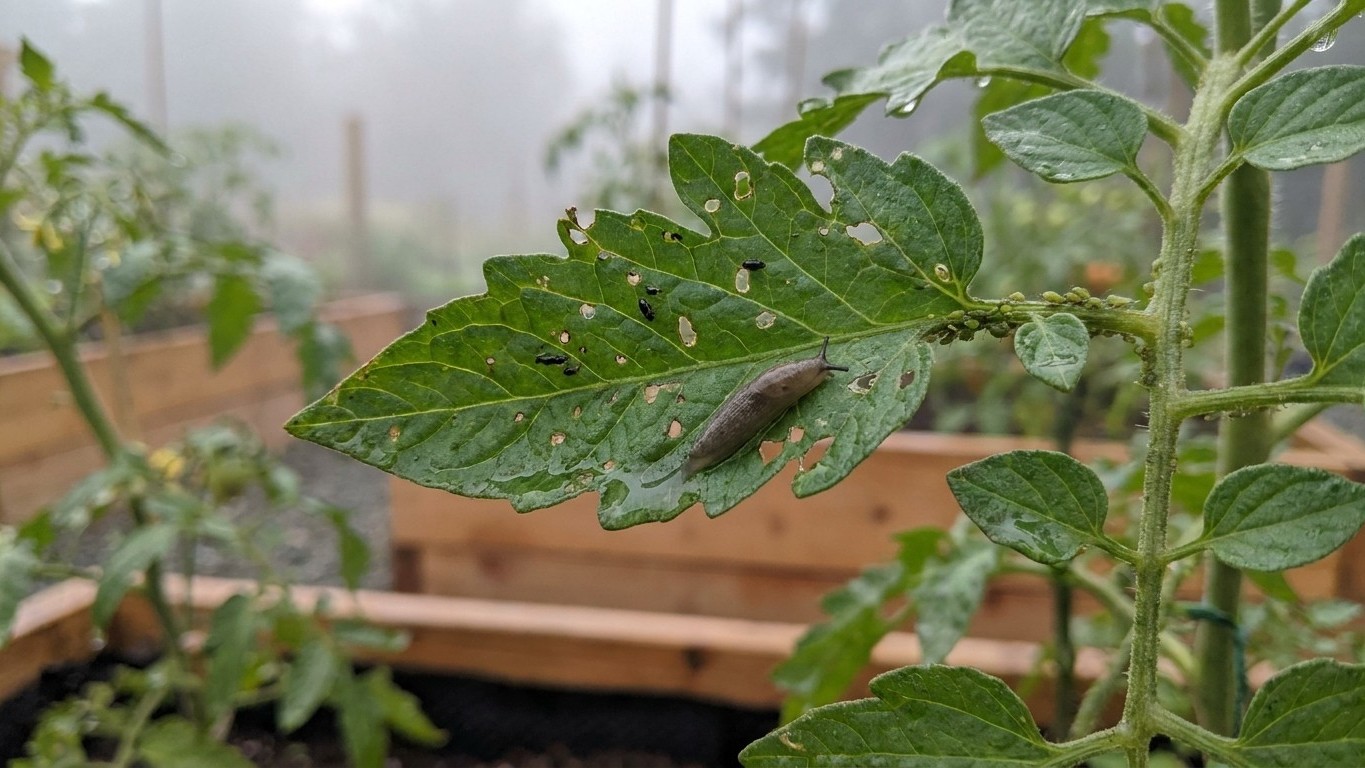

British Columbia’s coastal tomato patches deal with a short list of repeat offenders: slugs, flea beetles, aphids, tomato hornworm, spider mites and whitefly. Which ones bite hardest depends on where you garden in the province, but these six make up nearly every pest complaint that comes out of a Lower Mainland or Vancouver Island backyard. Here’s how to spot each one and what to do about it.
What this comes down to in British Columbia

Around Vancouver, the average last spring frost falls near March 18 and the average first fall frost near November 10, based on Environment and Climate Change Canada’s climate normals for the Vancouver Int’l A station. That’s a long, mild, damp season by Canadian standards, and it’s exactly the kind of season that favors soft-bodied, moisture-loving pests over the ones that thrive in dry heat. The reference city sits in Canadian hardiness zone 9a, one of the mildest zones in the country, which also means overwintering pest populations often survive milder winters and get a head start the following spring.
That combination, long wet spring, mild winter, coastal humidity, shapes which insects and mollusks actually cause damage here. Gardeners in the BC Interior see a different mix, weighted more toward heat-loving pests, but on the coast the pattern below holds for most home tomato patches.
Slugs
Slugs are usually the first pest a coastal BC tomato grower meets, often within days of transplanting. Look for grey-brown or black mollusks up to two inches long, most active at night or after rain, leaving ragged holes in leaves and a telltale silvery slime trail across the soil and stems. It’s the adult slug doing the damage, and it can strip a young transplant to bare stem in a single wet night. Beer traps, sharp-edged barriers like crushed eggshell or diatomaceous earth, and hand-picking after dark are the standbys; iron phosphate slug bait is the option most gardeners reach for when the population is heavy.
Flea Beetles
Flea beetles show up within the first few weeks after transplant, while foliage is still tender. They’re tiny, shiny black or bronze beetles, roughly the size of a pinhead, that jump like fleas when disturbed. The adult beetle chews small round shot-holes through leaves, and a heavy infestation on a young plant can stall its growth for weeks. Floating row cover over freshly transplanted seedlings is the most reliable fix, since it physically blocks the beetle from reaching the plant during the vulnerable stage; once plants are established and growing vigorously, damage usually becomes cosmetic.
Aphids
Aphids build up through late spring and into summer, clustering on new growth and the undersides of leaves. They’re small, soft-bodied insects, pale green to pinkish, often found in dense colonies rather than alone. Both nymphs and adults feed by piercing stems and leaves to suck sap, which curls leaves and coats them in sticky honeydew that can grow sooty mold. A strong jet of water knocks most colonies down, and insecticidal soap handles the rest; ladybugs and lacewings, if you leave them alone, will usually keep populations in check on their own.
Tomato Hornworm
Hornworms turn up in mid to late summer, once plants are tall and fruiting. The caterpillar is the damaging stage: a fat green worm up to four inches long, with white diagonal stripes and a curved horn at the tail end, camouflaged so well against tomato foliage that gardeners often find the black droppings, called frass, before they spot the worm itself. It can defoliate a branch overnight. Hand-picking works fine once you find it; if you see one covered in small white cocoons, leave it, those are parasitic wasp larvae already doing the job for you.
Spider Mites
Spider mites favor hot, dry stretches in late summer, which on the coast usually means a run of clear August days. They’re barely visible without a hand lens, pale yellow to reddish specks, and both nymphs and adults feed on leaf undersides, leaving a fine stippled, bronzed look and sometimes faint webbing. Regular overhead watering to raise humidity discourages them, and insecticidal soap or horticultural oil sprayed on leaf undersides breaks an active infestation.
Whitefly
Whitefly pressure builds steadily through the season and peaks in late summer, and it’s especially common where tomatoes are grown under cover, a common setup in Fraser Valley greenhouses and backyard hoop houses alike. Adults are tiny, moth-like, pure white insects that flutter up in a cloud when a leaf is disturbed; it’s the immobile, scale-like nymphs underneath the leaves that do the real sap-sucking damage. Yellow sticky traps catch adults and give you an early population count, while insecticidal soap targets the nymphs directly.
Working it out for your own garden
Identifying which pest you actually have starts with three questions: when in the season did the damage appear, which part of the plant is affected, and what does the culprit look like up close. Early damage on young transplants, holes and slime trails, points to slugs; early shot-holes in leaves with no slime point to flea beetles. Both show up in the first few weeks after planting, so a magnifying glass and a flashlight for a night check are worth more than any spray at that stage.
Mid-season problems tend to split by location on the plant. Curled, sticky new growth crawling with tiny insects is aphids. A stripped branch with black droppings on the leaves below is hornworm, even if you can’t find the caterpillar itself; check at dusk when it moves more. Late-season stippling and bronzing on leaves during a hot, dry stretch points to spider mites, while a cloud of small white insects rising off disturbed foliage, especially under any kind of cover, points to whitefly.
Timing also tells you what to expect before it happens. Coastal BC’s wet spring means slugs and flea beetles are close to a certainty in most gardens, so row cover and slug bait applied at transplant time are worth doing preventively rather than waiting for damage. Aphids and spider mites are more variable, tied to how warm and dry a given stretch of weather turns, so scouting the undersides of leaves weekly from June through August catches them before populations explode. Hornworm and whitefly both reward a weekly walk-through: checking for frass on lower leaves for the former, and giving a leaf a gentle shake for the latter.
None of this requires spraying on a schedule. Most of these pests can be managed by catching them early and using the least aggressive option first, whether that’s a water spray, a barrier, or hand-picking, before reaching for anything stronger.
What changes across the state
British Columbia is not one climate, and pest pressure shifts with it. The Vancouver Int’l A reference figures describe a mild, damp coastal pattern, but move inland to the Okanagan and the picture flips: drier summers and hotter days push spider mite pressure up while slug pressure drops off sharply, since mollusks need the moisture that coastal gardens have in abundance and Interior gardens mostly don’t.
Elevation matters too. Gardens up in the hills around the Fraser Valley or on higher ground on Vancouver Island run cooler and see pests arrive later in the season than gardens down at sea level, simply because the plants themselves are a few weeks behind. Distance from the coast has a similar effect on humidity-loving pests like slugs and whitefly, both of which favor the damp, cover-heavy growing style common closer to salt water.
North versus south within the province is a bigger swing again. Northern BC’s shorter, cooler season limits how many generations a pest like aphids or spider mites can produce in a summer, which naturally caps the damage compared to the long coastal season further south. None of this changes which six pests are worth watching, but it does change how early they show up and how bad a given year gets.
The mistakes this state punishes
The most common mistake in coastal BC gardens is transplanting into cold, wet soil right after a warm early-spring stretch, the kind that can show up well before the mid-March average. Soft new transplants sitting in cold, damp soil are exactly what slugs are built to exploit, and a week of slug damage on a stressed seedling can set a plant back for the whole season. Waiting for soil to actually warm, not just for a few sunny days, avoids handing slugs an easy target.
A second mistake is skipping row cover on young transplants because flea beetle damage looks minor at first glance. On an established plant it is minor; on a two-week-old seedling with four leaves, the same beetle can do real harm. Covering plants for those first few weeks costs little and removes the guesswork.
The third mistake is waiting too long to check for hornworm once fruit sets. Because the caterpillar is so well camouflaged, gardeners often don’t notice it until a branch is already stripped bare. A weekly check for frass on the lower leaves, starting in mid-summer, catches it while hand-picking still solves the whole problem.
Checking this against your county
The frost dates and pest patterns above come from a single reference station near Vancouver, and BC’s varied terrain means your local timing can run earlier or later. Before relying on these dates for your own planting or pest-watching schedule, check with your regional district’s agricultural extension contact and with the BC Ministry of Agriculture and Food’s tomato growing resources for guidance specific to your part of the province.
Common questions
Do all six of these pests show up in every BC garden?
No. Coastal gardens tend to see slugs and whitefly more, while Interior gardens see more spider mite pressure and far fewer slugs, since the two regions differ sharply in humidity.
Is the tomato hornworm dangerous to touch?
No, it doesn’t bite or sting despite its size and the horn on its tail. The main risk is mistaking the harmless horn for something venomous and leaving damage unchecked out of caution.
Can I prevent slugs without using bait?
Yes. Copper tape around raised beds, crushed eggshell or diatomaceous earth barriers, and beer traps all reduce slug damage without any bait product, though they generally need more frequent attention than iron phosphate bait.
Why do whitefly problems seem worse in greenhouses than outdoors?
Covered growing spaces trap warmth and humidity year-round, letting whitefly populations build without a cold winter to knock them back, which is why Fraser Valley greenhouse operations watch for them more closely than open-garden growers do.