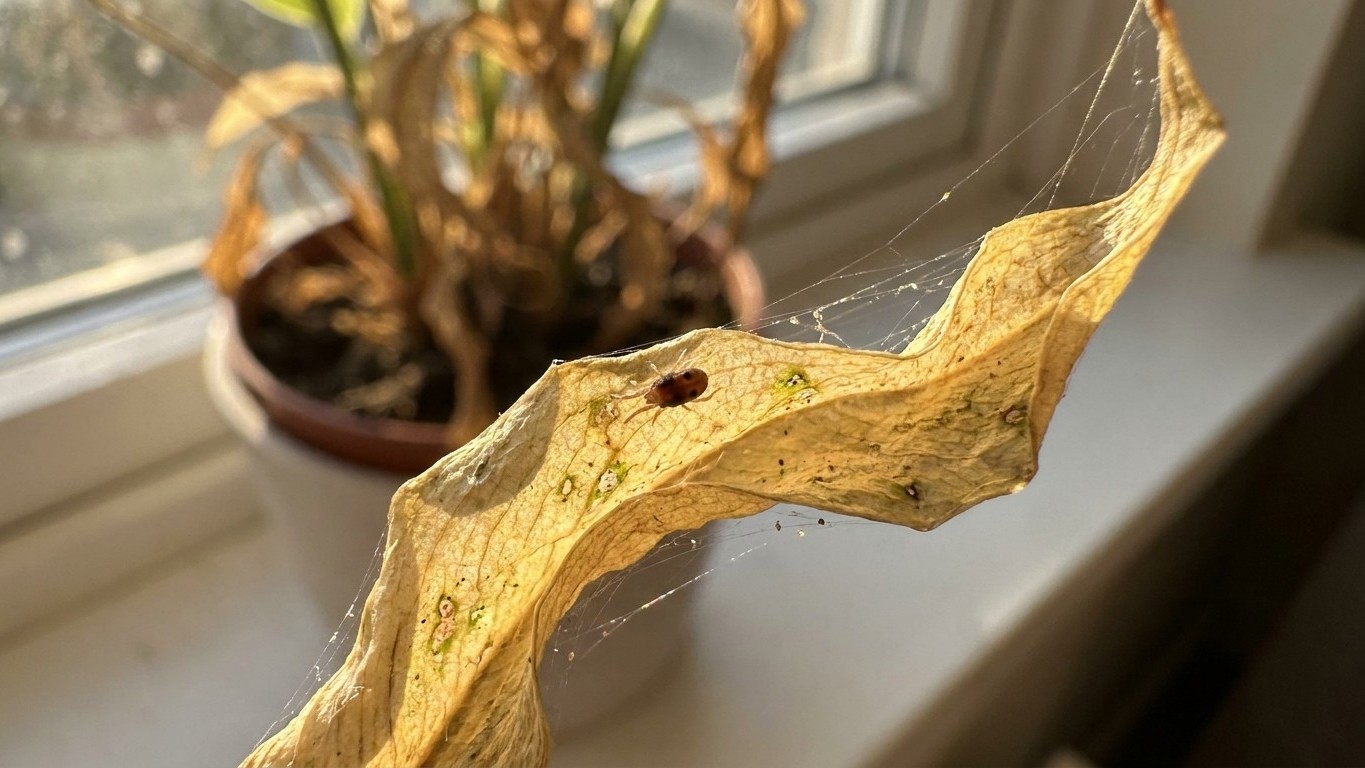

Spider mites become active in British Columbia as early as April in warm interior valleys and greenhouses, but the real population explosions happen from mid-July through late August, when the Okanagan and southern Interior see stretches of hot, dry weather. Coastal regions like Vancouver and Victoria see a milder, later peak, usually August into September, once the summer dry season sets in. Indoors, a second wave shows up in fall and winter when heating systems dry out the air around houseplants.
Where and When Spider Mites Thrive in BC

British Columbia isn’t one climate, it’s several stacked on top of each other. That matters a lot for a pest that lives and dies by humidity and temperature. The Okanagan Valley, with its orchards and vineyards, sits at the top of the risk list. Hot summers with daytime highs regularly above 86°F and low relative humidity create exactly the conditions two-spotted spider mites (Tetranychus urticae) need to reproduce fast. A single female can lay well over 100 eggs, and in warm weather a full generation can complete in under two weeks. Do the math over a ten-week summer and you get an infestation that seems to appear overnight.
The Fraser Valley and Lower Mainland run cooler and wetter, so outbreaks tend to be smaller and later, often tied to greenhouse operations rather than open fields. Greenhouse growers actually deal with spider mites nearly year-round because heated, low-humidity indoor air mimics the arid conditions the mites prefer, regardless of what’s happening outside. Northern BC, around Prince George and Fort St. John, has a short growing season and generally cooler summers, which keeps outdoor mite pressure lower, though it doesn’t eliminate it entirely on sheltered, south-facing plantings.
Vancouver Island and the coastal strip see their mite activity concentrated in the driest weeks of summer, typically late July through August, when the region’s usual damp pattern breaks for a few weeks of sun. That window is short compared to the Interior, but gardeners there still report stippled leaves on roses, tomatoes, and ornamental shrubs almost every year.
What Actually Triggers an Outbreak
Heat and dryness are the two ingredients that turn a low-level mite presence into a visible problem. Spider mites are nearly always present at some low density on outdoor plants. They only become destructive when conditions favor rapid reproduction while suppressing the natural predators that normally keep them in check.
A few specific triggers show up again and again in BC gardens and orchards:
- Extended dry spells, especially stretches of ten days or more without rain during July and August
- Dusty conditions along gravel roads or dry garden beds, which reduce predator mite survival
- Overuse of broad-spectrum insecticides that kill off predatory mites and other natural enemies
- Water-stressed plants, since drought-stressed foliage is easier for mites to feed on and colonize
- Excess nitrogen fertilizer, which pushes soft, lush new growth that mites prefer
That last point surprises a lot of home gardeners. Heavy feeding programs meant to boost plant growth can backfire by making leaves more attractive and more nutritious to spider mites. Orchardists in the Okanagan have known this for decades and often scale back nitrogen applications specifically to reduce mite pressure heading into summer.
Indoor Infestations Follow a Different Calendar
Houseplant spider mites don’t care about the outdoor forecast. They follow indoor heating schedules instead. Once furnaces and baseboard heaters kick on in October and November, indoor humidity in BC homes can drop below 30 percent, well within the range spider mites need to multiply. This is why so many people notice fine webbing and speckled leaves on houseplants in the dead of winter, right when they’d least expect a “summer pest” to be active.
Signs You’re Dealing With Spider Mites
The damage shows up before the mites themselves do, mostly because the mites are barely visible without a magnifying glass. Look for a fine, dusty stippling on leaves, tiny yellow or white speckles that give the foliage a faded, sandpaper-like look from a distance. Roses, tomatoes, beans, strawberries, and many ornamental shrubs common in BC gardens are frequent targets.
As populations grow, fine silk webbing appears between leaves and stems, often at the base of leaf veins or where a branch meets the main stem. Heavily infested plants can look dusty gray or bronze overall, and leaves may curl, dry out, and drop early. A simple field test: hold a sheet of white paper under a suspect branch and tap it firmly. If tiny specks the size of ground pepper start moving on the paper, that’s your confirmation.
Commercial growers in the Okanagan use a more systematic version of this, sampling a set number of leaves per row and counting mites under magnification to decide whether a treatment threshold has been crossed. Home gardeners rarely need that level of precision, but the underlying idea, checking regularly rather than waiting for obvious damage, applies just as well to a backyard tomato patch.
What Actually Stops Spider Mites in BC Conditions
Control strategies that work well in a humid climate often underperform in the Okanagan’s dry heat, and the reverse is true for coastal gardens. Matching the method to the local conditions makes a real difference.
Water is the simplest and most underrated tool. A strong jet of water sprayed on the undersides of leaves knocks mites off the plant and disrupts their webbing, and since dry conditions are what mites need, raising humidity around vulnerable plants (misting, mulching, grouping containers) works against them directly. This approach is especially useful in the Interior, where irrigation is already part of the routine for most gardens and orchards.
Predatory mites are the backbone of professional mite control in BC greenhouses and orchards. Species like Phytoseiulus persimilis feed almost exclusively on spider mite eggs and adults and are released commercially by growers across the Fraser Valley and Okanagan as part of integrated pest management programs. Home gardeners can buy small predator mite packets from specialty garden suppliers, though timing the release matters: predators need at least some spider mite population to feed on, so releasing them too early or too late reduces effectiveness.
Horticultural oils and insecticidal soaps offer a lower-impact chemical option. Applied thoroughly to the undersides of leaves, where mites concentrate, these products smother mites and their eggs without the broad toxicity of standard insecticides. That matters because standard insecticides are one of the main reasons outbreaks get worse in the first place, killing off the predator insects and mites that would otherwise keep populations low.
Neem oil works similarly and has become a common choice for home gardeners across the province who want to avoid harsher chemical miticides. It needs repeat applications, generally every seven to ten days during an active outbreak, since it doesn’t have long residual effects.
For serious infestations in commercial orchards or greenhouses, registered miticides remain part of the toolkit, but resistance is a documented problem. Spider mites reproduce fast enough that repeated use of the same chemical class can produce resistant populations within a single growing season. Rotating between different modes of action, and leaning on predator mites and cultural controls between chemical treatments, is the approach most BC extension resources and commercial growers now recommend.
Timing Treatment to BC’s Growing Season
Early intervention beats reactive treatment almost every time with this pest. In the Okanagan, growers start monitoring in May, well before visible damage, because by the time stippling is obvious in July, populations may have already gone through several generations. Coastal gardeners have a bit more breathing room given the later, shorter outbreak window, but checking plants weekly from late June onward still catches problems before they spiral.
Fall cleanup also plays a role that’s easy to overlook. Spider mites overwinter as eggs or adults in bark crevices, leaf litter, and garden debris. Clearing dead plant material at the end of the season, particularly around roses and fruit trees, reduces the overwintering population that would otherwise restart the cycle the following spring.
One detail that catches a lot of new BC gardeners off guard: spider mites aren’t insects at all, they’re arachnids, closer relatives to spiders and ticks than to aphids or beetles. That classification actually explains why so many insect-targeted pesticides fail against them. Products built to disrupt insect nervous systems or exoskeletons often have little to no effect on mites, which is part of why oils, soaps, and predator releases tend to outperform generic bug sprays across BC’s orchards, greenhouses, and backyard gardens alike.