
Nova Scotia’s cool, short season limits which tomato pests actually establish themselves here, and the list is shorter than what gardeners in warmer provinces deal with. Six insects account for nearly every case reported across the province, each tied to a specific point in the growing calendar between the average last spring frost and the average first fall frost.
What this comes down to in Nova Scotia
In Nova Scotia, the pests that actually show up track the province’s frost window, which runs on average from May 7 to October 18 at the Halifax Stanfield International Airport station. That’s a roughly five-and-a-half-month stretch, and within it, six insects show up reliably enough to be worth knowing on sight: cutworms and flea beetles right after transplant, aphids and Colorado potato beetle through early summer, tomato hornworm by mid-to-late summer, and slugs whenever the weather turns damp, which in this province is often.
Cutworms
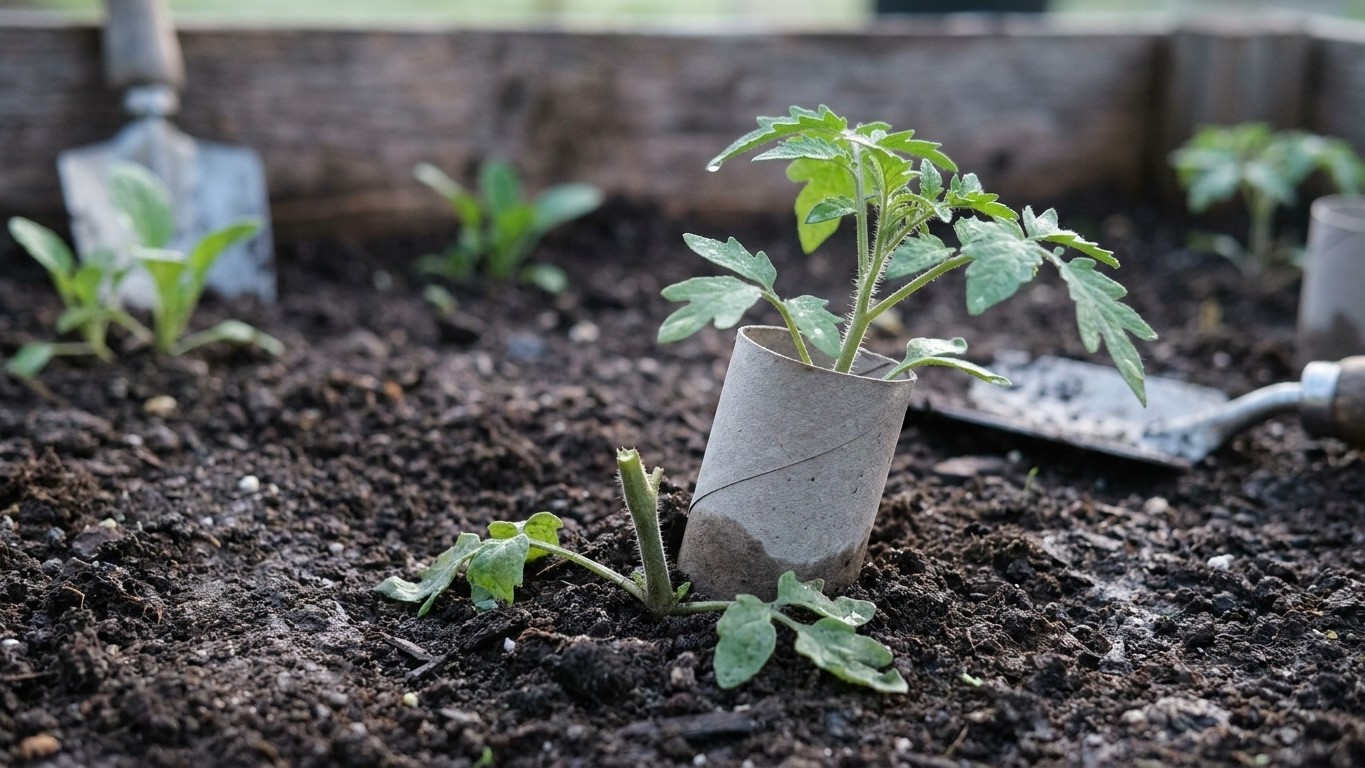
These are the larval stage of several moth species, thick gray-brown caterpillars about an inch long that curl into a tight C-shape when disturbed. They feed at night, right at the soil line, and the damage is unmistakable: a young transplant sliced clean through at the stem within a day or two of being set out. A cardboard or foil collar pushed an inch into the soil around each stem blocks them completely, and it costs almost nothing.
Flea beetles
Tiny, shiny black beetles, barely a sixteenth of an inch long, that jump like fleas when you brush the plant. Adults are the damage-doers here, chewing dozens of small round holes into young leaves until they look like they’ve been hit with buckshot. Seedlings can outgrow light damage, but heavy pressure in that first cool spring stretch can stall a plant for good. Row cover over transplants until they’re established handles most of it.
Aphids
Soft-bodied, pear-shaped insects around one-eighth inch, usually green or dull pink, clustered on the undersides of leaves and along new growth. It’s the adults and nymphs both that do the feeding, sucking sap and leaving curled, yellowing leaves and a sticky residue that draws sooty mold. A strong water spray or insecticidal soap knocks populations back before they build to the point of stunting the plant.
Colorado potato beetle
Rounded, hard-shelled, about three-eighths inch, with cream and black stripes running down the back. Adults overwinter in soil and move onto young plants early in the season; it’s the reddish, humpbacked larvae that do the heaviest defoliation, stripping leaves down to the veins. Hand-picking both stages off tomato and any nearby potato plants, checked every few days, keeps small infestations from becoming a real problem.
Tomato hornworm
Hard to miss once it’s grown: a bright green caterpillar up to four inches long, with white diagonal stripes and a curved horn near the tail. It’s the larval stage that strips whole branches of foliage overnight and can chew into green fruit. Because it blends in so well, look for the black droppings on leaves below before you spot the caterpillar itself. Handpicking works; parasitic wasps, if you see white cocoons stuck to a hornworm’s back, are doing the job for you already and shouldn’t be disturbed.
Slugs
Not an insect at all, but Nova Scotia’s damp, maritime-influenced summers make slugs a near-constant nuisance. They’re soft-bodied, gray to brown, and feed at night, leaving ragged holes in lower leaves and fruit along with a telltale slime trail. Damage tends to spike after a stretch of rain. Shallow dishes of beer or commercial iron phosphate baits set at soil level are the two methods that actually reduce numbers rather than just moving them along.
Working it out for your own garden
Identifying which of these six pests you’re actually looking at starts with timing, not guesswork. A stem severed cleanly at soil level within days of transplanting, in the cool weeks right after May’s frost window closes, points to cutworms almost every time, because nothing else causes that specific kind of damage that early. Small round holes riddling young leaves in that same early stretch is flea beetle feeding, and it’s worth checking the underside of a leaf with a flashlight at dusk if you want to catch the beetles jumping.
By the time plants are established and putting on real growth, usually a few weeks into June, aphids and Colorado potato beetle become the more likely culprits. Curled, yellowing new growth with a sticky film on the leaves underneath is aphid feeding; striped adult beetles or reddish larvae stripping leaves to the veins is Colorado potato beetle, and checking any potatoes growing nearby will usually confirm it, since the beetle moves freely between the two crops.
Large chewed sections of foliage appearing from midsummer on, especially if whole branches look stripped overnight, is the signal to start looking for tomato hornworm. Because the caterpillar’s coloring hides it so well against the stem, the droppings on the leaves below are often the faster way to confirm it before you spot the insect itself.
Slugs are the outlier because they’re not tied to a calendar month so much as to weather. Ragged holes in lower leaves or fruit, paired with a slime trail and damage that shows up specifically after a rainy stretch, at almost any point in the season, points to slugs rather than an insect. A quick check with a flashlight after dark, when they’re actively feeding, confirms it in minutes. Matching the damage pattern to the point in the season is the fastest route to the right pest, and it beats reaching for a broad-spectrum treatment before you know what you’re actually dealing with.
What changes across the state
Nova Scotia is not one climate, and pest pressure shifts with it. The Annapolis Valley, sheltered and warmer than much of the province, tends to see earlier flea beetle and aphid activity simply because its soil warms sooner. Coastal areas along the Atlantic shore run cooler and damper through summer, and that dampness is exactly what slugs need, so pressure there tends to run higher and later into the season than inland.
Elevation matters too. Upland districts and areas farther from the moderating effect of the ocean see a shorter, more compressed window between the two frost dates than the Halifax Stanfield reference point suggests, which pushes every pest’s active period into a tighter stretch. A cutworm problem that shows up in late May near the coast might not appear until well into June at higher, inland ground, because the soil simply hasn’t warmed enough yet to bring the larvae active.
The general shift worth remembering: warmer, sheltered pockets see pests earlier and often with more generations per season, while cooler, damper, or higher ground sees them later, compressed, and skewed toward moisture-driven problems like slugs rather than heat-driven ones. None of this changes which six pests are relevant, only when and how hard each one hits in a given corner of the province.
The mistakes this state punishes
The costliest mistake in Nova Scotia is treating the May 7 average as a safe planting date rather than the midpoint it actually is. In one year out of two, frost falls later than that average, and cutworms are waiting for exactly that kind of early, unprotected transplant. Setting out seedlings without a stem collar, on the assumption that the average date means the risk has passed, is how a whole flat of young plants gets cut down in a single night.
The second mistake is skipping row cover on young plants during the first cool weeks after transplant, when flea beetles are most active and seedlings are least able to absorb the damage. Row cover removed too early, the moment the weather warms, often lines up exactly with peak flea beetle emergence.
The third is waiting too long to check for tomato hornworm. Because the caterpillar hides so well, gardeners who only scan the plant visually, rather than checking for droppings on lower leaves starting in midsummer, tend to notice the damage only after whole branches are already stripped. A quick check every few days from July onward catches it while a few minutes of handpicking still solves the problem.
Checking this against your county
Every figure here comes from a single reference station and a single hardiness zone reading, useful as a starting point but not a substitute for what’s happening on your own soil. Pest timing shifts by pocket, by elevation, and by how close you are to the coast. Your county extension office can confirm what’s actually active nearby, and Nova Scotia’s own provincial agriculture guide is the better next stop for anything specific to your district.
Common questions
Do tomato hornworms show up every year in Nova Scotia?
They’re reported most seasons from midsummer on, though numbers vary by pocket and by how many overwintered pupae survived the previous winter’s cold.
Are Colorado potato beetles a problem if I don’t grow potatoes?
Yes. The beetle feeds readily on tomato foliage on its own, though a garden with both crops nearby tends to see heavier pressure.
Is late blight the same thing as a pest?
No. Late blight is a fungal-like disease, not an insect, and it’s covered separately from the six pests discussed here.
Do row covers need to come off before flowering?
Yes, once flowers appear, tomatoes need pollinator access, so row cover protection is really only useful during the seedling stage before bloom.