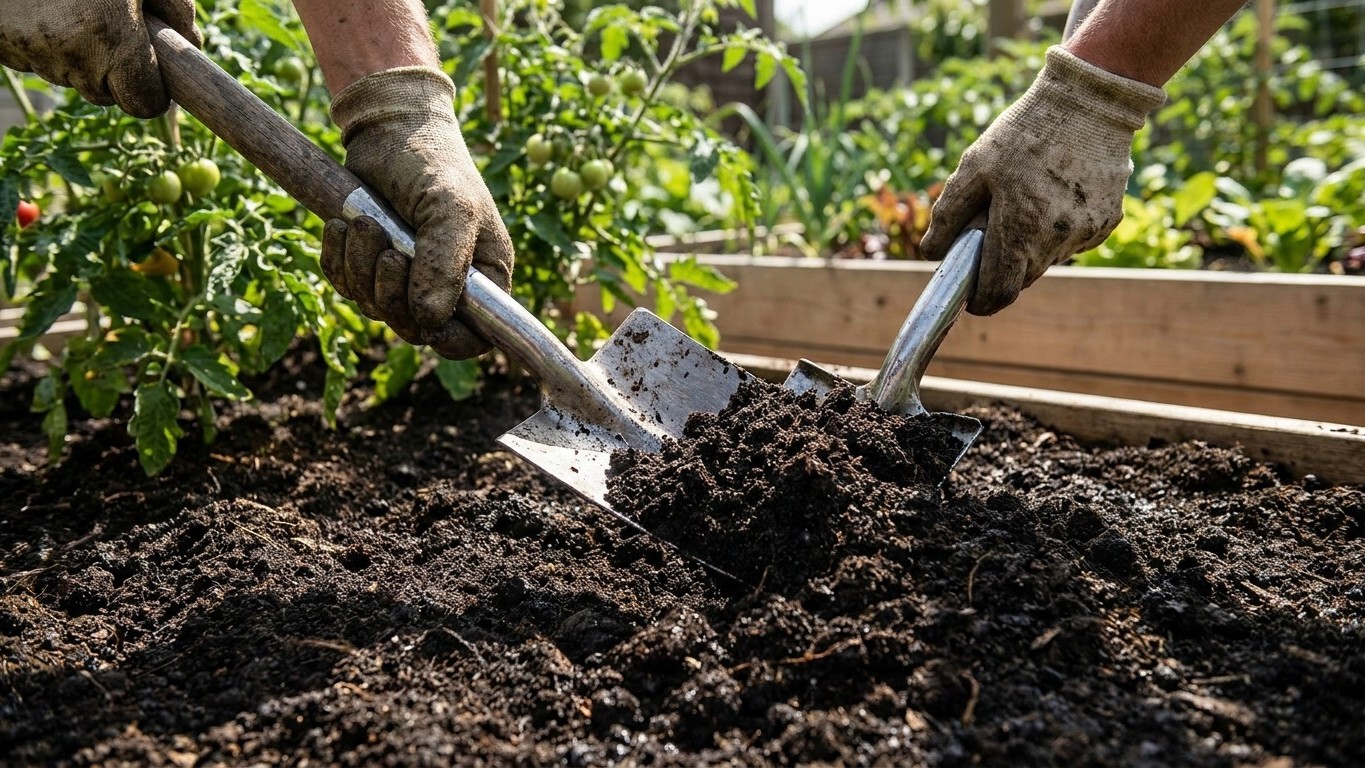

Dig a shovel into most North Dakota ground and you’re standing in the Williams series, a Mollisol, the dark, deep prairie soil that helped build the Corn Belt’s reputation. It runs close to neutral pH, holds a loam texture, and drains well. That’s the state’s representative soil. What’s actually under your tomato bed could be something else entirely, and the five-minute tests below will tell you which.
What is under your garden

USDA’s official read on North Dakota ground points to the Williams series, and the numbers behind that name are specific. Surface pH runs about 7.2, just a hair into alkaline territory but close enough to neutral that most garden plants won’t notice. The texture is a loam to silt loam: 38 percent sand, 22 percent clay, 40 percent silt, a balance that neither drains like a sieve nor sets up like concrete. Organic matter sits around 4.0 percent, a genuinely good number, the legacy of a few thousand years of prairie grass dying back into the ground every winter.
Here’s the honest caveat: this is the soil USDA uses to represent the state, drawn from an average of 549 mapped components of the Williams series. It is not a promise about your yard. A house lot where a builder scraped and regraded, a river bottom a few miles from a ridge, a low spot that collects runoff every spring, any of these can sit on ground that has almost nothing in common with the numbers above. The only way to know what you’re actually digging into is to test it yourself.
| Reading | Value (Williams series, surface) |
|---|---|
| Surface pH | about 7.2 (near neutral) |
| Sand | 38 percent |
| Clay | 22 percent |
| Silt | 40 percent |
| Organic matter | about 4.0 percent |
| Drainage class | well drained |
Two five-minute tests
The ribbon test tells you texture without a lab. Wet a small handful of soil until it holds together like putty, then squeeze it out between thumb and forefinger. Sandy soil won’t form a ribbon at all, it just falls apart. Loam forms a short ribbon, maybe an inch, before breaking. Heavy clay keeps ribboning past two inches, smooth and almost shiny.
The jar test shows you the layers. Fill a clear jar a third full of soil, top it off with water, shake hard for a minute, then leave it alone overnight. Sand settles first, within a minute or two. Silt follows over the next hour. Clay stays suspended the longest and forms the thinnest top layer once it finally settles, often a full day later. Measure each band’s thickness and you’ve got a rough percentage breakdown of your own ground, no lab required.
Testing before you amend
Guessing at soil amendments is a good way to spend money fixing a problem you don’t have. Adding lime to ground that’s already alkaline, for instance, can lock up nutrients your plants were using just fine. A soil test tells you the actual pH, actual nutrient levels, and actual organic matter in your specific bed, numbers your eyes and a ribbon test can’t give you.
Given the Williams series’ pH near 7.2, it’s reasonable to expect your own ground runs somewhere close to neutral. But expecting isn’t knowing, and plenty of yards land well outside that range because of fill dirt, old ash pits, years of fertilizer, or a completely different underlying soil series that the state average never touched.
Taking a sample correctly matters as much as sending it in:
- Pick 6 to 8 spots scattered across the bed or lawn area, avoiding edges, low spots, and anywhere fertilizer was recently dumped.
- At each spot, dig a small core 6 to 8 inches deep, the depth where most vegetable and lawn roots actually live.
- Drop all the cores into a clean bucket and mix them together thoroughly.
- Pull about two cups of the mixed soil and let it air dry on a tray, out of direct sun.
- Bag the dried sample, label it with the bed’s location, and send it to your local extension office or their recommended lab.
When results come back, focus on three numbers first: pH, organic matter percentage, and phosphorus level. Everything else is refinement.
Amending it
pH 7.2: not a lime-or-sulfur situation
The Williams series sits at roughly 7.2, close enough to neutral that it clears both danger zones gardeners usually worry about. It’s well above the 5.5 mark where lime becomes necessary to unlock phosphorus and keep brassicas happy, and it’s just under the 7.3 line where lime turns into an outright mistake. Most vegetables, and most lawn grasses, tolerate anywhere from about 6.0 to 7.5 without complaint. For ground that tests close to this number, skip the pH amendments entirely and put your money into organic matter instead.
That said, if your own soil test comes back above 7.3, never add lime, full stop. At that point elemental sulfur and steady additions of compost are the slow, honest route down, and you’ll likely see it first as yellow leaves with green veins, a sign iron has gone out of reach at high pH. If your test comes back below 5.5, which can happen on different soil series even within the same county, lime becomes the lever, but plan on it working over a couple of growing seasons, not a couple of weeks.
Organic matter: protecting the mollisol’s advantage
At 4.0 percent, the Williams series already carries more organic matter than most soils gardeners inherit, and that’s worth protecting rather than replacing. Compost, aged manure, and shredded leaves worked into the top few inches each fall maintain that reserve. Skip tilling it in deep every year, since that speeds up the breakdown of the organic matter you’re trying to keep.
Working the loam texture
A 38 sand, 22 clay, 40 silt mix is a fairly forgiving loam, not the heavy clay or loose sand that demands aggressive fixes. If your test shows your own ground running heavier in clay than that, add organic matter and never work it wet, and never mix sand directly into clay, since that combination tends to set up like a poorly mixed batch of concrete. If your ground tests sandier, organic matter still helps, but plan on watering shorter and more often, since sandy ground won’t hold moisture no matter what you add to it. Loam-range fixes land results in one season; correcting genuinely heavy clay or genuinely loose sand usually takes three.
Drainage and compaction
The Williams series carries a well drained rating, meaning water moves through it at a reasonable pace rather than sitting on the surface or vanishing in minutes. In practice, that means a garden on this soil shouldn’t have standing puddles a day after a heavy rain, though a few hours of surface wetness right after the storm is normal.
Confirm it yourself with a percolation test. Dig a hole a foot deep and a foot wide, fill it with water, and let it drain completely once. Fill it again and time how fast the water level drops. A drop of 1 to 2 inches per hour lines up with the well drained rating the series carries. Faster than that and you’re looking at sandy, fast-draining ground. Much slower, under half an inch an hour, points to a compacted or clay-heavy spot that will need real work or a raised bed to garden comfortably.
- Do: keep foot traffic on defined paths, since compaction from walking on wet beds undoes years of organic matter work in a single season.
- Avoid: double digging or heavy tilling on wet ground, a practice that’s fallen out of favor because it destroys soil structure faster than it builds it.
- Consider a raised bed: if your percolation test comes back under half an inch per hour, a raised bed filled with good soil is the honest answer, faster and more reliable than three years of trying to amend compacted native ground.
Local help
The NDSU Extension service runs soil testing through county offices across the state, and staff there will walk through your results with you once they come back. It’s the fastest way to trade the Williams series averages above for the actual numbers sitting under your own garden.
Common questions
Is North Dakota soil good for gardening?
The state’s representative soil, the Williams series, is genuinely favorable ground: near-neutral pH, a balanced loam texture, and organic matter around 4.0 percent. That combination supports most vegetables and lawns without heavy correction, though any individual yard can differ.
Do I need to add lime to North Dakota soil?
Not if your ground tests near the state average of about 7.2. Lime is only necessary when a test comes back below roughly 5.5, and it should never be added to soil that already tests above about 7.3.
Why does my soil test different from the state average?
The Williams series figures represent an average of hundreds of mapped locations, not your specific lot. Fill dirt, grading during construction, nearby waterways, and other soil series entirely can all push your own numbers away from the state pattern.
How much does a soil test cost through NDSU Extension?
Pricing varies by county office and by the specific panel of nutrients tested, so check with your local extension office directly before submitting a sample.