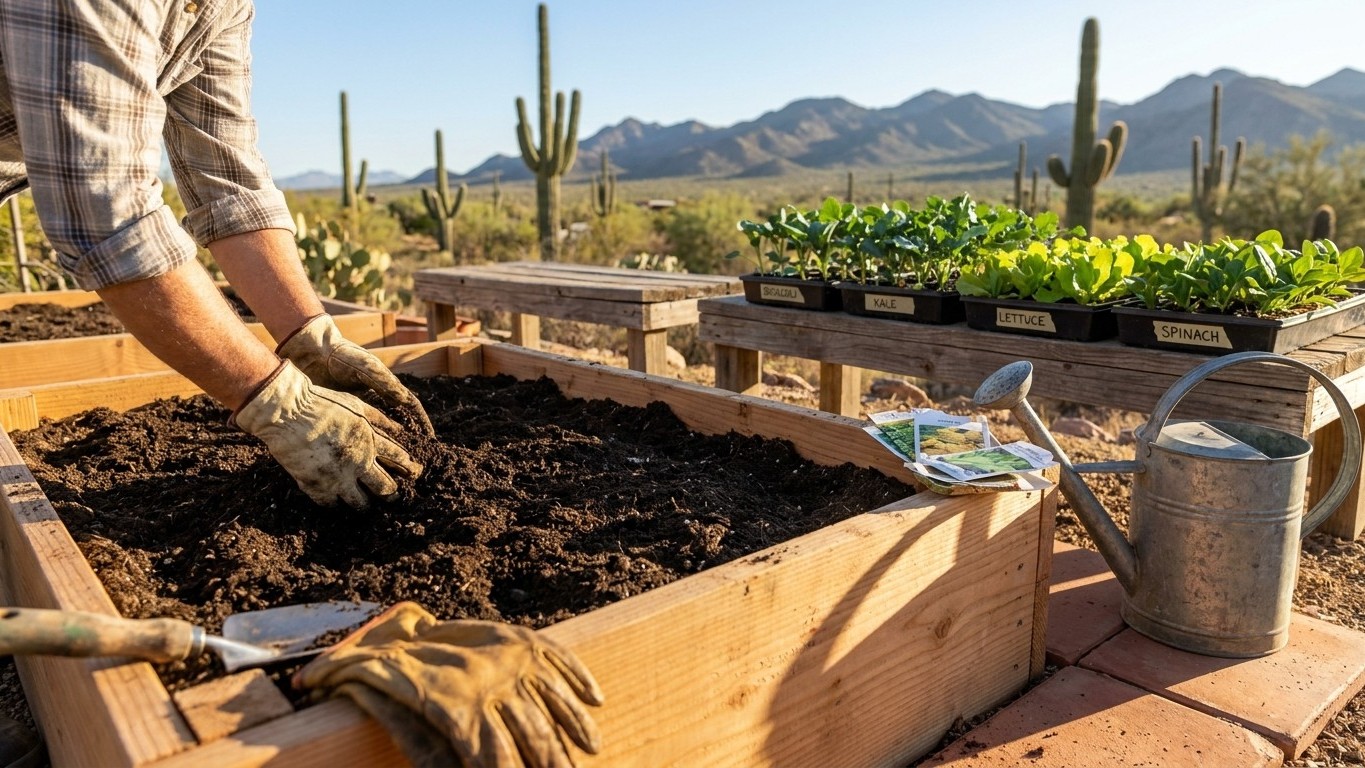

October is the turning point of the Arizona gardening year, but the answer to “what to plant” splits in two depending on where you live. In the low desert (Phoenix, Tucson, Yuma), this is the best planting month of the year for cool-season vegetables. In the high country (Flagstaff and similar elevations), the growing season is already closing and the work shifts to cleanup and dormant care.
What goes in the ground in October

Most of the country plans October planting around the first fall frost. Arizona’s low desert doesn’t really have one to plan around. NOAA daily records for the Phoenix station (USW00023183) show freezing temperatures in only 6 of the last 30 springs, and the station’s frost-free season is listed at 365 days. The limiting factor here was never cold, it’s the summer heat that shuts down fruit set and stresses roots for months at a stretch. October matters because that heat finally breaks, and the soil cools into the range where cool-season crops actually thrive.
That makes this the moment to direct-sow carrots, beets, radishes, turnips, spinach, lettuce, and peas into beds that have been baking since spring. Garlic and onion sets go in now too, timed to bulb up over the mild winter ahead. Transplants of broccoli, cabbage, cauliflower, and kale can go straight into the ground rather than waiting on a frost date that isn’t coming.
The high country is a different state entirely
Flagstaff and the other high-elevation pockets of Arizona sit in a completely different climate band. The USDA Plant Hardiness Zone Map puts the state’s full range at 4b-10b, and that spread is doing real work in this conversation: the reference low-desert city sits near the warm end, while the high country runs several zones cooler. In those higher elevations, frost has typically already arrived by the time October opens, and the ground is closing for the season rather than welcoming new plantings. If you garden above roughly 6,000 feet, treat this month as pre-winter prep, not a sowing window.
What to start under cover
Because the low desert doesn’t run on a frost calendar, the “count backward from frost” method that works almost everywhere else doesn’t apply cleanly here. Instead, the clock runs on soil and air temperature. Brassica and lettuce seed started indoors or under light shade in September needs roughly four to six weeks of growth before it’s ready to go into the ground as a stocky, non-leggy transplant. Start it too early, while daytime highs are still punishing, and seedlings stretch and struggle in the heat before they ever reach the garden. Start it too late, and you lose the mild window before winter’s shorter days slow growth to a crawl.
In the high country, the seed-starting conversation looks backward rather than forward. If frost has already moved through by the time October arrives, there’s little reason to start anything for outdoor planting. Indoor herb starts, windowsill greens, or seed started purely for spring transplant later are the realistic options. The two failure modes are the same ones gardeners everywhere run into: starting so early that plants become rootbound and stressed sitting in trays, or starting so late that there’s no usable season left to plant them into.
A cold frame or simple low tunnel bridges the gap in both regions. In the low desert it protects tender transplants from the occasional cool snap; in the high country it can stretch a harvest of hardy greens a few extra weeks past when the open garden would otherwise be done.
What is ready to pick
The low desert garden is mid-transition this month. Summer holdouts like peppers and eggplant may still be producing if they survived the worst of the heat, though yields taper as nights cool. The new fall plantings of greens and roots aren’t ready yet; they’re just getting established. What’s genuinely harvestable tends to be whatever summer squash or beans made it through, picked promptly since flavor and texture decline fast once nights turn cool and growth slows.
In the high country, if frost has already passed through, the outdoor harvest is largely finished. That’s the moment to check on anything stored from summer: winter squash should be firm with no soft spots at the stem end, potatoes kept dark and cool with any green-tinged or sprouting ones pulled and used first, and onions checked for any that have gone soft in the neck, since those won’t keep and should be used before they spread rot to the rest of the batch.
A cold frame with hardy greens like spinach or mâche can keep producing small pickings well past when the open garden has stopped, and it’s worth checking every few days rather than letting leaves get tough waiting for a “real” harvest size.
The jobs that matter this month
The low desert’s biggest job this month is soil recovery. Beds that sat through a brutal summer, whether fallow or cropped, benefit from a heavy hand of compost worked in before the fall planting push, since the organic matter that was there in spring has largely burned off in the heat. Mulch goes down next, not to hold in cold as it would elsewhere, but to slow evaporation while daytime temperatures are still warm enough to dry soil out fast. Watering rhythm needs adjusting weekly as temperatures drop: the deep, frequent irrigation that got plants through summer will drown roots once evapotranspiration slows.
Pest scouting matters here too. Whiteflies and aphids that built up on stressed summer plants often move straight onto tender new transplants, and catching them in the first couple of weeks is far easier than fighting an established infestation later.
The high country’s list runs closer to what most of the country recognizes as fall garden work. Dormant pruning of fruit trees and cane berries can begin once leaves drop, cutting out damaged or crossing wood while the plant’s structure is easy to see. This is also the moment to order seed for spring, since the varieties gardeners want most tend to sell out over winter. Testing soil now gives time to amend before spring planting, and turning the compost pile one more time before it freezes solid keeps it breaking down rather than sitting inert all winter. Tools deserve attention too: cleaning sap and dirt off pruners and shovels, sharpening blades, and repairing bed edges or fencing while the ground is still workable saves scrambling once winter sets in fully.
What not to do in October
The most common low-desert mistake is waiting. Gardeners used to frost-based calendars from other states sometimes hold off planting, expecting a freeze warning that simply isn’t the norm here, and end up starting cool-season crops weeks late. That delay eats directly into the mild window between summer heat and the shorter, cooler days of winter, and it’s the single easiest mistake to avoid once you understand that frost isn’t the gating factor in this region.
The reverse mistake also happens: planting heat-loving crops like tomatoes, peppers, or squash now on the assumption that a warm afternoon means a full growing season ahead. In the low desert, there isn’t enough runway before nights cool and growth slows to get a real harvest from a fresh planting of those crops. In the high country, if frost has already arrived, the ground is simply closed to new plantings of anything tender.
Nitrogen timing trips up gardeners in both regions. Pushing a heavy nitrogen feed on fall transplants encourages soft, leafy growth right as nights cool, and that soft growth is exactly what pest pressure and any cool snap will hit hardest. A lighter, balanced feed suits new fall transplants better than a nitrogen push meant for summer’s fast growers.
Overwatering as temperatures drop is the third trap. Soil that needed daily water in July can hold moisture for days once highs fall, and sticking to a summer watering schedule invites root rot in beds that no longer need it.
Checking this against your own county
A state-wide month is a starting point, not an instruction, and Arizona proves that better than almost anywhere. A hardiness range of 4b-10b means the same October date can mean “plant everything” in one county and “the season already ended” forty miles up in elevation. Local factors like elevation, canyon and valley cold-air pooling, and even which side of a mountain range a garden sits on can shift these windows by weeks in either direction. For guidance tuned to your specific county, the University of Arizona Cooperative Extension publishes local planting calendars and can point you to the office serving your area.
Common questions
Does Arizona ever get a real frost in fall or spring?
In the low desert, rarely. NOAA’s 1991-2020 climate normals for the Phoenix station show freezing temperatures reaching that area in only 6 of 30 recent springs, with the frost-free season listed at 365 days. The high country is different and does experience hard freezes well before October in most years.
Why is October such a good planting month in the low desert if there’s no frost to plan around?
Because the constraint isn’t cold, it’s heat. Summer temperatures stop fruit set and stress plants for months, and October is when that heat finally eases enough for cool-season vegetables to thrive.
Can I still plant tomatoes or peppers in October?
In the low desert, there generally isn’t enough mild season left before nights cool and growth slows for a fresh planting to produce a real harvest. In the high country, if frost has already arrived, the outdoor season for tender crops is over.
My garden is at high elevation. Does any of this low-desert advice apply to me?
Only the general principles, not the specifics. Arizona’s hardiness zones span 4b-10b, and high-elevation gardens follow a frost-driven calendar much closer to the rest of the country. Check with your local Cooperative Extension office for a calendar matched to your elevation.