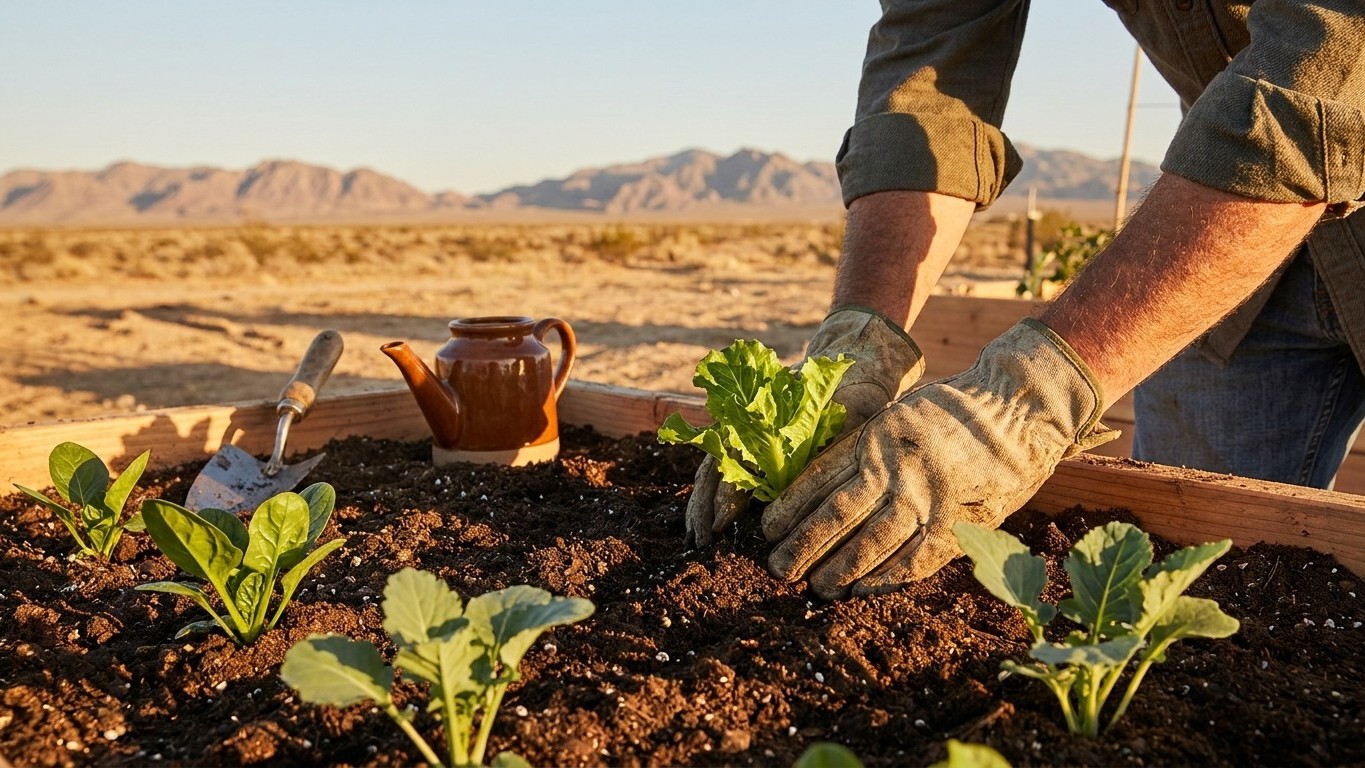

In low desert Arizona, September is planting month one for the fall garden, not a wind-down. The trigger isn’t frost, it’s the break in extreme heat. Cool-season crops such as lettuce, spinach, carrots, beets, and broccoli transplants go into the ground as the month progresses. In the high country around Flagstaff, the calendar flips: frost has often already arrived, and September is closer to a harvest-and-shutdown month.
What goes in the ground in September
Most of the country plans around a frost date. Arizona’s low desert doesn’t have one to plan around. NOAA’s 1991-2020 climate normals for the Phoenix station (USW00023183) list a 365-day frost-free season, and when a freeze does show up, it lands between late December and mid January, not in September. Out of 30 recent years of daily records at that station, a 32F reading only turned up in 6 springs. That’s the mechanism worth understanding: the limiting factor for Phoenix, Tucson, and Yuma gardens isn’t cold, it’s the punishing summer heat that stops fruit set and scorches seedlings for months at a stretch. September matters because that heat finally starts to loosen its grip.
That changes what “safe” means this month. Early in September, afternoon highs in the low desert are often still in triple digits, and soil temperature stays hot well below the surface. Direct-sown seeds and transplants set out too early can bolt, stall, or simply cook. As the month goes on and overnight lows begin easing, gardeners start moving in the classic cool-season lineup: lettuce, spinach, chard, kale, carrots, beets, radishes, turnips, broccoli and cauliflower transplants, and peas. Onion sets and transplants also go in through the back half of the month in many low desert gardens, with garlic typically waiting until soil cools further into fall.
Flagstaff and the higher elevations of Arizona sit in a completely different climate, and USDA’s Plant Hardiness Zone Map (2023, built on 1991-2020 averages) reflects that split: the state spans zones 4b through 10b, using the map’s own single variable, the average annual extreme minimum temperature. In the high country, September often brings the first hard frost of the season, so the priority shifts to garlic and shallot planting where soil is still workable, cold frames for lingering greens, and getting bare-root or dormant stock into the ground before the ground itself locks up.
| Region | September condition | Main planting task |
|---|---|---|
| Low desert (Phoenix, Tucson, Yuma) | Still hot early month, no frost risk | Start the fall cool-season garden |
| High country (Flagstaff, White Mountains) | First frosts often already arrived | Garlic, shallots, cold frames, dormant stock |
What to start under cover
In the low desert, the countdown runs backward not from a frost date but from the point when outdoor soil finally cools enough to hold a transplant. Broccoli, cauliflower, and cabbage seedlings are often started indoors or under light shade a few weeks ahead, so they’re stocky and ready the moment conditions outside stop punishing them. Start too early in still-scorching conditions and the seedlings sit in pots too long, turning leggy and rootbound before they ever see garden soil. Start too late and the cool-season window narrows fast, since low desert winters, while mild, don’t stretch indefinitely before spring heat returns.
Shade cloth and light protection do double duty here: they let a gardener start seedlings a little earlier than the open garden would tolerate, buying a few extra weeks of head start without exposing tender leaves to full desert sun. That’s the real trade-off in this climate, protection against heat rather than protection against cold.
In the high country, indoor starts this month look forward rather than backward. With frost already settling in or close behind, anything started now under cover is aimed at cold frames or spring succession, not at the open garden. Gardeners there are also using the month to pot up any tender perennials or herbs they want to bring indoors before nighttime lows drop further, since once a hard freeze sets in, that option closes.
What is ready to pick
Low desert harvests hit a lull in September. Summer crops such as peppers, eggplant, and okra can keep producing into the month if they were irrigated through the worst of the heat, and any beans or squash planted in late summer may still be filling out. But the big fall harvests, the lettuce, carrots, and broccoli just going into the ground now, are still weeks away. Checking peppers and eggplant for full color and firm skin, rather than size alone, is the simplest way to know they’re ready before the plants start winding down.
In the high country, harvest season is closing out fast. Any tomatoes, squash, or peppers still on the vine when frost threatens need to come in green or half-ripe rather than be left to gamble on one more warm stretch. Stored crops matter more here this month than fresh ones: potatoes, winter squash, and onions pulled earlier in the season should be checked for soft spots, sprouting, or a sweet smell, all early signs that one item is starting to turn and needs to be used before it spreads to the rest of the batch.
The jobs that matter this month
Soil preparation is the biggest payoff item on the low desert list. Beds that hosted tomatoes, peppers, or melons all summer are usually depleted, and working in compost now, before the fall crops go in, gives amendments time to settle before roots need them. Mulch matters here too, not for warmth but for moderating soil temperature and holding scarce moisture as watering schedules shift away from the deep, frequent summer routine toward something lighter as days cool.
Pest scouting deserves attention as the fall garden gets underway. Whiteflies and aphids often build up on late summer plants and can jump straight onto tender new seedlings if beds sit close together, so checking the undersides of leaves before transplanting nearby is worth the five minutes it takes. Succession sowing keeps a steady supply coming: a new short row of lettuce, spinach, or radishes every couple of weeks through fall avoids the all-at-once glut and gap pattern that a single big planting produces.
In the high country, September’s jobs run the other direction. Dormant pruning isn’t due yet, but clearing frost-killed summer plants, cleaning and sharpening tools before winter storage, and testing soil while beds are still accessible all pay off later. It’s also the point in the year to order seed for varieties that tend to sell out, since catalogs move fast once cooler-climate gardeners everywhere start planning. Checking stored crops for early rot and turning compost piles before they freeze solid round out a list that has as much riding on it as any spring task, even without a single seed going into open ground.
What not to do in September
The most common low desert mistake is transplanting cool-season seedlings into soil that only feels cooler because the air temperature dropped for a day or two. Soil holds heat far longer than air does, and a seedling set into ground that’s still hot several inches down will stall or scorch even on a mild afternoon. Waiting for a sustained cooling trend, rather than one comfortable morning, avoids the loss.
Overwatering is the second trap. Summer watering schedules in the desert are aggressive out of necessity, and carrying that same frequency into September, once temperatures start easing and cool-season crops with shallower water needs go in, invites root rot and damping-off in young seedlings. Adjusting the schedule downward as soon as the fall crops are in the ground matters more than sticking to a fixed routine out of habit.
Heavy nitrogen feeding at the wrong point causes trouble too. Root crops like carrots and beets pushed with high-nitrogen fertilizer put energy into leafy top growth instead of the root, leaving a disappointing harvest later. A balanced or lower-nitrogen feed suits the fall root crop lineup better. In the high country, the classic error is uncovering cold frames or removing protection after a mild afternoon, only to lose tender plants to the frost that follows that same night. Once nights start dropping near freezing there, protection stays on until the pattern is clearly settled, not just after one warm day.
Checking this against your own county
A statewide month is a starting point, not an instruction. Arizona’s elevation swings from below sea level near Yuma to well over 7,000 feet around Flagstaff, and that range moves planting windows by weeks in either direction, sometimes more. USDA’s hardiness zone map puts the state anywhere from zone 4b to 10b depending on location, and a date that works in Phoenix can be off by a season’s worth of weather in the White Mountains. The University of Arizona Cooperative Extension (extension.arizona.edu) publishes county-level guidance and planting calendars that account for these local differences, and it’s the better reference once a gardener wants dates specific to their own elevation and microclimate.
Common questions
Can tomatoes be planted in Arizona in September?
In the low desert, September is generally too early for tomato transplants since soil is still holding summer heat that stresses young plants; most low desert gardeners wait until temperatures ease further into fall. In the high country, September is typically past the point of setting out tomatoes at all, since frost may have already arrived.
Does Phoenix get frost in September?
No. NOAA’s climate normals for the Phoenix station show a 365-day frost-free season in most years, and on the rare occasions a freeze does occur, it falls between late December and mid January, not in September.
When should garlic go into the ground in low desert Arizona?
Garlic generally goes in later in fall than September, once soil has cooled further; September is more useful for finishing bed preparation and sourcing seed garlic ahead of planting.
Why does Arizona’s planting calendar differ so much by region?
The state’s hardiness zones span 4b to 10b on the USDA map, a range driven by huge elevation differences between the low desert and the high country. That spread means a single statewide date rarely applies evenly, and county-level extension guidance fills the gap a general calendar can’t.