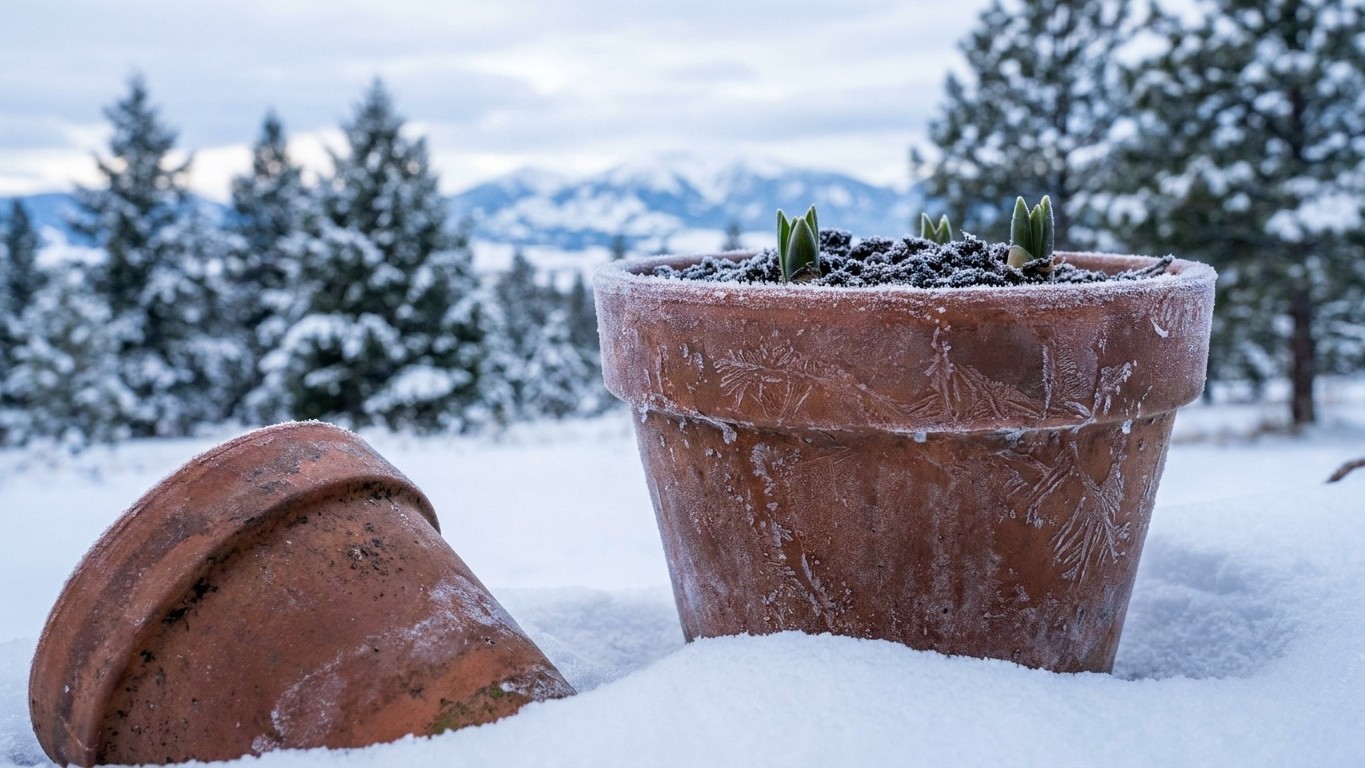

Container-grown spring bulbs can bloom just fine in Montana, but the pot changes the rules that work for the same bulb planted straight in a garden bed. A container freezes clear through in a way that surrounding soil never does, and Montana’s already-cold winters make that difference matter more than the artificial chilling gardeners in milder states rely on. The fix here is protecting or moving the pot, not manufacturing cold the bulb would get anyway.
Why this matters in Montana

The mean daily minimum temperature in Montana’s coldest month lands at 17.9°F, based on the NOAA NCEI Climate Normals for 1991-2020 at the Billings reference station. That’s not a record low; it’s the average low across the whole worst month of winter, and it’s the figure that actually decides whether a spring bulb’s chilling requirement gets met. A tulip or daffodil planted in the ground needs roughly 12 to 14 weeks below 45°F before it can send up a flower stalk instead of just leaves. With a coldest-month average minimum sitting nearly 30 degrees under that threshold, Montana ground supplies that chill on its own, for months, with no help from a gardener.
That number rules out one of the two reasons gardeners force bulbs. Indoor forcing, using a refrigerator to fake winter, is the standard fix for regions where the ground never gets cold enough for long enough, think Gulf Coast states where the coldest month barely dips into the 40s. Montana isn’t that state. The USDA Plant Hardiness Zone Map (2023 edition, built on 1991-2020 normals) puts Billings on the milder edge of a statewide range that runs from zone 3a near the Canadian border to zone 6a in some of the state’s lower valleys, and even that milder edge gets a real winter.
The problem containers introduce is different, and it’s the one that actually matters here. Soil in the ground is insulated by the earth around and beneath it; the surface freezes and thaws, but a few inches down, roots stay in a narrower, more survivable temperature band all winter. A container has no such buffer. Sitting exposed on a patio or a porch step, a pot’s soil temperature tracks the air temperature almost directly, so a bulb rated hardy in-ground for a given zone can freeze solid, roots included, in that same zone’s open air. A nursery tag might list a tulip as hardy to zone 4; that rating assumes garden soil, not a ceramic pot standing on concrete through a Montana winter.
That’s why Growing Spring Bulbs in Montana containers isn’t really about supplying missing cold. It’s about managing the cold that’s already abundant, so it doesn’t reach the roots at a lethal dose. The method below covers exactly how that’s done outdoors, along with the narrower case of forcing bulbs indoors for an early, out-of-season bloom rather than for survival.
How to do it here
Two different projects fall under this heading: keeping a potted bulb alive through a Montana winter so it blooms outdoors next spring, and forcing a bulb indoors so it blooms weeks early on a windowsill. Both start the same way, in fall, with a healthy bulb and a well-draining pot, then the steps split.
- Pot the bulb in fall in a container with drainage holes, using a standard well-draining potting mix rather than garden soil, which compacts and holds too much water around the bulb.
- Decide right away whether this pot is going to overwinter outdoors or get forced indoors, since the remaining steps diverge from here.
- For indoor forcing, give the potted bulb 12 to 14 weeks below 45°F before bringing it into warmth. An unheated garage that stays above freezing works, and so does a spare refrigerator crisper drawer, as long as it’s kept away from any ripening fruit. Apples, pears, and similar fruit release ethylene gas as they ripen, and ethylene can kill the flower bud forming inside a chilling bulb without leaving any sign until it simply fails to bloom.
- For outdoor overwintering, check whether the pot itself is at least two USDA zones hardier than the bulb requires. A plastic or foam container insulates a bit better than thin terra-cotta or glazed ceramic, but neither reliably reaches that buffer on its own across most of Montana.
- Where the pot can’t meet that buffer, move it into an unheated garage, shed, or similar structure that stays above freezing, and pack mulch, straw, or leaves around and over the pot up to its rim.
- Once the cold period ends, whether measured in weeks for a forced bulb or by the calendar for an overwintered one, shift the container into gradually increasing light and warmth rather than a sudden jump, and keep the soil evenly moist without letting water stand in the saucer.
Which bulbs are worth it
Not every spring bulb is worth the extra handling a Montana container demands, and the ones that are worth it split along a simple line: how long they need to chill, and how well they hold themselves upright once they bloom. A shorter cold requirement means a faster, more predictable schedule; a taller, thinner stem means more risk of toppling in a lightweight pot with no surrounding plants to lean on.
- Crocus, short-stemmed and quick to chill, forces reliably and rarely needs staking.
- Grape hyacinth (muscari), similarly compact, tolerates the shorter end of the cold window well.
- Hyacinths, dense and a bit heavy-headed but short enough overall that a wide, stable pot handles them fine.
- Daffodils (narcissus), forgiving of small variations in chilling time and sturdy once potted.
- Tulips, reliable bloomers for one season in a container, even where many varieties won’t return with the same vigor the following year.
- Alliums, tall and top-heavy on the stem, on top of a longer chilling requirement that’s harder to fit into a container schedule.
- Fritillaria, sensitive to the exact moisture level in the mix, rotting easily in a pot where a garden bed would have drained on its own.
- Tall, lily-flowering tulip varieties, prone to toppling for the same reason as alliums: height without neighboring plants to lean against.
The tulip is worth a second look because the math around it is different anyway. Most showy tulip hybrids decline fast in Montana’s clay and rocky soils even planted in the ground, so plenty of gardeners already treat them as a one-season purchase. Forced or overwintered in a pot, a tulip that was never going to reliably rebloom costs nothing extra by being handled the same way. Daffodils and crocus are the ones worth doing carefully, since a well-handled bulb in the right container will come back for several more seasons.
What goes wrong, and when you can still fix it
Leaves but no flower
A potted bulb that pushes up healthy green leaves and then stalls, never sending up a bloom stalk, almost always means the cold period ran short. The bulb broke dormancy enough to grow foliage but never got the full stretch below 45°F needed to form a flower bud. There’s no fix this season; cold can’t be added retroactively to a bulb that’s already growing leaves. Let the foliage die back naturally to feed the bulb, then run the full chilling period properly next fall.
A flower buried in the leaves
When the bloom does appear but on a stem too short to see over the foliage, the bulb was likely moved from cold into warmth too fast, or warmed partway through its chilling period. Stem length is set as the flower forms, so it can’t be corrected once it’s already grown. The bulb currently in the pot can’t be fixed this season; next time, move a chilled bulb into warmth gradually, over several days, rather than straight into a bright, heated room.
Rot at the base of the pot
Soft, mushy bulb tissue or a sour smell at the base traces back almost every time to drainage, either a pot without enough holes or a saucer that let water sit against the bulb all winter. If the bulb is still firm when the problem is caught, repotting immediately into fresh, well-draining mix in a pot with real drainage can still save it for this season. Once the tissue has gone soft, the bulb is finished, and the only fix is for next fall: a pot with proper drainage holes and a mix that never holds standing water.