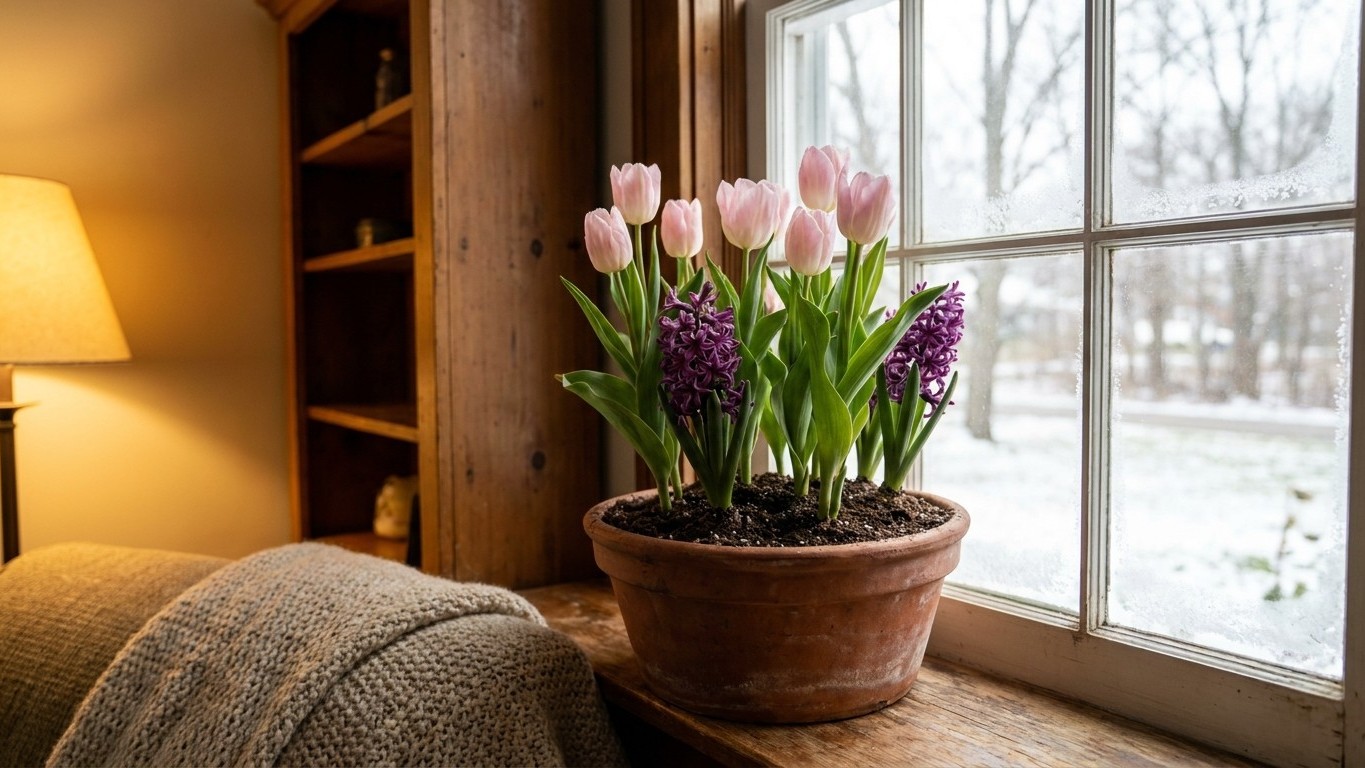

Ohio’s winters are cold enough that forcing bulbs has nothing to do with a shortage of outdoor chill. The coldest month here averages a minimum of 22.0°F, and the state sits in USDA zones 5b-6b, plenty cold for garden bulbs to get their natural rest. Forcing indoors is really about bringing bloom inside a heated house before the ground outside cooperates, and about protecting the pot itself, which chills faster than open soil.
Why this matters in Ohio

A tulip or hyacinth planted in an Ohio garden bed gets its twelve to fourteen weeks below 45°F without any help. The ground here holds cold from roughly late November through February, and the 22.0°F coldest-month minimum (NOAA NCEI Climate Normals, 1991-2020, reference station Columbus) confirms that outdoor soil delivers far more chill than any spring bulb actually needs. So if the question is whether Ohio winters are cold enough for bulbs planted in the ground, the answer is yes, decisively, and forcing has nothing to fix there.
The real reason to force bulbs indoors here is timing, not temperature. A heated living room never drops below 45°F, so a bulb sitting on a windowsill in October will never get the cold signal it needs to flower, no matter how long you wait. The gardener has to supply that cold artificially, in a refrigerator or an unheated space, before bringing the pot into the warmth. That’s forcing: manufacturing winter indoors so the bulb blooms on the household’s schedule instead of the calendar’s.
Containers raise a separate problem, and it’s the one Ohio gardeners actually get wrong. A bulb bed in zone 5b-6b freezes only a few inches down; the mass of surrounding soil insulates the bulb below. A pot has no such buffer. Left on a porch or unheated deck through a Columbus winter, the growing medium inside can freeze solid, roots and all, exposing the bulb to temperatures the same species would never see safely in the ground. That’s why a bulb rated hardy for this zone can still die in a container here, and why the fix for pots is different from the fix for garden beds. Ohio, in short, has two separate situations: outdoor beds that need no help at all, and containers that need active winter management regardless of how hardy the bulb is supposed to be.
How to do it here
The sequence below assumes you’re forcing bulbs for indoor bloom, or protecting a potted bulb through an Ohio winter. Each step should be something you can check yourself, not something to take on faith.
- Pot the bulbs in a container with drainage holes, using a loose, well-draining mix, with the tips at or just below the surface. Water once, thoroughly, right after potting.
- Chill the potted bulb for 12 to 14 weeks at a steady 35-45°F. A refrigerator crisper drawer works, but keep it away from ripening apples, pears, or other fruit; the ethylene gas they release can damage the flower bud forming inside the bulb before you ever see it.
- If you’d rather not tie up refrigerator space, an unheated but attached garage works, as long as it reliably stays above freezing through the coldest stretch of the season. A detached, uninsulated garage in central Ohio can dip well below freezing on the coldest nights, which defeats the purpose.
- For pots you plan to leave outside rather than chill indoors, the bulb needs to be rated at least two hardiness zones colder than 5b-6b, meaning hardy to zone 3b-4b, or you need to move the pot into an unheated garage and bank mulch or straw around it against an exterior wall.
- Check progress around week 10 by tipping the pot and looking for white roots emerging from the drainage holes, along with pale shoot growth at the surface. Both signs mean the chilling period is working as it should.
- Once the full chilling period is complete, move the pot to a cool, dim spot around 50-60°F for about a week to let the shoots green up gradually.
- Finish by moving the pot to a warm, bright spot, ideally 65-70°F, where it will bloom within one to three weeks depending on the species.
Which bulbs are worth it
Some bulbs reward the effort of forcing; others fight you the whole way. The difference usually comes down to two things: how short a chilling period the species needs, and how tall and top-heavy the finished stem gets in a pot with no garden soil to anchor it.
Bulbs that force reliably
- Paperwhite narcissus, which needs no chilling period at all and was never going to survive an Ohio winter outdoors anyway, so forcing costs nothing in the long run
- Hyacinths, with a shorter cold requirement and a sturdy stem that holds up well in a container
- Crocus, fast to chill and low enough that toppling isn’t an issue
- Muscari (grape hyacinth), compact and forgiving of a slightly uneven chill
- Species and botanical tulips, such as kaufmanniana and greigii types, which stay short and stocky compared to standard tulips
Bulbs that sulk
- Standard trumpet and large-cup daffodils, which grow tall stems that flop in a lightweight pot
- Tall Darwin and Triumph tulips, prone to leaning or snapping once the flower opens
- Alliums, which need a long chilling period and often bloom unevenly indoors
- Fritillaria imperialis, finicky about chilling consistency and better left to the garden bed
What goes wrong, and when you can still fix it
Leaves but no flower
This means the chilling period was cut short, whether by an early trip out of the fridge or a garage that warmed up mid-winter. There’s no fixing it this season; the bud simply never formed properly. Next time, track the full 12 to 14 weeks from the day the pot goes cold, not from the day it was potted.
A flower on a stem too short to see
This happens when the pot moves into a warm room before the chilling period is finished, or moves too fast from cold to warm without the gradual middle step. The bulb rushes to bloom on a stunted stem. Once that’s happened, there’s no reversing it this season; the flower will open low and stay low.
Rot in the pot
Soft, mushy bulbs or a sour smell in the soil point to standing water, usually from a container without adequate drainage holes or a mix that holds too much moisture during the long chilling weeks. A bulb that’s already gone soft and dark won’t recover, no matter how it’s replanted. If only the surface looks damp and the bulb itself still feels firm, repotting immediately in a drier, grittier mix with better drainage can still save it for this season.
Related guides
- Growing Spring Bulbs in Containers in Ohio
- Forcing Spring Bulbs Indoors in Oklahoma