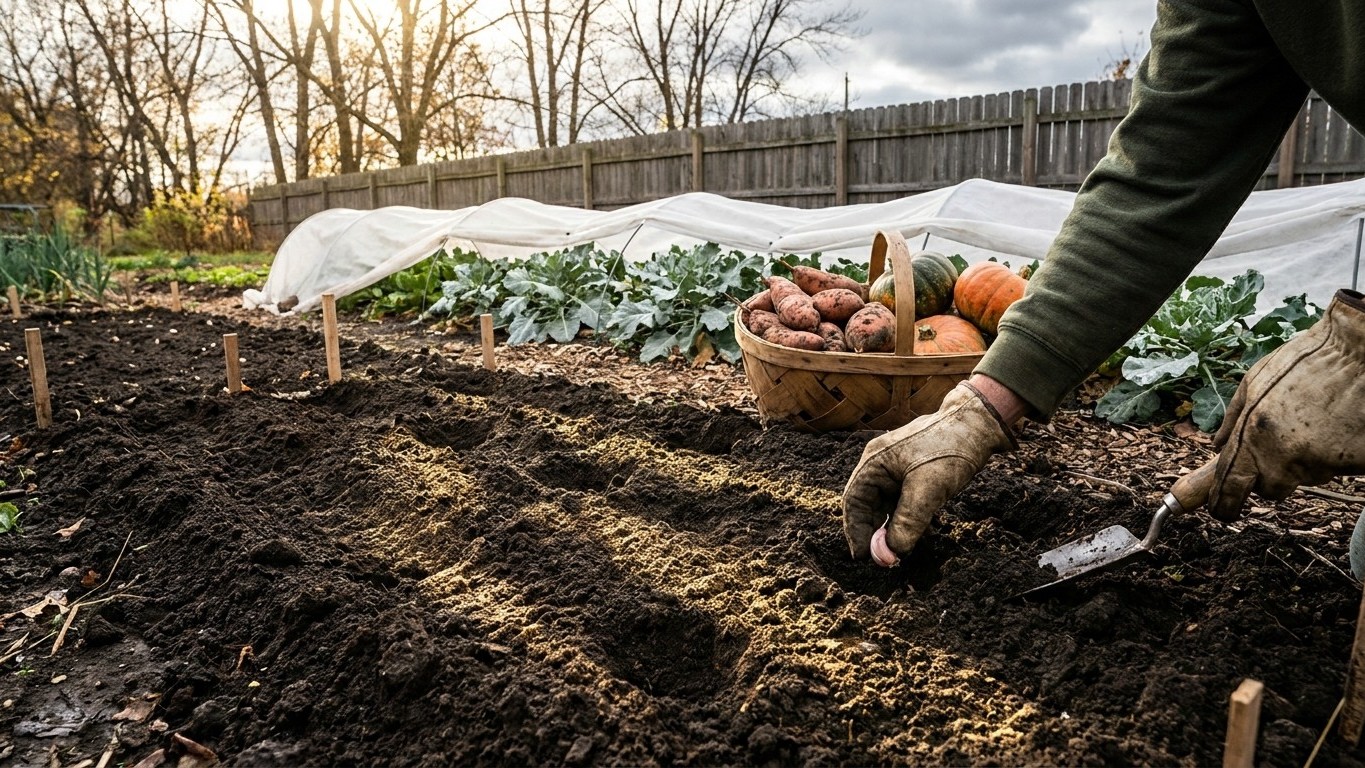

October is Iowa’s garlic-planting window and its last full harvest push before frost, not the start of a new growing season. Get garlic and shallots into the ground, sow a handful of frost-hardy greens under cover for spring, pull in winter squash, sweet potatoes and the last tomatoes before a hard freeze, and use the weeks to close down beds for winter. Zone here runs 4b-6a on the USDA map, and frost is the deadline for almost everything on this list.
What goes in the ground in October

Garlic is the headline crop for this month across Iowa. Cloves want to go in roughly four to six weeks before the ground freezes solid, which lines up with early-to-mid October in most counties. Push them in too early and the shoots emerge and get knocked back hard before winter; push them in too late and roots never anchor before the soil locks up. Shallots follow the same logic and the same timing.
Spring-flowering bulbs, tulips, daffodils, crocus, go in once soil has cooled but before it freezes. There’s no rush to beat a calendar date here; the soil tells you when it’s ready by staying workable with a spade.
The frost math behind the decision
NOAA’s 1991-2020 climate normals put the first fall freeze at a single Iowa airport station in a window of October 14 to October 25. That’s the optimistic end. Iowa State Extension’s county-level data, built from 1950-2021 records, runs roughly ten days earlier in fall than that airport number, which pushes the real first-frost risk for a lot of counties into the first half of October. Anyone still hoping to harden off a warm-season transplant this month is working against that math, not with it.
Cereal rye and winter wheat can still be seeded as a cover crop early in the month; both germinate in cool soil and don’t need the long fall window that a vegetable crop would. Trees, shrubs and perennials can also go in now, since cooler air slows top growth while soil is still warm enough for roots to establish, but they need those same four to six weeks before a hard freeze locks the ground. What doesn’t belong on this list is any direct-sown vegetable grown for harvest: lettuce, beans, squash, anything tender is done for the season once frost risk enters that window.
What to start under cover
Spinach, mache (corn salad) and claytonia are the three crops worth sowing under a cold frame or low tunnel this month, and none of them are grown for a fall harvest. They’re sown to sit as small, cold-hardy seedlings through winter and resume growth as days lengthen, giving an early spring harvest weeks ahead of anything direct-sown outdoors next year. Quick radishes sown in the first days of October can occasionally sneak in a harvest under cover before a hard freeze, but treat that as a bonus, not a plan.
Work the timing backward from the frost window rather than from the calendar. With first frost falling somewhere in that October 14 to October 25 range at the airport station, and roughly ten days earlier by county extension figures, a crop needs to already have real leaf growth by the time cold settles in to survive as an overwintering seedling. Sow too early under cover and spinach or mache can bolt or get leggy before the cold that’s supposed to hold them in stasis arrives. Sow too late and the seedlings are too small and underdeveloped to make it through a hard freeze, cover or no cover.
Indoors, this is also the month to start forcing bulbs, amaryllis and paperwhites among them, for winter bloom. Count backward from whenever you want flowers and plant in stages a couple of weeks apart, since forced bulbs don’t wait for you the way garden bulbs do.
What is ready to pick
Winter squash and pumpkins come off the vine this month, and timing matters more than it looks: harvest before a hard freeze damages the rind, since a frost-cracked squash won’t store. Sweet potatoes need to come out of the ground before soil temperatures drop and definitely before frost touches the foliage, which can shorten storage life even if the tubers look fine.
Apples are still ripening on many varieties through the month, and the last tomatoes and peppers need picking, green if necessary, ahead of any frost warning; green tomatoes ripen indoors on a windowsill just fine. Kale, collards and Brussels sprouts are the exception to the urgency: a light frost sweetens all three, so there’s no reason to rush them and every reason to leave them a few extra days once cold hits.
Carrots, beets and turnips can stay in the ground past the first light frosts too, protected under a few inches of mulch, and often taste better for it. Basil is the opposite story: it turns to mush at the first frost, so it’s worth cutting and freezing or drying well before any freeze watch is posted.
The jobs that matter this month
Harvesting ahead of frost is job one, but it’s not the only deadline on the calendar. Clean up diseased plant debris, tomato foliage with blight, squash vines with powdery mildew, rather than composting it; that material overwinters the same problems into next season if it goes back into the pile.
Divide and transplant perennials while soil is still workable, mulch beds that are done for the season, and drain hoses and irrigation lines before a hard freeze cracks fittings. Rake leaves into the compost pile or shred them straight onto beds as mulch, since whole leaves mat down and smother whatever’s underneath.
Soil, tools and next season
Pull a soil test now if beds need lime or sulfur; both take months to shift pH, and applying them in fall gives them a head start over winter rather than waiting until spring planting is already close. Order garlic and spring bulbs promptly if that hasn’t happened yet, since the better varieties sell out early in the season. Clean and sharpen pruning tools before they go into winter storage, and bring in tender container plants and houseplants that summered outdoors before the first real cold snap catches them on the porch.
What not to do in October
The most common mistake this month is leaving tender crops out on the strength of a warm afternoon. Tomatoes, peppers and basil don’t get a grace period once a real frost hits; one cold night ends the season for all three regardless of how mild the days felt that week.
A close second is pulling mulch or row covers off too early during a warm spell, then getting caught when a frost swings back through before the window closes. Iowa’s fall frost dates are a range, not a hard line, and a mild week in early October doesn’t cancel the risk baked into that October 14 to October 25 window, or the earlier risk the county extension data points to.
Skip high-nitrogen fertilizer on lawns, perennials or woody plants this late in the season. Nitrogen pushes soft new growth that doesn’t have time to harden off before winter, and that new growth is exactly what gets damaged first by cold. Hold off on pruning trees and shrubs too; cuts made now can stimulate a flush of growth right before dormancy and don’t heal as cleanly as pruning done during winter dormancy. And don’t rush garlic into warm soil out of eagerness, since cloves planted too early can push top growth before winter that gets knocked back and weakens the bulb.
Checking this against your own county
A statewide October guide is a starting point, not an instruction sheet for a specific yard. Elevation, local topography and the straightforward difference between northern and southern Iowa can shift these windows by weeks in either direction. The frost figures above come from a single NOAA airport station; Iowa State Extension’s county-level records, drawn from 1950-2021 data, run about ten days earlier in fall, which matters a lot if a garden sits in the northern part of the state. Check both the Iowa State Extension service and the state’s own planting calendar for figures closer to a specific county before making planting decisions.
Common questions
Is it too late to plant garlic in Iowa in October?
No. October sits inside the four-to-six-week window before the ground typically freezes, which is the timing garlic needs to root without pushing much top growth before winter.
Can I still start a vegetable garden from seed outdoors in October in Iowa?
Not for a fall harvest. Frost risk in this window, October 14 to October 25 at the reference station and potentially earlier by county, rules out direct-sown vegetables grown for harvest this season; cold frame sowing of spinach or mache for an overwintering crop is the realistic option.
What USDA hardiness zone is Iowa in?
Iowa spans zones 4b through 6a on the USDA Plant Hardiness Zone Map, based on average annual extreme minimum temperature. That’s a statewide range, and the low end and high end of that range behave differently enough that local zone lookup matters more than the state figure.
When should I stop harvesting tomatoes and peppers before frost hits?
Pick them the moment a frost warning is issued rather than waiting to see if it materializes. Green tomatoes ripen fine indoors, but a single freeze on the plant ends the fruit’s usefulness outright.
Gardeners who plant by the Moon can check the October 2026 moon planting calendar, a tradition rather than a proven method.
Related guides
Elsewhere? See what to plant in October in every state and province.