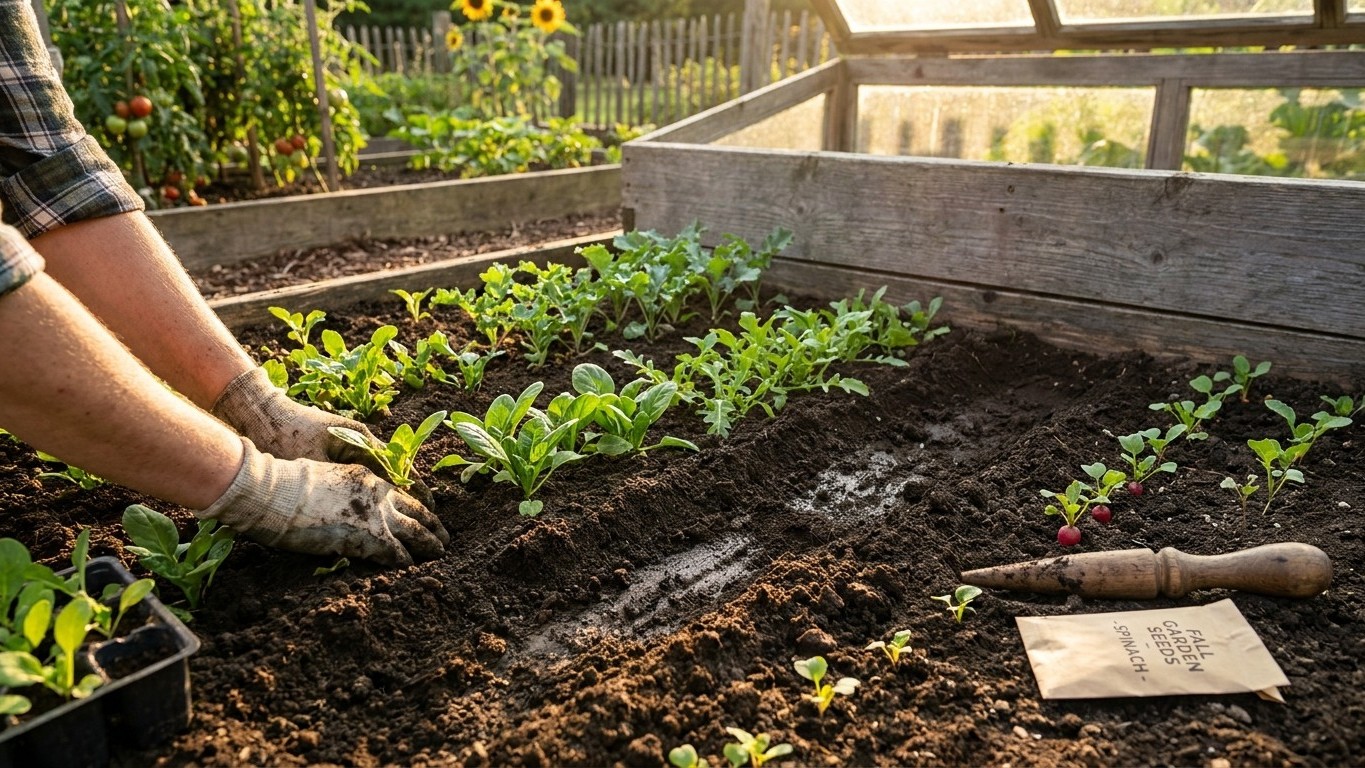

September in Iowa still has real planting work in it: hardy greens go into open soil, cover crops go down on cleared beds, and cold frames get seeded for a fall and winter harvest. The state’s first fall freeze usually lands between October 14 and October 25, so the month is a countdown, not a shutdown.
What goes in the ground in September

The freeze that ends the season sits between October 14 and October 25 for the state’s reference climate station, based on NOAA’s 1991-2020 Climate Normals for 32°F freeze risk. That gives a direct-sow window of roughly four to seven weeks depending on where in the month you plant and where in the state you garden. Fast, cold-tolerant crops fit that window comfortably. Slow ones do not.
Radishes and turnips, ready in three to five weeks, can go into the ground through most of September and still finish before frost damages them. Spinach, mustard greens, arugula and baby kale follow the same logic: sown early in the month, they mature with room to spare. Lettuce is tighter. A head lettuce needs six to seven weeks, which pushes the safe sowing date into the first week or two of September at the latest; loose-leaf types cut young buy more time.
Green onions from sets, and scallions started from seed, tolerate the early frosts that arrive at the edge of that October window and can stay in the ground past the first light freeze without much damage. Cover crops belong here too: cereal rye, winter wheat and crimson clover seeded now on any bed that’s finished producing will germinate in the remaining warm soil and hold the ground over winter instead of leaving it bare.
Spring-flowering bulbs, tulips, daffodils, crocus, are traditionally set out once soil has started to cool, and September is the front edge of that season in much of the state. What doesn’t belong in September ground: beans, squash, cucumbers, anything that needs a full summer to fruit. The clock has run out on those regardless of how warm the afternoons still feel.
What to start under cover
Cold frames and low tunnels change the math for September sowing because they buy extra weeks on both ends. Counting backward from the October 14-25 freeze window, a quick green that needs 25 to 35 days to reach a pickable size can still be sown under cover into mid-September for an October harvest. Push past that and you’re not growing for a fall harvest anymore, you’re establishing plants that will sit dormant through winter and resume growth in spring, which is exactly what spinach, mâche and claytonia are good at when sown under glass or plastic late in the month.
The two ways this goes wrong both come down to timing. Sow too early and pack a cold frame in warm September afternoons, and seedlings can bolt or stretch into leggy, weak growth before the weather that’s supposed to slow them down actually arrives. Sow too late, past the point where roots have time to establish before the ground cools hard, and the same seedlings winter-kill instead of overwintering. There’s no fixed date that works everywhere in the state for this; it depends on how quickly your particular garden cools in fall, which is one more reason the backward count from your local frost window matters more than a calendar date.
Low tunnels serve a second purpose this month: stretched over beds of tomatoes, peppers or basil still producing outdoors, they can buy an extra week or two of harvest past the first light frost, provided the tunnel goes on before the cold night, not after.
What is ready to pick
September is one of the heaviest harvest months in Iowa, not a lean one. Winter squash and pumpkins are curing on the vine; the test is a rind that resists a thumbnail and a stem that’s started to dry and go corky. Apples on mid- and late-season trees are coming ripe through the month, and a gentle twist that releases the fruit cleanly from the branch is the surest sign it’s ready, more reliable than color alone.
Tomatoes and peppers keep producing until the first real frost, so daily picking still pays off, especially for anything close to that October window. Dry beans left on the vine to brown and rattle are ready to strip and shell. Sweet corn from late plantings finishes out. Potatoes intended for winter storage should be dug once the tops have died back and the skins have set, then cured in a dry, shaded spot for a week or two before they go into storage.
Onions and garlic harvested and cured earlier in summer are already in storage by September, and this is a good month to go through that stock. Press gently on each bulb; anything soft, sprouting, or starting to smell should be pulled and used first, before it spreads rot to the rest of the bin.
The jobs that matter this month
Frost readiness tops the list, because the 32°F window covers a 30 to 70 percent probability band, which means an early frost inside or even ahead of that range is entirely possible in a given year. Keeping row cover or old blankets staged near the garden, rather than in a closet, is the difference between saving a week of tomatoes and losing them overnight.
Cover cropping any bed that’s finished for the season is worth doing now rather than later. Cereal rye and clover seeded in September have enough warm soil left to germinate and root before winter, which holds soil structure and adds organic matter that would otherwise wash away over a bare winter.
Curing and storing winter squash, onions and potatoes is time-sensitive: leave squash on the vine too long past full color and a hard frost can rot it from the inside before it’s even picked. Seed saving from open-pollinated flowers and vegetables should happen before wind and rain scatter it, and diseased plant debris, especially anything with tomato blight or squash vine borer damage, should come out of the garden now rather than getting tilled in, where it will carry the same problem into next season.
September is also the ordering window for garlic and spring bulbs, since the better varieties tend to sell out before the actual planting dates arrive later in fall. Dividing peonies, iris and other spring perennials fits into early fall as well, giving roots time to settle before the ground cools hard.
What not to do in September
Planting anything warm-season, tomatoes, peppers, squash, cucumbers, is close to pointless this late; there simply isn’t enough season left before the October frost window to get a return on the effort. Put that energy into cover crops or fall greens instead.
Overreacting to the first cool night is its own mistake. Because the freeze date is a probability band and not a fixed point, covering everything at the first chilly evening in early September can mean weeks of unnecessary fuss, while waiting too long once frost is genuinely forecast can mean losing tender crops overnight. Watch the actual forecast for your area rather than the calendar or the feel of the air.
Heavy nitrogen feeding late in the season is a common misstep on lawns, trees and shrubs headed into dormancy. Nitrogen pushes soft new growth that hasn’t hardened off by the time a hard freeze arrives, and that tender growth is what gets damaged first. If feeding is part of your fall routine, it belongs earlier in the season, not now.
Leaving winter squash in the field past full maturity, hoping for a bit more size, risks losing the whole fruit to a sudden freeze and rot. And leaving blighted or pest-damaged plant material in the beds over winter, rather than removing it, is one of the most reliable ways to start next season with the same disease pressure already waiting in the soil.
Checking this against your own county
A statewide frost window is a starting point, not an instruction for your specific yard. Elevation, local terrain and the difference between Iowa’s northern and southern counties can shift these dates by weeks in either direction. County-level figures compiled by Iowa State University Extension run about four days later in spring and about ten days earlier in fall than the airport-based figures used here, which means the true first frost for many counties may arrive noticeably sooner than October 14. Check your county’s own data before you commit tender crops to one more week outdoors.
Common questions
Can I still plant tomatoes in Iowa in September?
No. With frost arriving somewhere between October 14 and October 25, there isn’t enough remaining season for tomatoes to set and ripen fruit from a new planting.
What vegetables can I direct sow in Iowa in September?
Radishes, turnips, spinach, arugula, mustard greens and quick loose-leaf lettuce all fit comfortably into the remaining frost-free window, especially if sown in the first half of the month.
When should garlic actually go into the ground?
Most Iowa gardeners wait until soil has cooled further in October, closer to the frost window itself. September is the month for ordering bulbs and prepping the bed, not planting.
How do I find the exact frost date for my county?
Statewide averages don’t capture local elevation or the north-south spread across Iowa. Iowa State University Extension publishes county-level freeze data that will be more accurate for your specific location than any single statewide figure.
Gardeners who plant by the Moon can check the September 2027 moon planting calendar, a tradition rather than a proven method.