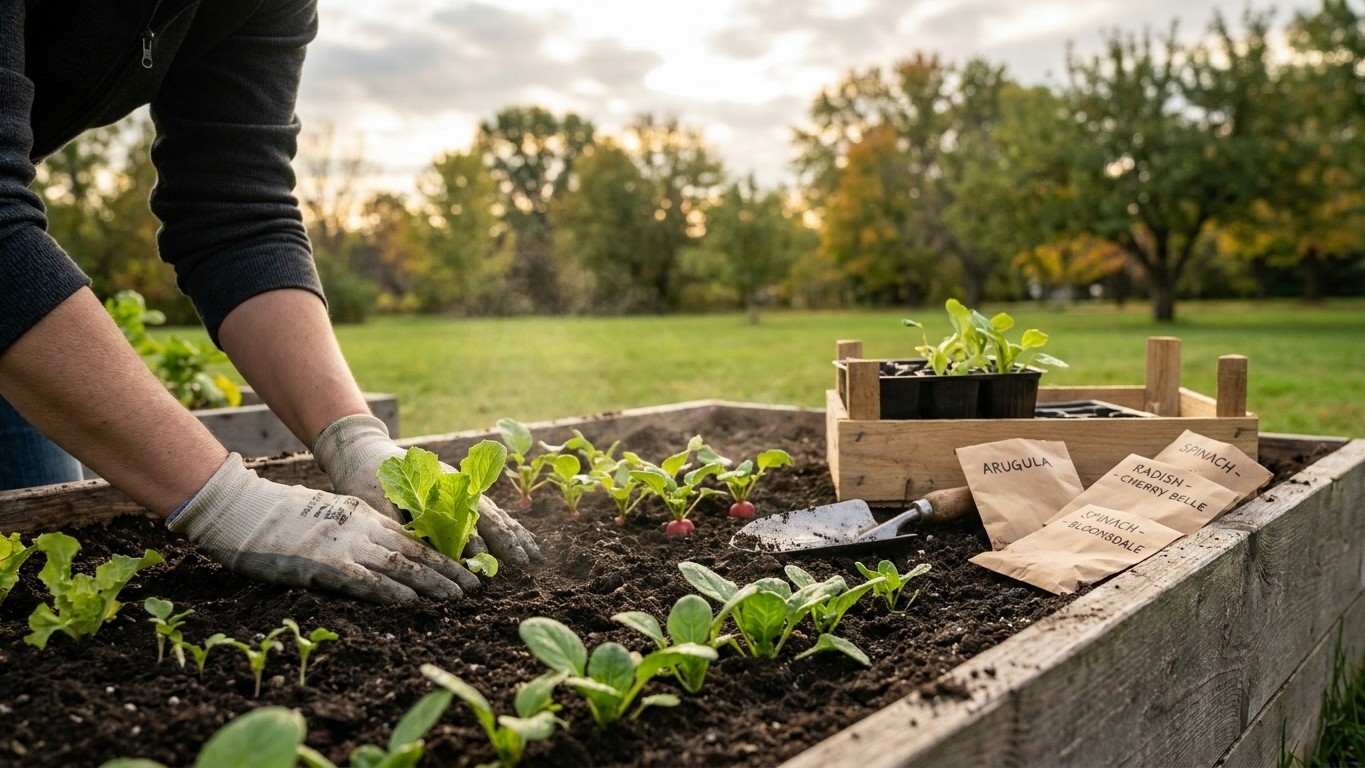

September in Massachusetts is still an active planting month, not a wind-down. Fast-maturing greens and roots have enough time to mature before frost, cover crops belong on any bed that’s emptying out, and it’s one of the best windows all year for lawns, perennials, trees and shrubs. The date that actually matters isn’t September 1 or September 30, it’s the first fall frost, which lands anywhere from November 3 to November 14 depending on where you garden in the state.
What goes in the ground in September

The frost window for most of Massachusetts runs November 3 to November 14, based on NOAA’s 1991-2020 climate normals for the Boston area. That gives a gardener starting in early September somewhere between nine and eleven weeks of open-ground growing time, enough for a real second crop, but not enough for anything that needs a long season. The math, not the month on the calendar, decides what’s safe.
Direct-sow anything that finishes in 30 to 55 days: spinach, arugula, mesclun mix, radishes, turnips, baby lettuce, and scallions all fit comfortably inside that window even started in the second week of the month. Kale and collards sown now will size up into tender fall greens that actually taste better after a light touch of frost. Bush beans are a gamble past the first week or two of September; they need warm soil to germinate and won’t outrun a mid-November freeze in most inland counties.
Hold off on garlic and shallots. Both go into the ground in Massachusetts closer to mid-October through November, once soil temperatures have dropped and the cloves won’t push premature top growth before winter. Planting them in September usually backfires with soft, exposed shoots that struggle through the cold months ahead.
September is also prime season for lawns, perennials, trees and shrubs. Cool nights and soil that’s still warm from summer mean transplants root in fast with far less stress than a spring planting. Dividing overgrown perennials, moving a shrub that’s outgrown its spot, and overseeding bare lawn patches all belong on this month’s list, the roots get eight to ten weeks to establish before the ground locks up.
What to start under cover
Counting backward from the frost window is the only reliable way to time a September sowing. Take the earlier edge of the range, November 3, as the conservative target. A crop that needs about six weeks from seed to a harvestable size, started under a cold frame or row cover in the first week of September, reaches maturity by mid-October, a full two to three weeks of buffer before the earliest frost date arrives.
Lettuce, spinach, and Asian greens like tatsoi or mizuna are the easiest under-cover candidates this month. Sown by mid-September under a simple hoop tunnel or cold frame, they’ll produce into November and, in a mild pocket of the state, longer. Started transplants of broccoli or cabbage set out in the first week of the month can still head up if the plants are already several weeks old going in, starting seed for those crops from scratch in September is usually too late.
The two failure modes are mirror images of each other. Start too early relative to the frost window and cool-season transplants sit in trays too long, turning rootbound and leggy before there’s anywhere to put them. Start too late and the arithmetic simply doesn’t work, the plant runs out of daylight and warmth before it reaches a usable size, especially once day length drops sharply after the equinox. Splitting a planting into two smaller sowings ten days apart hedges against both mistakes better than one big gamble.
What is ready to pick
September is the fullest harvest month of the year in Massachusetts gardens. Tomatoes, peppers, and summer squash are still producing, often at their peak flavor as nights cool. Sweet corn planted in late spring finishes here, and the state’s orchards move into early and mid-season apple varieties. Grapes on the vine and fall-bearing raspberries also come in through the month.
Onions and garlic planted the previous fall or spring should already be pulled and curing by now if the tops have flopped over and dried, leaving them in wet ground past that point invites rot. Winter squash and pumpkins are close but not quite there: wait until the rind resists a fingernail press and the stem has started to dry and corky before cutting them, since squash harvested too green won’t cure well in storage.
Check any stored crops from earlier in the season for early trouble. A single soft potato or onion in a storage bin can spread rot to its neighbors fast, so a quick sort now, pulling anything with a soft spot or sprouting, protects the rest of what’s meant to last through winter.
The jobs that matter this month
Soil, cover, and cleanup
Any bed that’s finished producing for the season should get a cover crop rather than sit bare. Winter rye or clover sown in September has time to establish before frost, and it holds soil structure and nutrients through the winter instead of losing them to erosion and leaching. This is also the best month to test soil pH and add lime if it’s needed, lime takes months to fully react with the soil, so applying it now means the correction is actually in place by spring planting.
Pulling spent plant material matters more in September than it seems. Diseased tomato or squash vines left in the bed over winter give fungal spores and insect eggs a place to overwinter, setting up the same problems again next season. Clean removal now, not composting diseased material, is the cheaper fix.
Watering, staking, and pest scouting
Late-season tomatoes and peppers still need consistent water; a dry spell followed by heavy rain right before harvest is the classic cause of split fruit. Heavily loaded tomato cages and bean trellises benefit from a last round of staking before an early fall storm flattens them. Squash vine borer and late blight both show up more aggressively as the season winds down, so a walk through the garden checking stems and lower leaves catches problems while there’s still time to pull an infected plant before it spreads.
Order spring bulbs now if planting them in October, before the good varieties sell out, nurseries and mail-order suppliers routinely run out of popular tulip and daffodil stock by the time most gardeners think to look.
What not to do in September
Warm afternoons in early September fool a lot of gardeners into planting warm-season crops like a fresh round of tomatoes, peppers, or basil. Air temperature isn’t the problem, the shrinking number of frost-free days left is. Anything that needs 70-plus days to fruit simply won’t make it before the first freeze arrives between November 3 and November 14, so that effort and space are better spent on a fast fall green instead.
A stretch of unusually mild weather in late September or October tempts gardeners to pull row covers or cold frame lids off too early. One warm week doesn’t cancel the frost window; uncovering hardened-off fall greens or newly planted lawn seed right before a cold snap undoes weeks of protection in a single night.
Feeding lawns or perennials a high-nitrogen fertilizer late in the month is another common misstep. Nitrogen pushes soft new growth that doesn’t have time to harden off before frost, leaving it vulnerable to freeze damage. A low-nitrogen, phosphorus-and-potassium-leaning fall fertilizer supports root development instead, which is what actually matters heading into winter dormancy.
Finally, don’t delay garlic bed prep so long that it becomes an October scramble. Amending the bed with compost now, even though the cloves themselves go in later, spreads the work out and gives amendments time to settle before planting.
Checking this against your own county
The frost dates and hardiness range cited here come from a single coastal reference station, and Massachusetts is not one climate. The USDA Plant Hardiness Zone Map places the state anywhere from zone 5a to 7b, the Berkshires and higher inland elevations sit at the cold end, while the coast and the Cape run milder. Elevation and distance from the ocean can shift a frost date by two to three weeks in either direction from the numbers above.
Treat everything in this article as a starting point, then confirm it against local conditions through the University of Massachusetts Amherst Extension, which publishes region-specific planting guidance for the state.
Common questions
Is it too late to plant a vegetable garden in Massachusetts in September?
No, but the list narrows to fast-maturing crops. Spinach, arugula, radishes, turnips, and baby lettuce sown in the first half of the month still have time to mature before the frost window opens on November 3.
When should garlic actually go in the ground in Massachusetts?
Closer to mid-October through November, once soil has cooled, rather than in September. Planting too early pushes soft top growth that struggles through winter.
What’s the best thing to plant in September for a Massachusetts lawn?
September is one of the strongest windows of the year for overseeding or renewing turf, since cool nights and still-warm soil favor fast root establishment before winter dormancy sets in.
How do I know if my county frosts earlier than the state average?
Higher elevation, distance from the coast, and low-lying frost pockets all push a first frost earlier than the November 3 to November 14 range measured at the coastal reference station. Local extension offices and long-time neighbors are usually the best gauge for a specific property.
Gardeners who plant by the Moon can check the September 2027 moon planting calendar, a tradition rather than a proven method.