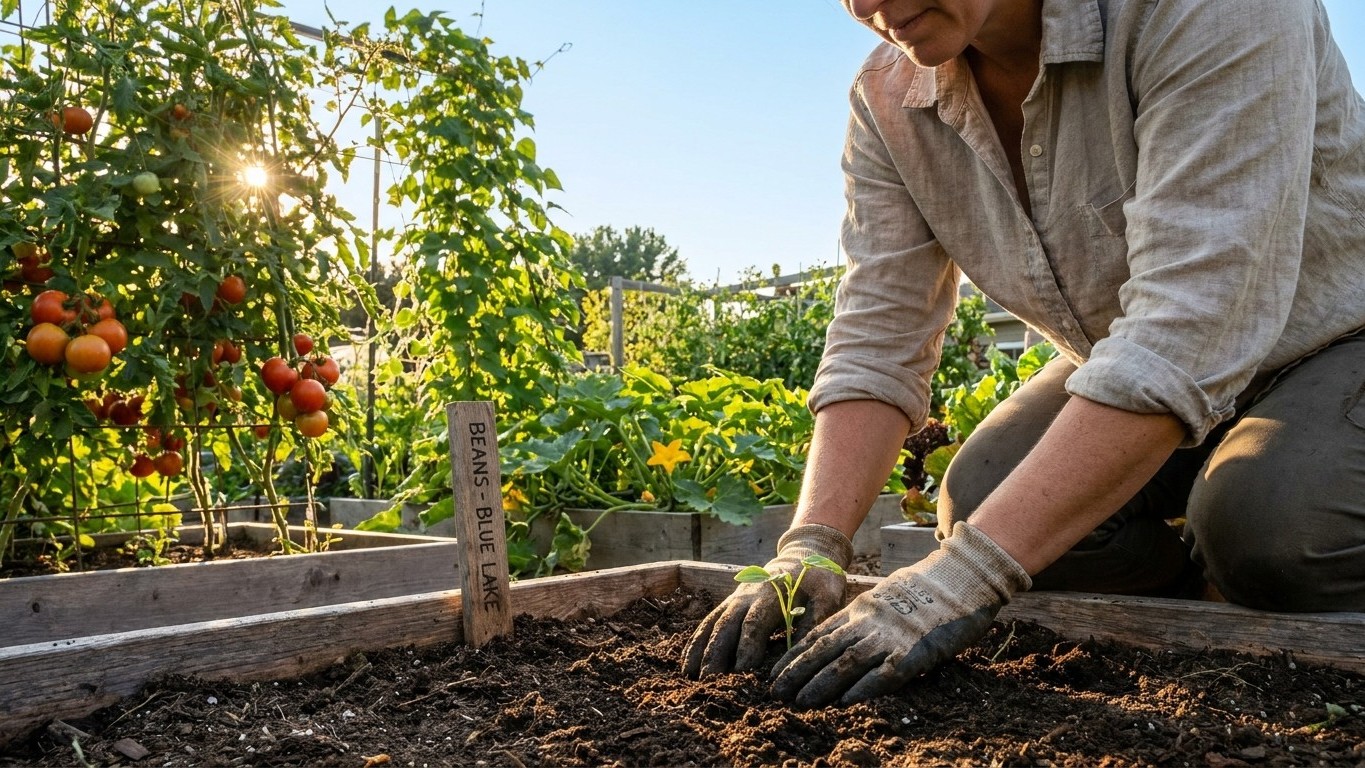

July in Minnesota is peak-season gardening: soil is warm, days are long, and the work shifts from planting the main crop to keeping it fed, watered, and harvested on schedule. You can still direct-sow fast-maturing vegetables for a second round, start fall brassicas indoors, and expect the first tomatoes, beans, and summer squash to come in by month’s end.
What goes in the ground in July

By July, Minnesota is nowhere near frost. The last spring freeze window runs April 17 to April 30 in the Twin Cities area, and the next freeze risk doesn’t arrive until October 11 to October 23. That gap is the whole reason July still has planting options: soil temperature is no longer the limiting factor, time until fall frost is.
What matters now is counting backward from that October window. A bush bean matures in roughly 50 to 60 days, which puts an early-July sowing right at the edge of safety in the south of the state and cutting it close farther north. Beets, carrots, and salad turnips run 55 to 70 days and fit comfortably if sown in the first half of the month. Radishes and quick lettuce mixes, at 25 to 35 days, can go in almost any week of July, including a third or fourth succession.
Cucumbers and summer squash can still be direct-sown in early July, since both mature in 50 to 65 days, but sowing them in the last week of the month is a gamble outside the mildest years. Sweet corn is the clearest cutoff: most varieties need 60 to 90 days, which means corn sown after the first few days of July risks running out of season before that October frost window closes, especially in the north.
Garlic and shallots are not a July crop here; they went in the ground last fall and are being harvested now, not planted. If you’re holding seed garlic, store it cool and dry and wait for the fall planting window instead.
Lettuce sown in July does better with afternoon shade or a shade cloth over the row. Minnesota summer heat pushes lettuce toward bolting fast, and a few hours of shade in the hottest part of the day buys real time before it turns bitter.
What to start under cover
July is when the fall garden gets its start indoors, and the math runs backward from the first fall frost window of October 11 to October 23. Broccoli and cabbage for fall harvest need about 45 to 70 days from transplant to maturity, plus another 4 to 6 weeks as seedlings before they go outside. Started under cover in the first two weeks of July, they transplant out in mid-to-late August and still have room to mature before frost. Started later than that, they’re racing the calendar.
Kale and collards are more forgiving. Both tolerate a light frost and even improve in flavor after one, so seedlings started under cover through mid-July and transplanted in August still have a wide safety margin into the fall window.
The first failure mode is starting too early: Minnesota’s July heat inside a greenhouse or on a warm windowsill pushes brassica seedlings to stretch fast, and a rootbound, leggy transplant struggles once it hits the ground in August. The second failure mode is starting too late, which leaves a plant still small when the days shorten and growth slows in September, well before it reaches harvest size.
A practical middle ground: start fall broccoli and cabbage under cover in the first half of July, in a spot with some afternoon shade to keep soil temperature down, and move them to larger cells if they’re ready to transplant before the garden bed opens up. Lettuce and spinach for a fall crop can also be started under cover in late July, since the same heat that stresses direct-sown lettuce outdoors is less of a problem for seedlings kept in a shaded cold frame or under row cover until temperatures ease.
What is ready to pick
July is when the harvest turns from trickle to flood. Garlic comes out this month once the lower third of the leaves has browned; pull a test bulb, and if the cloves are well-formed and the wrapper is intact, the rest of the row is ready to lift and cure in a dry, airy spot out of direct sun.
Peas are wrapping up as the heat climbs; pick daily once pods fill out, since Minnesota summer heat pushes them past their prime fast. Beets, carrots, and early potatoes planted in spring are at usable size by mid-to-late July, though smaller roots pulled young are often the most tender. Zucchini and other summer squash need daily checking once they start producing: a squash left two extra days can go from tender to oversized and seedy.
Cucumbers are ready when they’re firm and evenly colored, before they start to yellow. Green beans should snap cleanly when bent; if they bend without breaking, they’ve gone past their best texture. Raspberries and currants are typically ripening through the month, and the first tomatoes, if the plants were set out early, can start coloring in the last week of July in a warm season, though most of the tomato harvest here lands in August.
Check onions started earlier in the season for tops that have begun to flop over. That’s the early signal they’re shifting into curing mode rather than active growth, even though full harvest usually comes later.
The jobs that matter this month
Water and mulch first
July heat and inconsistent rain make watering rhythm the single biggest lever in a Minnesota garden this month. Deep, infrequent watering, aiming for roughly 1 to 1.5 inches per week including rainfall, builds deeper roots than a light daily sprinkle. A 2 to 3 inch layer of mulch around tomatoes, squash, and peppers holds that moisture in and keeps soil temperature from spiking during a heat stretch. Skip this and you’re fighting blossom drop and split tomatoes by August.
Stake before it sprawls
Tomatoes, pole beans, and vining squash put on their fastest growth of the season in July. A cage or stake installed now takes ten minutes; the same job attempted once the plant has sprawled across the bed means untangling stems and risking breakage. The same logic applies to peonies and tall perennials still holding blooms.
Scout for pests on a schedule
Japanese beetles typically peak in July across Minnesota, along with squash bugs and Colorado potato beetle larvae. A walk through the garden every few days, checking the undersides of leaves and hand-picking egg clusters, catches an infestation while it’s still small. Waiting until damage is obvious usually means the population has already established.
Keep the succession going
Every time a row of radishes, lettuce, or early beans comes out, that space is an opening for another quick crop. Reseeding bare patches within a day or two of harvest, rather than leaving soil empty, is what keeps a Minnesota garden productive from July through the fall frost window rather than tapering off in August.
What not to do in July
The classic July mistake in Minnesota isn’t planting too early, it’s planting too late and expecting a warm-season crop to still finish. Sweet corn, winter squash, and pumpkins sown after the first week of the month are often chasing a fall frost date of October 11 to October 23 that arrives before they mature, especially in the north of the state where that window closes sooner.
Overhead watering in the evening is another common error. Minnesota summers bring enough humidity on their own, and wet foliage overnight is exactly what powdery mildew and other fungal diseases need to take hold on squash, cucumbers, and tomatoes. Watering at the base of the plant, earlier in the day, cuts that risk considerably.
Heavy nitrogen feeding is a mistake many gardeners make once tomatoes and peppers are flowering. Nitrogen pushes leafy growth at the expense of fruit set, so a plant fed generously in July can end up lush and green with little to show at harvest. A lower-nitrogen, higher-phosphorus and potassium feed suits fruiting crops better at this stage.
Letting zucchini and cucumbers go unchecked for even three or four days is a mistake that costs flavor and texture, not the plant’s life, but it’s an easy one to avoid. A short, regular harvest walk through the garden solves it. And uncovering heat-sensitive lettuce or spinach during a mild stretch, only to lose it to the next hot afternoon, is a reminder that a shade cloth left in place costs nothing when the weather cooperates.
Checking this against your own county
Everything above is built around the Twin Cities frost window, and Minnesota is a large state. Elevation, lake effect near Lake Superior, and the simple distance between the southern border and the Iron Range shift both the last spring frost and first fall frost by two to three weeks in the north. A planting date that works in Rochester can be two weeks off in Duluth or International Falls.
The USDA hardiness zone map places Minnesota across zones 3a to 5a, another sign of how much the state’s growing conditions vary from south to north. For a planting calendar adjusted to your county, and for local frost data, the University of Minnesota Extension is the reliable next stop.
Common questions
Is it too late to plant tomatoes in Minnesota in July?
Direct-seeding tomatoes in July is too late for most varieties to mature before the October frost window. Transplants already growing in the garden are a different matter and will keep producing into fall.
Can I still start a vegetable garden from scratch in July in Minnesota?
Yes, with fast crops. Bush beans, beets, carrots, radishes, and lettuce sown in early July still have enough time before the October 11 to October 23 frost window to produce a harvest.
When should fall broccoli and cabbage go into the ground in Minnesota?
Started under cover in the first two weeks of July, they’re typically ready to transplant outdoors in mid-to-late August, leaving enough time to mature before the first fall frost.
Why is my zucchini producing huge, seedy fruit in July?
It’s almost always a harvesting gap. Squash left on the vine even a few extra days in Minnesota’s July heat swells past its tender stage. Checking plants every day or two during peak production keeps fruit at its best size.