
November closes New Jersey’s outdoor planting season more than it opens it. Garlic and shallots can still go into workable soil early in the month, dormant bare-root stock can be planted, and cold frames or low tunnels keep hardy greens going. Almost everything else waits for spring, because the first fall freeze typically lands somewhere in this same window.
What goes in the ground in November

The decision this month turns on one number: the reference weather station used by NOAA’s 1991-2020 Climate Normals shows a 30 to 70 percent chance of a 32°F freeze landing between November 4 and November 16. That means the freeze risk isn’t a future event to plan around, it’s already arriving somewhere in the state as the month unfolds. Soil temperature lags behind air temperature by a couple of weeks, so the ground itself often stays workable a bit longer than the air feels safe. That lag is the whole reason anything still goes in the ground at all.
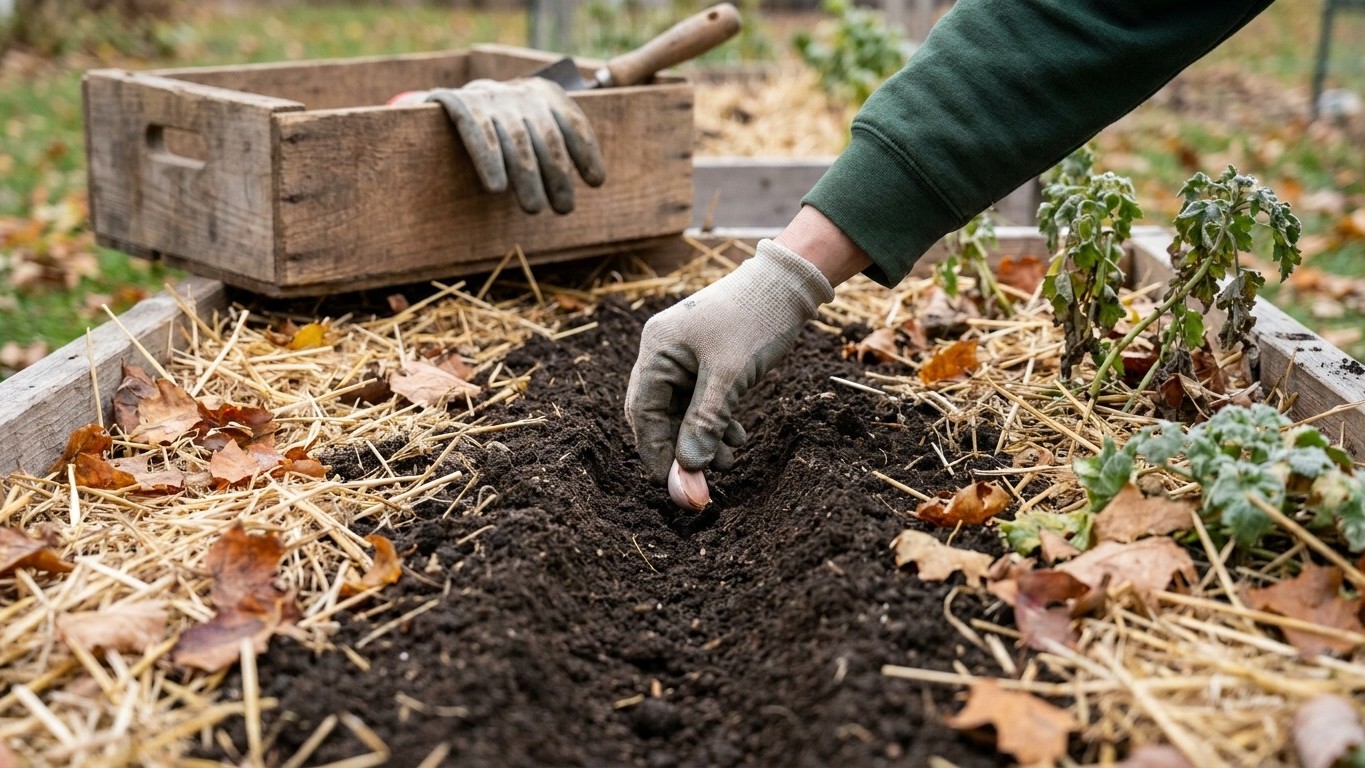
Garlic cloves and shallot sets are the main event. Push them in while the soil can still be worked, ideally with enough time left before hard freeze for roots to establish before the plant goes fully dormant. Bare-root fruit trees, roses, and perennials can also go in this month if the nursery ships them dormant, since they aren’t trying to grow, just to root in before winter locks the ground.
Cold frames and low tunnels are where the real action is. Spinach, mache (corn salad), and claytonia tolerate the cold well enough to sit under cover and keep growing slowly, particularly in the milder soils of South Jersey, which sits toward the 7b end of the state’s 6a-7b USDA Hardiness Zone range. North Jersey’s ridge-and-valley counties, closer to 6a, lose that window faster.
One trick worth knowing: chicory roots and rhubarb crowns can be dug and brought indoors now to force in a dark, cool space, producing tender growth over the following weeks. It’s not glamorous, but it’s real food coming out of a plant that would otherwise just sit dormant outside. Beyond garlic, shallots, bare-root plantings, and cover-protected greens, there isn’t a crop worth direct-sowing outdoors for a harvest this season. Anything planted for summer growth now is simply feeding the frost.
What to start under cover
With the fall frost window already closing outdoor options, the sowing calendar shifts to counting forward from a slow-growth winter, not backward from a frost date the way spring starts work. Mache, spinach, and arugula sown into a cold frame now grow at a fraction of their normal pace once daylight drops, so a seed packet that says “45 days to harvest” can easily take double that under cover in a New Jersey winter. Plan on sparse pickings starting sometime in late winter rather than a fast turnaround.
The two ways this goes wrong mirror each other. Sow too early into a frame that gets full sun on a warm afternoon, and seedlings stretch and go leggy from heat buildup with no ventilation to match it. Sow too late, and soil temperature under the cover drops below the point where spinach or lettuce seed will germinate at all, closer to the mid-30s Fahrenheit, and the seed just sits ungerminated until spring, if it survives that long.
Indoors, this is prime microgreen and sprout territory. Sunflower shoots, pea shoots, and standard mixed microgreens germinate in a tray on a windowsill or under a grow light in five to ten days regardless of what’s happening outside, and they’re one of the few crops in New Jersey that don’t care at all about the frost calendar. For gardeners itching to start something with real leaves, that indoor tray is the honest answer this month, not a seed-starting rack of tomatoes that won’t go outside for another five months.
What is ready to pick
Outdoors, the answer is short. Once frost settles in, most annual vegetables are done for the season. What’s left standing tends to be the crops that actually improve from cold exposure. Kale, collards, and Brussels sprouts convert starches to sugars once temperatures drop, so a plant that tasted plain in October often tastes noticeably better after a freeze or two. Leeks left in the ground can be dug as needed well into the cold months as long as the soil isn’t frozen solid, and parsnips and carrots under a thick mulch layer can be harvested the same way.
Cold frames and low tunnels extend this further. Spinach, mache, and arugula sown earlier in the fall are still cutting territory now, just slowly, a few leaves at a time rather than a full head at once.
Indoors, sprouts and microgreens are the fastest thing in the house, ready on a rolling basis with no outdoor limitations at all.
Stored crops need a weekly look, not a seasonal one. Squash, potatoes, and onions all sit in storage for months, but one soft spot on a squash or one sprouting onion can spread rot through a whole bin faster than most gardeners expect. Check for give when pressed, dark soft patches, or a smell that wasn’t there last week, and pull anything questionable before it takes down its neighbors.
The jobs that matter this month
This is the section that carries the page in November, because the planting list is short but the task list isn’t. Garlic planting has a real deadline: get it in before the ground locks up, not after. Once cloves are in, mulch lightly, then add the heavier layer only after the ground has had its first hard freeze, since mulching too early traps warmth and can rot the cloves before they root.
Dormant pruning starts now for the lighter work: removing spent raspberry and blackberry canes that fruited over summer, and cutting out obviously dead or damaged wood on fruit trees. Save the major structural pruning of apples and pears for late winter, when the wound has less time to sit open before spring growth seals it.
Seed catalogs are worth ordering from early. Popular varieties, especially open-pollinated and heirloom types, sell out over winter, and the gardeners who order in November get first pick.
Soil testing pays off now too. A fall soil test through a lab such as the Rutgers Soil Testing Laboratory gives time for lime or other amendments to adjust pH before spring planting, since lime can take months to fully react in the soil.
Round out the list with compost turned and topped with fallen leaves, tools cleaned and sharpened before they sit unused all winter, raised beds and fencing checked for storm damage, and next year’s crop rotation sketched out while this year’s bed layout is still fresh and visible.
What not to do in November
The most common mistake is planting for a harvest that isn’t coming. Lettuce and brassica transplants set out now, chasing a mild stretch of weather, run out of daylight and warmth before they mature, and a freeze finishes off what the short days didn’t. If it’s cool-season transplants for eating, that window closed weeks ago; what’s left is cover-protected sowing, not open bare-ground transplanting.
Mulching too early is the second trap. Piling mulch on beds or around perennials while the soil is still warm just gives rodents a cozy spot to overwinter and can delay the plant’s own dormancy signal. Wait until after the first real freeze to lay it down thick.
A mild stretch mid-month tempts gardeners to pull covers off cold frames or roll back mulch to “let things breathe.” That’s a gamble against a sudden refreeze that a covered bed was built to avoid in the first place. Leave the protection on.
Nitrogen fertilizer has no business going down now. It pushes soft new growth right when a plant needs to be shutting down for winter, and that new growth is the first thing frost kills. Hold off until spring.
Finally, working wet or partially frozen soil with a fork or tiller compacts the structure in a way that takes a full season to undo. If it’s too wet or too cold to crumble in your hand, leave it alone.
Checking this against your own county
These frost figures come from one reference weather station, and New Jersey’s geography stretches that figure in both directions. Elevation in the northwest, lake-effect pockets, and the long north-to-south run of the state all shift the real frost date by weeks in either direction.
| Region | General USDA Zone tendency | Frost pattern |
|---|---|---|
| Northern/Skylands NJ | Closer to 6a | Tends toward earlier, colder freezes |
| Southern/Coastal NJ | Closer to 7b | Tends toward later, milder freezes |
For a planting calendar built around a specific county, check the Rutgers New Jersey Agricultural Experiment Station, which runs the state’s Cooperative Extension Service and county-level guidance.
Common questions
Can I still plant garlic in November in New Jersey?
Yes, as long as the soil is still workable and hasn’t frozen solid. Cloves need a few weeks of root development before dormancy, so earlier in the month is safer than later.
What vegetables survive frost in a New Jersey garden?
Kale, collards, Brussels sprouts, and leeks all tolerate freezing temperatures and often taste better afterward, since cold triggers the plant to convert starches into sugars.
Should I prune fruit trees in November?
Only lightly. Remove dead or damaged wood and spent cane fruit now, but save major structural pruning of apples and pears for late winter, closer to when growth resumes.
When should I stop watering the garden for winter?
Once the ground has had a hard freeze and any actively growing crops have gone dormant, regular watering can stop. Cold frame and cover-grown greens still need occasional moisture through winter.
Gardeners who plant by the Moon can check the November 2026 moon planting calendar, a tradition rather than a proven method.
Related guides
Elsewhere? See what to plant in November in every state and province.