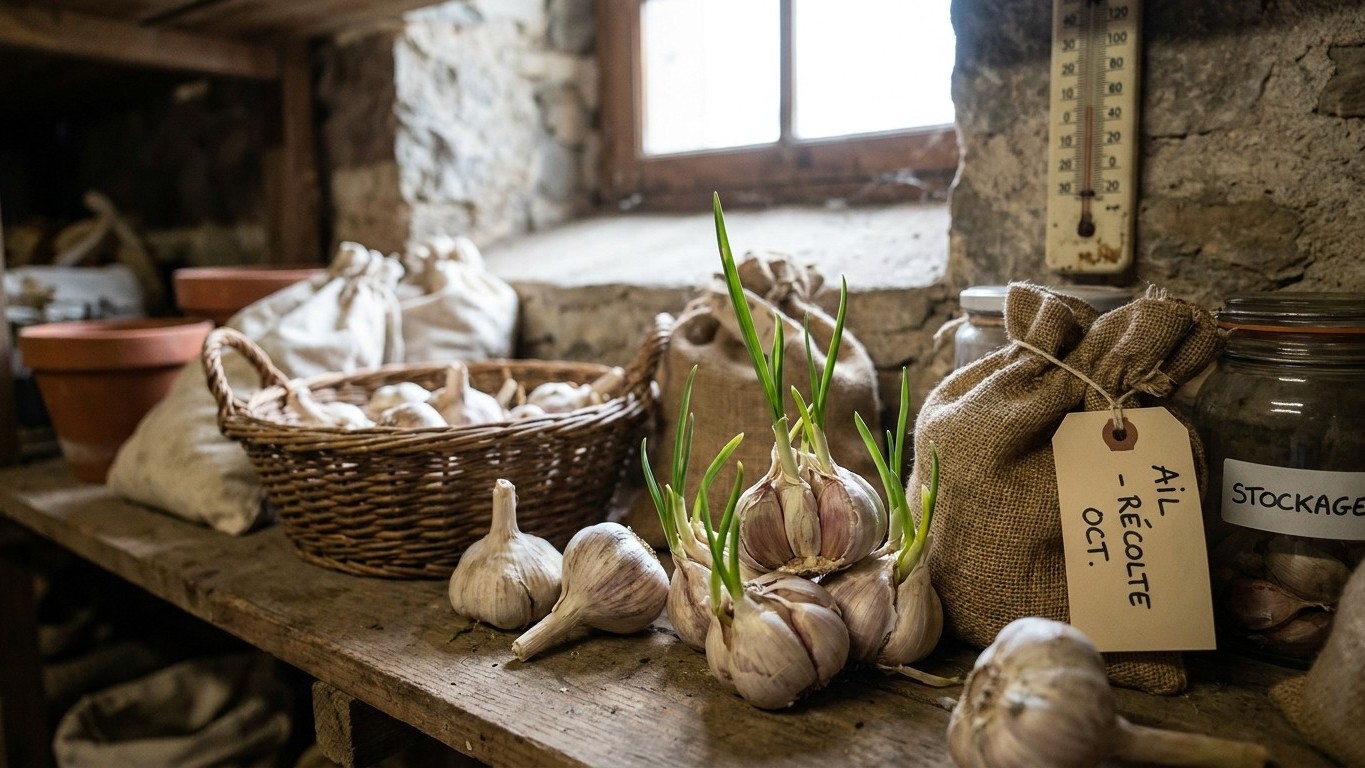

A green shoot pushing out of a clove tip inside a stored garlic bulb means the clove has broken dormancy early. That happens when curing was cut short before the bulb was fully dry, or when the storage spot sits in a temperature and humidity range that tells the clove it is time to grow again. Once you see it, move the affected bulbs to the coldest, driest part of your kitchen storage and plan to use them within the next few weeks, because the sprout will keep drawing on the clove from here on.
What you are looking at

Look closely at where the shoot comes from. True storage sprouting starts as a thin green point emerging from the flat basal end or the pointed tip of an individual clove, still tucked inside its papery wrapper, with the rest of the bulb feeling firm and dry to the touch. There is no softness, no smell, and no discoloration on the wrapper around it. That combination, a firm bulb with one live green point, is what separates this from the problems it gets confused with.
Clove rot looks different: the wrapper darkens or goes slimy, the clove itself softens or turns brown-gray, and there is usually an off smell before any green shoot ever appears. A bulb with rot is not a sprouting problem, it is a storage-rot problem, and the two are not the same fix. Garlic that never split into distinct cloves and formed one solid round bulb is a separate issue tied to how the seed clove was planted, not to storage conditions at all, and it is covered on its own on the page about garlic that grew one round bulb instead of cloves.
It also helps to rule out what is normal. Garlic naturally wants to sprout, it is a bulb built to grow again, and a bulb that has been sitting for many months past its cure date will eventually push a shoot even under decent conditions. That is not a failure, it is the clock running out on dormancy. The problem worth diagnosing is sprouting that shows up early, within the first couple of months of storage, on a batch that was cured properly. That timing is the real signal something upstream went wrong.
What actually causes it
Garlic dormancy is not a fixed switch. It is a window that opens and closes depending on how the bulb was handled at two points months apart: harvest and curing, and then storage itself. Everything that shows up as a sprouted bulb in the pantry was set in motion earlier in the season, not at the moment you noticed the shoot.
Curing left unfinished
Curing is the process of drying the whole bulb, wrapper and all, in a warm, airy, shaded spot for a stretch of weeks after harvest, until the outer skins are papery and the neck has closed down tight. A bulb pulled into storage before that process finishes still carries moisture in the neck and inner wrapper. That trapped moisture keeps the clove metabolically active, and an active clove is a clove that is ready to sprout at the first excuse. This decision is made at harvest and in the days right after it, not in storage, and by the time you see a shoot the curing window is long closed.
Storage in the wrong temperature band
Once curing is done, garlic wants either firm cold or firm warmth to stay dormant, not a middle ground. A cool, damp spot, the kind many refrigerators, unheated porches, or a plastic bag on a counter can create, sits right in the range that breaks dormancy early rather than extending it. This is a widely repeated point across university extension storage guidance for alliums, though the exact temperature bands vary by publication, so check your own state extension’s storage sheet for the specific figures they recommend for your climate. What matters practically is that “cool and a bit humid” is often worse for garlic than either a genuinely cold refrigerator crisper kept dry, or a room-temperature pantry.
Humidity compounds both problems. A bulb that went into storage slightly underdried, combined with a storage spot that adds ambient moisture rather than pulling it away, is the classic pairing behind early sprouting. Growers who assume the crop’s whole cycle, from planting the prior autumn through the summer harvest, is worth reviewing when troubleshooting storage issues can start with the overview on growing garlic, since curing practice is a direct extension of how the crop was grown, not a separate step.
What you can still do this season
There is no way to push a sprouted clove back into dormancy. Once the shoot has started, the clove is committing stored energy to that new growth, and the bulb will keep softening and losing flavor the longer the shoot runs. That is the honest answer, the season on that bulb’s storage life is already decided.
What you still have is a bulb that is perfectly fine to eat, and soon. Trim the green shoot out before use, since it can taste bitter and turns tough with any cooking, and use the cloves promptly rather than setting them back on the shelf. A sprouted bulb makes good roasted garlic, goes fine into a sauce or a braise, and loses nothing in flavor if you use it within a week or two of noticing the shoot. Small or slightly undersized bulbs, or ones that never split cleanly, are no less edible for it, they simply will not win a size contest.
Sort your remaining stored garlic now rather than waiting. Pull every bulb, check for the same early green point, and separate anything showing it into a “use this week” pile. The rest of the batch may be fine, especially if only bulbs from one part of the braid or one bin are affected, which usually points to a localized pocket of warmth or moisture in that spot rather than a problem with the whole harvest.
What does not work
Cutting the sprout off and putting the bulb back into the same storage spot does not stop new growth. The clove has already broken dormancy, and it will keep pushing green tissue as long as it has stored energy left, regardless of how many times you trim it back.
Moving sprouting garlic into the refrigerator to “slow it down” often backfires, since a cold, humid crisper drawer is one of the conditions that triggers early sprouting in the first place rather than one that prevents it. If refrigeration is going to be part of your storage plan, it needs to be dry cold, not damp cold, and that is a distinction worth checking against your state extension’s storage guidance rather than assuming any refrigerator will do.
Feeding, watering, or otherwise treating the bulb as a plant with a nutrient problem misses the point entirely. Sprouting in storage is not a deficiency, it is a dormancy failure, and no amount of fertilizer or misting changes the physiology of a clove that has already decided to grow. Waxing or oiling bulbs to “seal in freshness” also does not work. It traps the same moisture that likely caused the problem, and can encourage the rot that early sprouting sometimes opens the door to.
Getting it right next year
The fixes here belong at two points, both months before you would ever see a sprout in the pantry: planting in autumn, and curing right after the following summer’s harvest.
At planting
Choose seed cloves from your largest, best-formed bulbs, since undersized or poorly-formed cloves are more prone to storage trouble generally, and the same seed-selection habit that prevents sprouting also helps avoid the single round bulb problem covered separately on this site. If you are unsure how deep or how far apart to plant for your winter, that decision depends on how cold your ground actually gets, which is worth checking against your own USDA hardiness zone and your state extension’s fall planting guide rather than a national average.
At curing, the following summer
Give the crop the full curing period recommended by your state extension before you trim, sort, or box it for storage, even if the bulbs look dry on the outside after a week or two. The neck and inner wrapper take longer to finish than the outer skin suggests. If you are still deciding when to pull bulbs at all, the leaf color is your best signal, and it is worth reading through yellow leaves on garlic to tell normal ripening from a plant that is stressed rather than simply mature.
For storage itself, pick one condition and commit to it rather than letting the bulbs drift between a damp mudroom and a warm kitchen counter over the season. The table below is a rough guide to how common storage spots behave, though your own results will depend on your climate and your specific space.
| Storage spot | Typical conditions | Effect on dormancy |
|---|---|---|
| Dry pantry shelf | Room temperature, low humidity | Holds dormancy well for months if curing was complete |
| Root cellar or unheated garage | Cold but often humid, variable by season | Can trigger early sprouting if humidity is high |
| Refrigerator crisper | Cold and often humid | Frequently triggers early sprouting unless kept genuinely dry |
Hardneck types such as ‘Music’ and ‘German Extra Hardy’ generally have a shorter reliable storage life than softneck types such as ‘Inchelium Red’ or ‘California Early’, a difference published across most seed catalogs. If early sprouting is a recurring problem in your kitchen storage, choosing a softneck for the bulk of next year’s crop and reserving hardnecks for earlier use is a reasonable adjustment to make at planting time.
Common questions
Can I plant a clove that already sprouted in storage?
You can, but it is not ideal. A clove that spent its stored energy on an early shoot has less left to establish roots before winter, so it is better used in the kitchen and replaced with a fresh, firm seed clove for planting.
Will sprouted garlic turn to rot if I leave it?
Not automatically, but the risk goes up. The same moisture and warmth that triggers early sprouting can also support the fungi and bacteria behind storage rot, so a sprouted bulb left too long is more likely to soften and spoil than one that never sprouted.
Why did only a few bulbs in my batch sprout and not the rest?
That pattern usually points to something local to those bulbs, not the whole harvest. A pocket of trapped moisture in one part of a mesh bag, a spot closer to a damp wall, or cloves that were slightly smaller and cured less evenly than the rest can all explain a partial problem.
Does the green sprout taste bad?
It tends to taste bitter and turns tough when cooked, similar to an old onion sprout. Most cooks just slice it out and use the rest of the clove as normal.