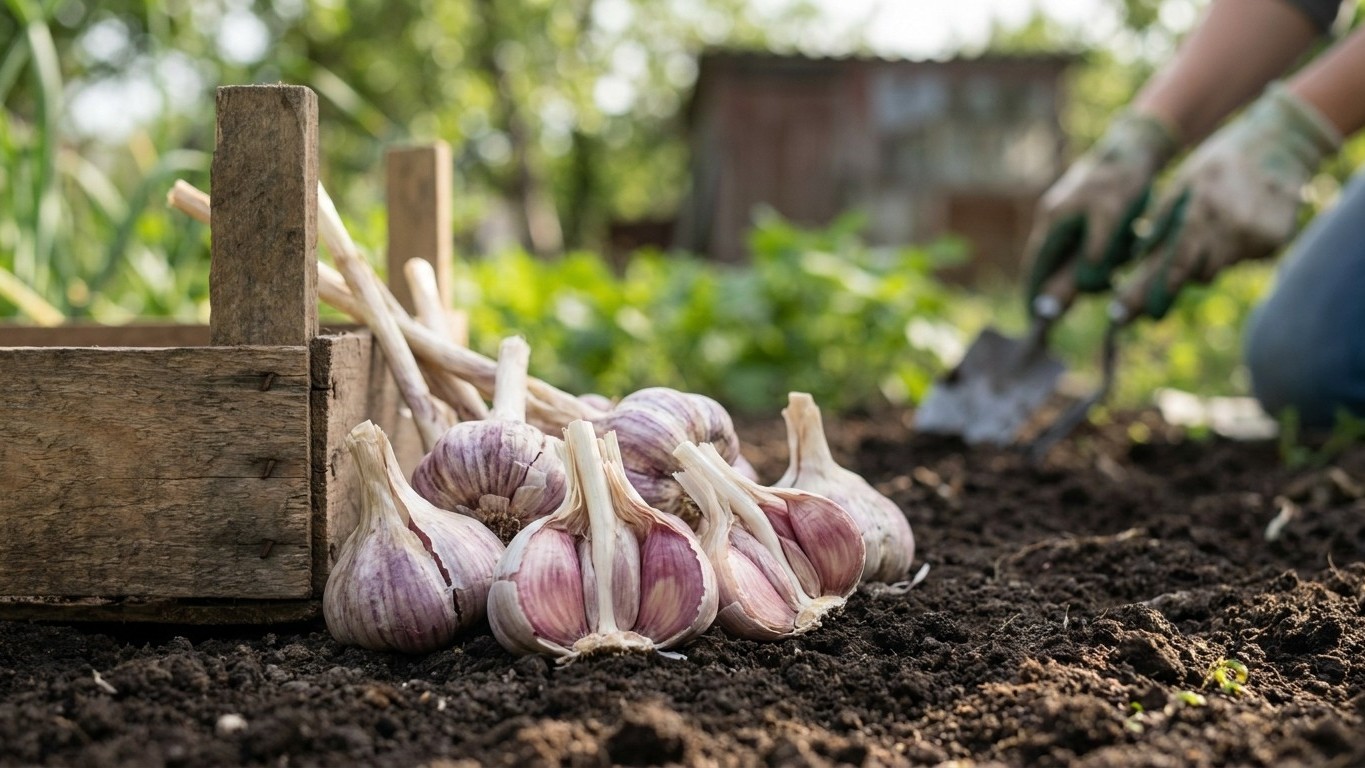

A split garlic wrapper is the bulb’s papery skin tearing open along the line of the cloves, and it almost always means the plant sat in the ground past the point its bulb had finished sizing. Once that skin tears, the cloves underneath are exposed and the wrapper will not close back up or heal. Pull a test bulb or two the moment you notice splitting anywhere in the bed, and if the rest of the tops look close behind, lift the whole planting within the next few days rather than waiting for every leaf to brown down.
What you are looking at

A split bulb still has its outer skin in place over most of its surface, but somewhere, usually around the shoulder or neck, the wrapper has torn and the individual cloves have fanned open so you can see daylight or soil between them. The clove skins themselves are usually intact underneath. This is different from a bulb that simply has a loose, papery wrapper after curing, where the outer layer is dry and flaky but the cloves are still held in a tight cluster. Splitting means the cloves have physically separated while the bulb was still in the ground.
It also looks nothing like basal rot or bulb mite damage, both of which usually come with a bad smell, soft or discolored tissue at the base, or a bulb that feels spongy when you squeeze it. A split bulb from over-maturity is firm and smells like normal garlic. It is also not the same as a bulb pushed partway out of the soil by frost heaving in late winter or early spring, which is a whole plant sitting proud of the row, roots and all, rather than a wrapper cracking around fully formed cloves.
The confirming detail is timing and location. Splitting shows up at or near harvest, on bulbs that have otherwise finished growing, and the crack runs along the natural seams between cloves rather than anywhere else on the bulb. If you dig one up and the wrapper is intact but the whole plant looks stunted or yellow all over, that is a different problem, likely tied to nutrition or a shallow root system, not this one.
What actually causes it
Garlic runs on a long cycle. Cloves planted in autumn spend winter in the cold, which is what triggers them to differentiate into a proper bulb rather than staying as a single fat clove. Growth resumes in spring, the bulb swells through late spring and into early summer, and then the plant reaches a point where clove formation is finished and the bulb simply needs to be lifted and cured. Splitting happens after that point, when the bulb has stopped needing to grow but is left in soil that keeps feeding it water.
The mechanism is straightforward: the wrapper layers stop expanding once the bulb signals it is mature, but the cloves inside keep taking up moisture if the soil is wet, especially after a rain or irrigation late in the season. The cloves swell a little more than the skin can accommodate, and the wrapper gives way along its weakest seams, which are always the lines between cloves. A stretch of wet weather in the final couple of weeks before what would have been a normal harvest window is the single most common trigger.
Oversized cloves at planting make this worse the following summer, because bulbs that were already large going into their final growth phase have less spare capacity in the wrapper before it reaches its limit. Very large seed cloves, or cloves saved from a bed that already ran to small or split bulbs, tend to repeat the problem. If you’re troubleshooting a season where bulbs also came in undersized rather than split, that’s a related but separate issue covered in Small Garlic Bulbs: The Four Things That Shrink a Harvest.
The decision that mattered here was made weeks before you saw the split, not on the day you noticed it. By the time the wrapper tears, the bulb was already fully sized and simply left in the ground too long, usually because the tops hadn’t fully died back yet and it seemed too early to pull.
What you can still do this season
Once a bulb has split, nothing reverses it. The wrapper does not reseal, and no amount of curing will restore the papery layer that tore. What you can control now is what happens to the bulb next, and here the outcome depends on how badly it split.
A bulb with a small tear near the shoulder, cloves still tight, is fine to eat and fine to cure for a few weeks of short-term use. It just won’t hold as long as an intact bulb, so use it before your unsplit stock. A bulb that has fanned open badly, especially near the neck, is the one to peel and cook or freeze soon rather than trying to store, because the exposed cloves dry out fast and pick up soil organisms that shorten its life. None of this means the harvest is wasted. Split garlic is ordinary garlic that needs to be eaten sooner.
Sort the bulbs as you lift them:
- Intact wrapper, firm cloves: cure normally for storage
- Minor split, cloves still clustered: use within a few weeks
- Wide split or neck rupture: peel and use immediately, or freeze
- Any bulb with soft spots or smell: discard, do not store or replant
Split bulbs also make poor seed stock for next autumn’s planting, even if they look fine otherwise, since the exposed cloves are more likely to have picked up rot organisms in storage. If you’re already dealing with garlic that sprouted early in storage this year, that’s a separate curing problem worth reading up on in Garlic Sprouting in Storage: What Went Wrong at Curing, but split and sprouted are not the same fault and don’t share a fix.
What does not work
Feeding the bed once you’ve noticed splitting does nothing, because the problem isn’t a nutrient shortage, it’s a bulb that has already finished growing and is now sitting in soil past its window. Extra nitrogen at this stage, if anything, pushes more leaf growth at the plant’s expense and does not touch the cloves underground at all.
Watering more, on the theory that the plant is stressed, is actively counterproductive. Excess soil moisture in the final weeks is usually part of what caused the split in the first place, so adding water compounds it rather than fixing it. If anything, once you see the first split bulb in a bed, that’s a signal to get everything else out of wet ground as soon as you reasonably can.
Waiting longer, hoping the tops will finish dying back and somehow the bulb will settle, also doesn’t help. The wrapper is a fixed structure. It does not grow back or tighten once torn, and leaving split bulbs in the ground longer only gives soil organisms more time to reach the exposed cloves. There’s no remedy that acts on a bulb that has already split. The only useful response is to lift it, sort it, and use it.
Getting it right next year
The change that actually prevents this happens at two points, both months away from harvest: planting and the lifting decision next summer. Neither can be adjusted after the fact this season, which is exactly why the fix has to wait.
At planting, in autumn, choose clove size with some restraint. Oversized cloves saved from a bed that already ran to splitting tend to repeat the pattern, since they start their final growth phase with less spare room in the wrapper. Planting timing itself, along with your local frost and freeze windows, is worth checking against your state extension service or the general planting guidance in Growing Garlic rather than guessing, since it varies by region and even by county.
At harvest, next summer, the fix is watching the plant rather than the calendar. Garlic signals it’s ready by the lower leaves browning while a handful of upper leaves are still green, and pulling at that stage, rather than waiting for everything to die back, is what keeps the bulb from sitting in the ground through an extra rain or two it didn’t need. If the weather turns wet as that window approaches, lift earlier rather than later. A slightly early bulb cures down fine. A split one does not improve no matter how long you leave it.
Local frost dates and the length of the growing season shift when that harvest window actually falls from one region to the next, so check your state extension service or land-grant university’s garlic guidance for the specific timing where you garden, rather than relying on a date that worked for someone three states over.
Common questions
Can I still eat garlic that split in the ground?
Yes, as long as the cloves are firm and there’s no soft rot or bad smell. Use it sooner rather than later, since split bulbs don’t store as long as intact ones.
Will a split bulb regrow or heal if I leave it longer?
No. The wrapper is a fixed papery layer and it does not reseal once torn. Leaving a split bulb in the ground only gives it more time to pick up rot from the soil.
Is splitting the same thing as garlic bulbs being too small?
No, they’re separate problems with different causes. Splitting comes from a fully sized bulb sitting too long in wet soil, while undersized bulbs usually trace back to crowding, poor fertility, or a short growing season.
Can I use split bulbs as seed garlic for next year?
It’s not a good idea even if the cloves look sound, since the exposed tissue is more likely to carry rot organisms into storage. Save your seed cloves from the firmest, fully wrapped bulbs instead.