
Wisconsin gardeners catch a break on heat that many states don’t. Milwaukee averages just 7.0 days a year at 90°F or above, so the mechanism that stalls tuber growth barely shows up here. The real variable is frost timing, which swings from April 16 to April 29 depending on where you garden in the state. Knowing exactly When to Plant Potatoes in Wisconsin lets you hit that window right, making a full-season crop, not just a rushed spring dig, realistic.
The short answer
Two numbers decide how you Plant Potatoes in Wisconsin. The first is heat load: Milwaukee’s average of 7.0 days a year reaching 90°F or higher, drawn from NOAA NCEI Climate Normals covering 1991 to 2020. The second is timing: the last spring frost falls somewhere between April 16 and April 29, based on 32°F freeze probabilities at station USW00014839. Compare those two facts and the answer is straightforward. Utah State University Extension’s fact sheet on garden potatoes explains that tuber set and fill are inhibited once soil temperatures climb above 90°F. With so few days that hot in an average Wisconsin summer, that ceiling almost never gets tested here the way it does in the Southern Plains or the Desert Southwest.
That changes the whole planning conversation. In a state where 90°F days pile up by the dozen, gardeners are told to plant early and dig before the heat arrives, treating the crop as a spring sprint. Wisconsin doesn’t need that workaround. A gardener here can plant at the right soil temperature, let the vines run through a normal summer, and expect the tubers to keep sizing because the soil rarely gets hot enough to shut that process down. The limiting factor shifts from heat stress to frost exposure on both ends of the season, which is a much more manageable problem to solve with a calendar.
Season class Matters More Than a variety name
Neither Utah State University Extension nor the University of Maine Cooperative Extension publishes a days-to-maturity number for individual varieties, and this page won’t invent one. What both sources do publish is season class, which tells you when a batch is ready to dig relative to the others you planted, and what the crop is generally suited for at the table. For a closer look at Potato Varieties That Suit Wisconsin, matching season class to your local frost window matters more than chasing a specific cultivar name.
| Season class | Typical use | Wisconsin timing note |
|---|---|---|
| Early | Boiling, salads | Dug first; works well ahead of any late-summer dry spell |
| Mid-season | General purpose, baking or boiling | Main planting; fits the backward-counted window below |
| Late-season | Baking, longer storage | Benefits from Wisconsin’s low count of 90°F days; see Harvesting and Storing Potatoes in Wisconsin for details on timing the dig and curing this class for storage, since the extra weeks in the ground rarely mean heat stress |
When to plant here
Instead of guessing a calendar date, work backward from the last frost window and from soil temperature, which is the actual trigger Utah State University Extension and the University of Maine Cooperative Extension both point to.
- Start with your last spring frost window. For the reference station behind Wisconsin’s NOAA NCEI data, that falls between April 16 and April 29.
- Subtract 14 to 21 days from that date, since potatoes go in the ground 14 to 21 days before the last frost, not after it.
- Working from the earlier end of the frost window, April 16 minus 21 days lands around March 26; April 16 minus 14 days lands around April 2.
- Working from the later end, April 29 minus 21 days lands around April 8; April 29 minus 14 days lands around April 15.
- That gives a rough statewide planting band from late March to mid-April, but the final decision belongs to the soil, not the calendar: push a soil thermometer 4 inches down and wait until it reads 50°F before planting.
- If a cold snap follows planting, don’t dig back up to check. Seed potatoes tolerate cool soil far better than they tolerate rot from waterlogged, cold ground, which is a separate risk covered below.
Redo this math for your own address rather than trusting a single statewide date. A gardener near the Lake Michigan shoreline and a gardener in the state’s interior can be two or three weeks apart on both ends of that frost window.
What the heat does to the crop
The mechanism is simple and it’s the one fact that should drive every planting decision on this page. Utah State University Extension states plainly that tuber set and fill are inhibited once soil temperatures rise above 90°F. Below that threshold, the plant keeps building tubers underground. Above it, that process stalls, no matter how much water reaches the roots.
That last part trips people up. A gardener watching leaves wilt in a heat spell often reaches for the hose, assuming drought is the problem. But if the soil itself has crossed 90°F, watering more doesn’t reopen the process that’s been shut down. The fix, where it’s needed, is shade cloth, deeper mulch to buffer soil temperature, or accepting that the plant is pausing until conditions cool, not pouring on more irrigation.
Wisconsin’s advantage is that this scenario rarely arrives. With Milwaukee averaging only 7.0 days a year at 90°F or higher, most seasons never push soil temperatures into that danger zone for long enough to matter. That’s a meaningful difference from states where 90°F days run into the dozens or scores each summer, forcing gardeners to treat potatoes as a spring-only crop dug before the heat sets in. Here, a full-season planting, tracked from that backward-counted spring date through a normal Wisconsin summer, is a reasonable plan rather than a gamble against the thermometer.
What goes wrong here
- Planting uncertified seed potatoes. Seed from a grocery store or a neighbor’s leftover bag can carry viruses that stunt the whole planting and persist in your soil. Buy certified seed potatoes from a garden center or seed supplier that states certification on the label.
- Planting into cold, wet soil before it reaches 50°F. Wisconsin’s April can swing from dry and mild to soaked and cold within days. Cut seed pieces rot in cold, saturated ground rather than sprouting, so wait for the soil reading, not the date on the wall calendar.
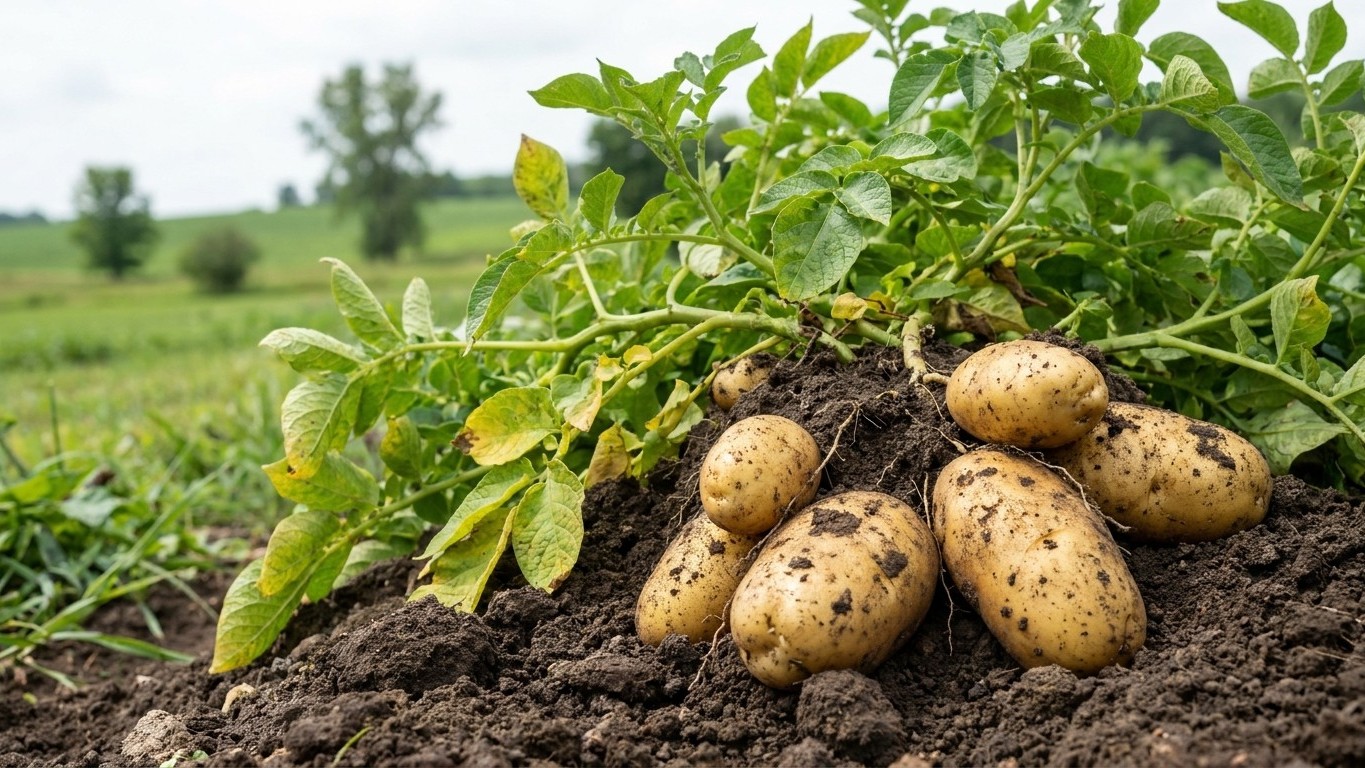
- Skipping hilling. Tubers that develop near the surface and get exposed to sunlight turn green and produce solanine, a compound that makes them unsafe to eat. Mound soil or mulch over the row as vines grow to keep developing tubers covered.
- Digging too early out of impatience. Pulling plants while vines are still green and standing means small, thin-skinned tubers that don’t store well. Wait until the foliage yellows and dies back for a storage crop, and only pull individual plants early if you specifically want small, early-season potatoes for immediate eating.
Checking this against your own county
A statewide frost window is a starting point, not a fixed instruction for your yard. Elevation changes, distance from Lake Michigan, and simple north-south position across Wisconsin can shift both the last spring frost and the first fall freeze by weeks in either direction. Southern Wisconsin’s interior typically sees its first fall freeze in early October, while the far north freezes considerably earlier, and the immediate lakeshore often lags behind both because the lake itself delays the first cold snap.
Before locking in a planting date, check current conditions and localized guidance through University of Wisconsin-Madison Division of Extension, which tracks county-level agricultural conditions across the state. A soil thermometer and that local guidance together beat any single statewide date.
Common questions
Does Wisconsin ever get hot enough to hurt potato tubers?
Rarely. Milwaukee averages only 7.0 days a year at 90°F or higher, well below the level where Utah State University Extension says tuber set and fill start shutting down. Most Wisconsin seasons never sustain that soil temperature long enough to matter.
Can I plant potatoes before the last frost date?
Yes, and you’re supposed to. Potatoes go in the ground 14 to 21 days before the last frost, once soil reaches 50°F, since the seed pieces sprout underground before frost risk has fully passed.
Why did my potatoes turn green?
Tubers developing near the surface were exposed to light. Hilling soil or mulch over the row as the plant grows keeps that from happening; green tubers should be discarded rather than eaten.
Is a specific variety guaranteed to mature by a certain date?
No published source, including Utah State University Extension or the University of Maine Cooperative Extension, gives a days-to-maturity figure for potato varieties. Both sources instead classify varieties as early, mid-season, or late, which tells you dig order relative to other plantings, not a fixed date.